

by Niamh Cooper, Melissa Byrne & Gillian Hegarty
The weather in July has been nothing short of spectacular, and many of us have lived outside for the last few weeks. Even when the weather decides to take a turn – and it will, eventually, because this is Ireland – this is the season for food you can eat with your fingers. And nothing on any picnic blanket, or kitchen table, will be as spectacularly pink as this beetroot dip. It looks like something a unicorn might eat. And it tastes even better.
If you haven’t tried beetroot yet, zapping it into a dip might be one of the best things you’ve done this summer. You can buy beetroot in a packet, or fresh – and you can eat it, leaves and all! Just a note though: don’t use the pickled beetroot as it won’t work in this recipe!
First, a word about the leaves. When you buy fresh beetroot between June and October, it comes with its beautiful stalks and leaves attached, and they are delicious too. Strip the leaves from the stalks and wash everything. Cut the stalks into roughly 2cm pieces and cook in boiling salted water for two minutes, then add the leaves and cook for one minute more. You can also steam them. Lift out with a slotted spoon and drizzle with olive oil, salt and pepper.
Ingredients
• 250g cooked beetroot
• 50g feta cheese
• 2 tbsp roughly chopped fresh mint
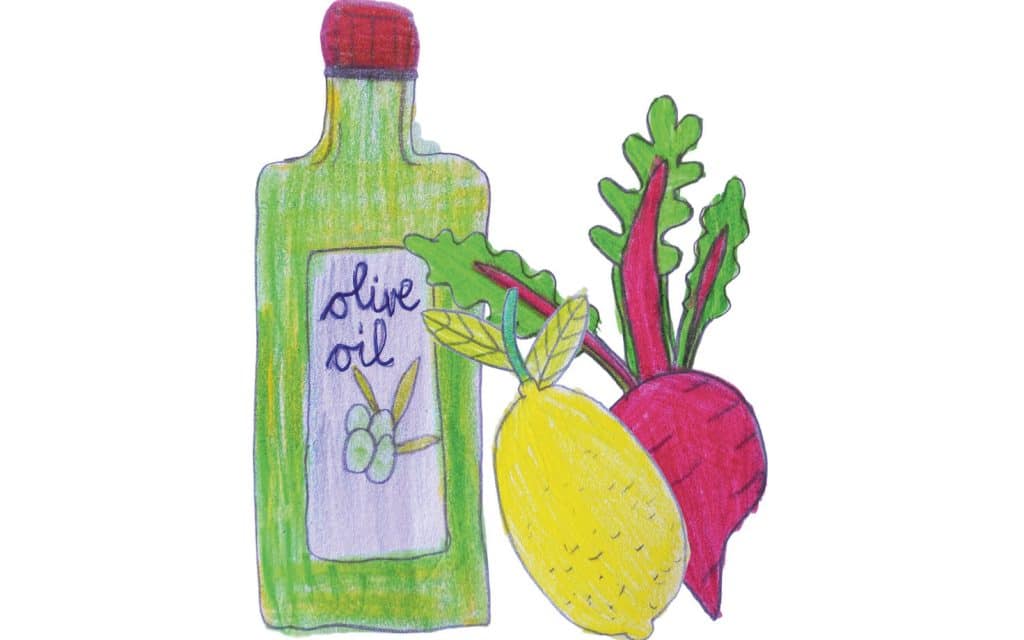
• 2 tbsp olive oil
• 1 tbsp freshly squeezed lemon juice
• Salt and freshly ground pepper
If using fresh beetroot, cut off the stalks, leaving about an inch on the beetroot. Wash gently without damaging the skin, place in a saucepan of cold water, and then ask an adult to help you: Bring to the boil and simmer for 1 to 2 hours, depending on size. The beetroot is cooked when the skin comes off easily and a skewer slides through with no resistance. Remove the skin and stalk, roughly chop, and place in a food processor with all the other ingredients. Blitz until smooth. Taste and adjust the seasoning; you may like more lemon, salt, pepper or mint. The dip looks beautiful, garnished with marigold petals. One warning: beetroot juice stains everything it touches, including you, so wear old clothes.
A few ways to eat it:
Serve it on bread, with crackers or on toasted pitta; eat with a rainbow of raw vegetables such as carrot sticks, cucumber and peppers; dollop onto a hot baked potato instead of butter; spread inside a wrap; have on a burger instead of ketchup, or whatever way you fancy eating it.
Turn it into a salad. Cut the cooked beetroot into wedges and place in a bowl, season with salt and pepper, add a few rocket leaves and tear in some mint. Mix the oil and lemon juice together and pour over the beetroot. Transfer to a serving bowl and crumble over the feta. Garnish with edible flowers from the garden if you have them, such as violas, marigolds, borage or cornflowers. Broad beans are a lovely addition as well, and they are fantastic right now – if you can get your hands on them.
So there you have it: a dip (or salad!) that is bursting with goodness, looks amazing and is totally delicious. Make a batch, share it with someone, and see if you can convince them it came from a unicorn.
Did You Know?
• Beetroot has one of the highest amounts of antioxidants of any vegetable? They help protect the cells in your body.
• The amazing colour comes from natural pigments called ‘betalains’, which scientists are researching for their cancer-protective and other effects.
• Beetroot is packed with nitrates, which widen your blood vessels and help oxygen move around your body more efficiently. That is why athletes drink beetroot juice before races. Scientists are also studying whether it may help lower blood pressure, improve breathing and keep our brains healthy.
• The ancient Greeks ate only the leaves. It took hundreds of years before anyone thought of eating the root!