


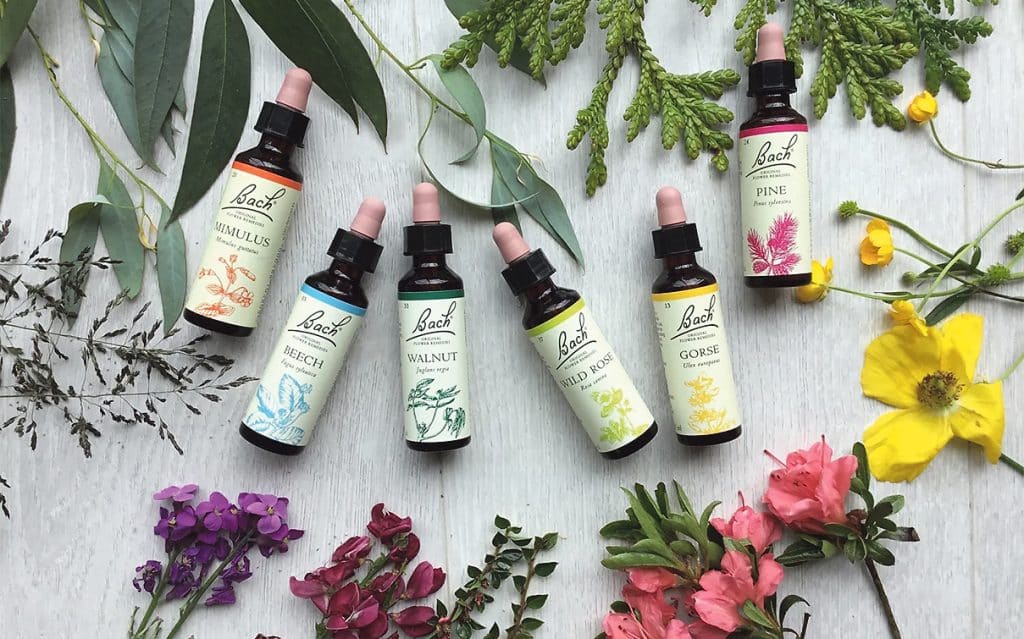
Most of us accept that our emotions affect our physical health. We know that grief can leave us exhausted and more vulnerable to illness. Stress can upset our digestion, disturb our sleep and sap our energy. Anxiety can leave us tense, with headaches, a racing heart or an unsettled stomach. Even after a frightening accident, the emotional shock can linger long after the physical injuries have healed.
Modern research increasingly recognises this close relationship between mind and body. But Dr Edward Bach took the idea a step further.
This month, I’d like to look at the Bach Flower Remedies and the gentle role they can play in supporting emotional wellbeing. Thirty-five years ago we used to make up blends of these remedies for customers, but over the years they have fallen a bit out of fashion. I find them particularly helpful for children, who are learning to balance their emotions, and I’m starting to use them again for myself.
Dr Edward Bach (1886 – 1936) was a British doctor, bacteriologist and homeopath. During his medical career he became increasingly convinced that while physical symptoms needed treatment, our emotional state also played an important role in our health. He believed that restoring emotional balance could help people feel more resilient and support the body’s natural ability to recover.
His life’s work resulted in a system of 38 flower remedies, each chosen to correspond with a particular emotional state or pattern of thinking.
Rather than treating diseases or physical symptoms, the remedies are chosen according to how someone is feeling. Dr Bach grouped them into seven broad emotional categories, including fear, uncertainty, loneliness, discouragement, oversensitivity, over-concern for others, and feeling overwhelmed by life’s circumstances.
For example, someone who lacks confidence might choose Larch. A person whose mind won’t stop racing at night may be drawn to White Chestnut. Aspen is often chosen for vague feelings of anxiety or apprehension when there’s no obvious reason for the worry, while Mimulus is selected when the fear has a clear cause, such as flying, public speaking or visiting the dentist.
What I particularly like about the Bach system is that it encourages us to pause and ask a simple question: ‘How am I really feeling?’ Often we’re so busy getting on with life that we don’t notice our emotions until they begin to affect our sleep, our relationships or our physical wellbeing.
The remedies themselves are prepared from flowers and plants and are extremely gentle. They don’t force a change or suppress emotions. Instead, many people describe them as helping them regain perspective, feel calmer and reconnect with their natural emotional balance.
Choosing a remedy is often an intuitive process. You can use a single essence or combine several that reflect different aspects of how you’re feeling. You can take a drop straight from the bottle or add it to a glass or bottle of water. As life changes, so can your choice of remedies. You may find that one is exactly what you need during a particularly stressful week, while another feels more appropriate a month later.
One of the best-known combinations is Rescue Remedy, developed by Dr Bach for times of acute stress or emotional upset. Many people keep a bottle in their handbag, desk drawer or first-aid kit for those moments when life suddenly becomes overwhelming.
Dr. Bach described Willow as a remedy for people who feel that life has treated them unfairly and who tend to dwell on what has happened to them. They may experience resentment or bitterness, often blaming circumstances or other people for their unhappiness. Because their attention remains focused on past hurts and perceived injustices, they can find it difficult to move forward and embrace the present with a more positive outlook.
The positive potential of Willow is to help restore a sense of optimism, personal responsibility and the ability to enjoy life again, even when circumstances aren’t perfect.
Several Bach flower remedies share emotional qualities with Willow but address different underlying states. Gentian is suited to those who feel discouraged after a setback and have temporarily lost heart. Gorse is for people who have become deeply hopeless and believe that nothing will ever improve. Honeysuckle is appropriate when someone is living in the past or longing for how things used to be. Pine is indicated when the dominant emotion is guilt or self-blame rather than resentment or self-pity. Elm is helpful for those who feel overwhelmed by responsibility and experience a temporary sense of ‘poor me’ because they are carrying too much. Heather, on the other hand, is for people who feel sorry for themselves and seek constant sympathy, attention, or reassurance from others.
One of the strengths of Bach Flower Remedies is that they are chosen according to the emotion behind the feeling, rather than the outward behaviour. Three people might say, “I’m feeling sorry for myself,” but one may be grieving a loss (Honeysuckle), another may be exhausted (Elm), and another may genuinely feel embittered by life (Willow).
You could view the Bach Flower Remedies as energetic medicine, emotional support or simply a mindful daily ritual – either way, they offer something increasingly valuable in today’s busy world: an invitation to create space in our day to slow down, become more self-aware and pay attention to your emotional health.
It can be easy to think that staying healthy is about eating well and exercising, but there’s more to it than that! Becoming aware of how our emotional life affects us is a very good starting point.
For more information, there’s lots of books available and we also have some leaflets in Organico. We sell the Healing Herbs Remedies, as they are prepared according to the original method described by Bach.
Organico Shop Deli and Bakery is open from 9-6pm Monday to Saturday (Deli serving food and drinks from 9-4pm), on Glengarriff Road in Bantry. Call us on 027 51391; if you have any questions, email us on [email protected] and find us online on www.organico.ie.