


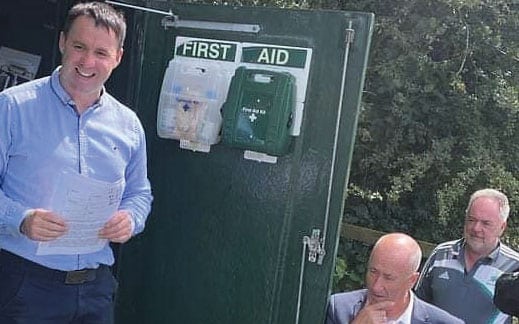
Oisin Coakley, Catchment Co-ordinator
Many in our farming community will know Oisín Coakley well through his many years of scientific and advisory work on the Water Catchments Programme. I was delighted to get an opportunity to interview him so our readers can hear about his role as Catchment Co-ordinator and the water quality improvement work that is happening on farms all over West Cork.
Tell us about your role and the Better Farming for Water campaign in the Bandon-Ilen catchment area?
My role as Catchment Co-ordinator with Teagasc’s Better Farming for Water (BFFW) campaign allows me to work directly with farmers, advisors, industry representatives and local communities across the Lee and Bandon-Ilen catchments. Every week I meet people who are making genuine efforts to improve water quality while continuing to run productive and profitable farm businesses.
The BFFW campaign was established to build on the huge amount of knowledge, expertise and good work that already exists within Irish agriculture. The objective is not to reinvent the farming wheel or tell farmers something they don’t already know. Instead, it is about bringing together advice, science and practical farming experience and presenting it in a way that makes sense on individual farms. In simple terms, it is about helping farmers identify practical actions that work to improve Water Quality.
The Bandon-Ilen catchment covers a large area of West Cork and contains some of the most productive farmland in the country. There are many farming enterprises such as dairy, beef, sheep, pigs, tillage and mixed farms throughout the catchment. The region benefits from a strong agricultural community and significant support from the wider industry. The Bandon-Ilen Catchment Implementation Group is chaired by retired Bandon farmer Roy Kingston and is supported by a broad range of stakeholders including Teagasc, DAFM, industry partners, local authorities and farming representatives from all sectors.
One of the real strengths of the catchment approach is that it brings people together. Everyone has an important role to play. Water quality is not something that can be solved by one group working in isolation.
Water quality can mean different things to different people – how is the quality of water assessed?
When people hear the term ‘water quality’, they often think about drinking water supplies. In reality, water quality means much more than that.
When agencies such as the EPA assess water quality, they are examining the overall health of rivers, streams, lakes, estuaries and groundwater. One of the key things they look at is water ecology. Put simply, water ecology refers to the life that exists within a river or stream. Tiny aquatic insects and invertebrates such as mayflies, stoneflies and freshwater shrimp are often used as indicators of river health. These small creatures are surprisingly sensitive to environmental change and can tell us a great deal about how healthy a river is. People are often surprised to learn that agriculture is not the only factor that influences water quality.
Across West Cork, water quality can also be affected by wastewater treatment systems, septic tanks, road runoff, urban development, forestry operations and physical alterations (hydro-morphology) to rivers and streams. Agriculture is one part of a much bigger picture.
Farmers have the added challenge of dealing with weather extremes – what effect does weather have on water quality?
Weather is probably one of the most influential factors affecting water quality. A prolonged period of heavy rainfall can mobilise nutrients and sediment and transport them across the landscape and into our waters very quickly. Flood events can move material that may have been sitting quietly for months or even years.
At the opposite extreme, dry periods and low river flows can create their own environmental pressures. This is one reason why water quality can appear to improve in one year and deteriorate the next, even when farmers are consistently implementing positive measures.
Farmers have been making the changes to farm practices to improve water quality – why are they not seeing much of this reflected in recent water quality reports?
One of the most common questions I hear from farmers is: “We’ve done the work, so why aren’t we seeing more improvement?”
It is a fair question. Many farmers have heeded the advice; they’ve invested significant time and money over recent years. They have upgraded farmyards, improved slurry storage, planted riparian margins, improved nutrient management planning and implemented countless practical measures designed to reduce losses to water.
The science tells us that improvements can take time. Nutrients that entered the environment years ago can continue moving slowly through soils and groundwater before eventually reaching rivers and streams. In some cases, improvements implemented today may not be fully reflected in monitoring results for several years. That can be frustrating, but it doesn’t mean the actions being taken are not working.
Are you optimistic about improving water quality given all the challenges facing agriculture?
Water quality is one of the most important challenges facing Irish agriculture, but it is also one of the greatest opportunities. Every improvement made on a farm contributes to something much bigger. The encouraging thing is that I continue to meet farmers across West Cork who are willing to engage, learn and take practical actions where improvements can be made. The conversation around water quality can sometimes become negative. My experience on the ground with farmers is often quite different. I see farmers who genuinely care, communities that want healthy eco-systems and advisors working hard to support practical solutions to water quality. If we continue building on that foundation and working together, there is every reason to be optimistic about the future of both farming and our water quality in West Cork
Can you give farmers some practical tips to do in October?
As we move further into autumn, I’d encourage farmers to focus on three simple actions:
• Walk the farmyard during or after rainfall. Follow the water and identify any potential risks of nutrients or sediment moving to waters
• Check gutters, downpipes and drains. Separating clean and soiled water remains one of the most effective actions available.
• Keep clean roadways and concrete yards. Getting cows out to grass can present its own challenges in October, regular scraping and cleaning of roadways and concrete yards will minimise soiled water areas.
There is a practical guide on preventing farmyard pollution recently published by Teagasc’s BFFW and is available online or if farmers would like some specific advice related to their farm they should contact their local Teagasc or industry ASSAP or Sustainability adviser.
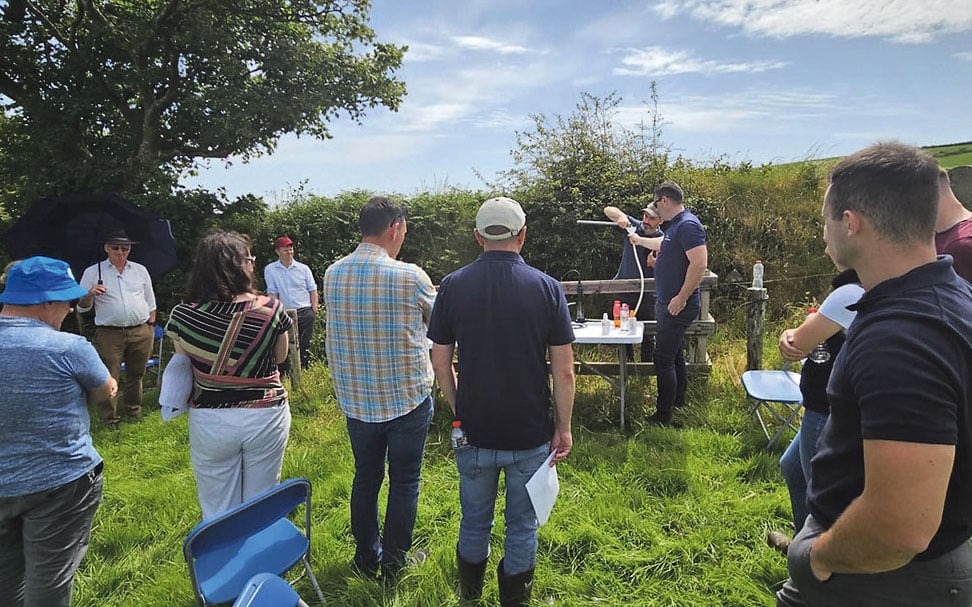
A date for your diary
A Catchment Water Quality event will take place near Timoleague on the morning of Wednesday, October 7. Attendees will have the opportunity to learn from 18 years of research from the agricultural catchments programme and see practical measures on water quality.