


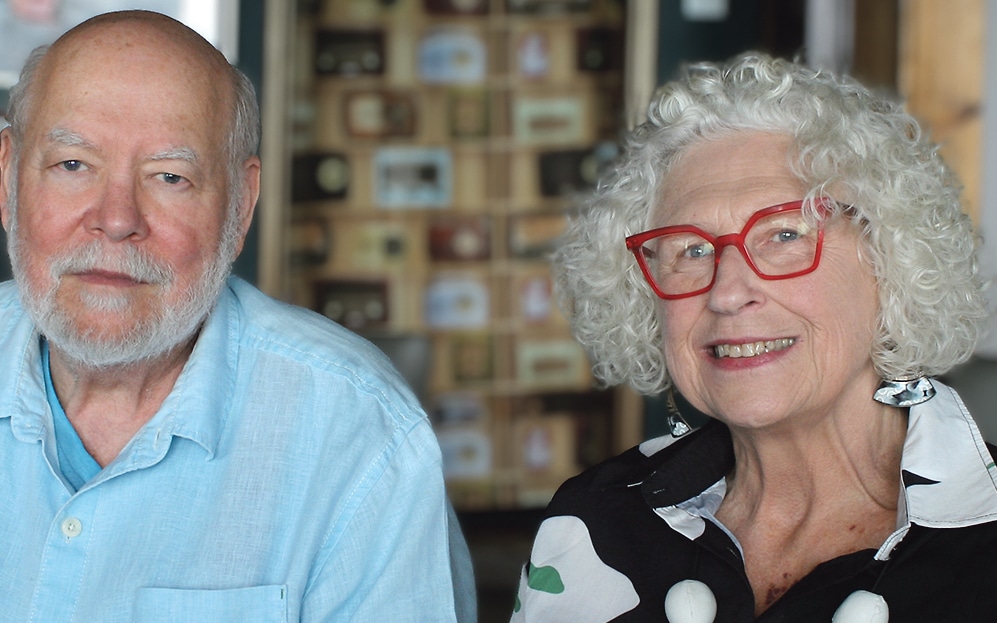
After spending four decades helping countries and organisations to rebuild after communism, Steven Kelly and Mari Novak finally hung their hats in West Cork. Partners in life and business, the couple, who celebrate 42 years of marriage this year, moved to West Cork from Prague in 2012 with the intention of easing into retirement. It was a turn they tell Mary O’Brien “of about 180 degrees”. The recent publication of their shared memoir entitled ‘In the trenches of change’ maps their journey together working for reform, while navigating culture, politics and bureaucracy along the way.
While people were wary and reserved in Prague post-communism, Mari shares how fascinating it was to be there right from the beginning “…watching hearts unfolding, brains unfolding.
“Under communism, you never wanted to stand out. You never wanted to be noticed… you didn’t look people in the eye or say hello,” she says.
Here in West Cork, the couple are appreciative of being part of an open and engaged community and are embracing the lifestyle that has allowed them to slow down while retaining their interests.
“There’s so many people who have travelled or lived in different places… there’s an awareness and ongoing conversation about geopolitics and economy here, as well as history and language,” says Mari.
Steven grew up in Nevada. His early career was in the army, working in intelligence, before moving on to training and human development. After leaving the army, he started a company called GSC (Good Services for the Community) delivering training to organisations in Houston.
From Cleveland, Mari’s background is in business, specialising in complex systems, and human resources. Her father had served in the navy in the Pacific during WWII so she developed a fascination with geography at an early age and volunteered for a stint with the Peace Corps in Micronesia.
After meeting at a personal development conference in New York City in the early 1980s, the couple married in 1984 and honeymooned in the Soviet Union, carrying a letter from the mayor of Houston to the mayor of Baku (Houston’s sister city).
“He hired me and then he married me,” says Mari laughing.
Through their work together, Steven and Mari began to realise that, more often than not, it wasn’t just training that organisations needed. “The incentives may have been wrong, or they didn’t have the resources they needed or the procedures and guidelines weren’t correct,” explains Steven.
Overcoming the health challenge of a collapsed lung as a university student earlier in life had led Mari to Nepal on more than one occasion.
Based on her experience there, the couple came up with the idea of leading business people on transformational trekking experiences to Nepal.
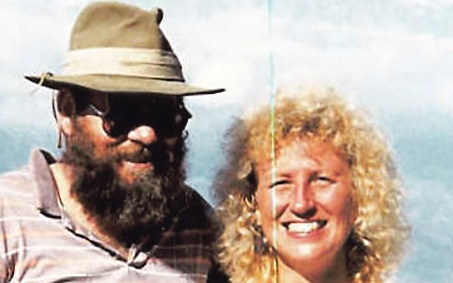
“Typically they were business people who were in decision points of their life… they needed an adventure,” shares Steven.
The trips were physically challenging (10-12,000 feet in difficult terrain) but gave people the opportunity to disengage and reflect. “We’d choose the right moment to have a conversation… about whether they had the confidence or the courage to do what they thought they should do as opposed to what they had always been doing,” explains Steven.
When glasnost and perestroika policies were introduced by Soviet leader Mikhail Gorbachev in the 1980s to encourage open discussion of political and social issues, Mari began thinking about opportunities working overseas. “We knew there was going to be a need to rebuild organisations,” she says.
Then the Berlin Wall fell in 1989.
Steven and Mari arrived in Czechoslovakia two months after the Velvet Revolution, initially for Steven’s PhD research.
Steven’s PhD research fell through after the entire university system was unexpectedly reorganised and his sponsor retired. Meanwhile, they had set up their consultancy office as Kelly Novak Opportunities (KNO), and that steadily gained clients.
While Steven concentrated on corporate training in the large organisations moving in post communism (Opel, McDonald’s, Shell), Mari focused on international development funded through the EU and US, working across the former Soviet republics designing training programmes for government ministers.
“We trained the Supreme Court, different things… I ended up working all over the former Soviet republics helping to design and administer programmes,” shares Mari.
The couple’s role was to create order in the chaos of post-communist transition. “You didn’t know what your postage stamp was. You didn’t know what your flag was. You didn’t know who owned a building,” says Mari.
“It was exciting, it was exhausting, it was intense and a bit insane at moments.”
“We had two of our banks fail on us in the early years”, adds Steven.
On one occasion they recall sitting at a table in a restaurant for 15 minutes and being completely ignored. “When we eventually enquired about why nobody was coming to take our order, we were told we were sitting in Andre’s section and it was his day off,” says Mari.
While Mari and Steven are US natives, Mari has a family connection to Czechia and Slovakia, with all her grandparents born there, while Steven is half Irish. Neither however identifies strongly with nationality. “To be proud to have been accidentally born with curly hair, is like… the stroke of luck that I was born in Cleveland, Ohio versus Timbuktu,” says Mari.
After becoming Irish citizens, the couple started learning Irish and have become active in local groups, including Cnoc Bui Arts Centre just over the road in Union Hall. Both enjoy gardening and Steven has joined a writer’s group – his compositions ranging from papers on geopolitics to satirical poetry – while Mari’s passion for knitting has led to her becoming involved in a wool collective.
Their lives and careers have left them with a particular perspective on politics and governance. They see the current political situation in the US as unfortunate. “Many people felt so desperate to want to put in such an administration. They were desperate for any kind of change, even if it was unpredictable,” says Mari.
Steven references Neil Howe’s ‘The Fourth Turning’, which argues that the US is in a cyclical period of crisis that will bring significant turmoil before improvement.
They appreciate Ireland’s quality of life, even while remaining critical of aspects of its governance. Having visited more than 100 countries and worked with presidents, ministers and kings, they have seen the strengths and weaknesses of systems in many different parts of the world, their experience reinforcing their belief that no system remains effective forever
“Any system atrophies after a while,” says Mari. “Re-invigoration must be constant.”
For all the complexity of their work however, the most important lesson they have taken from four decades of helping organisations and countries through periods of change is that total efficiency should never be the ultimate goal. Whatever the organisation, country or situation, Steven and Mari believe that it’s the people who matter and who will ultimately make a difference in the end.
‘In the trenches of change’ by Steven Kelly and Mari Novak is available to purchase through the website www.trenchesofchange.com.