

A dry backend to 2024 and the lovely Spring of 2025 allowed stock on most farms to graze from March onward up to late Autumn before any weather upset to what was a lovely farming year.
Unfortunately, Spring 2026 has not been so kind: While weather has started to improve at last, work is well behind time. Heavy rainfall and wet soil conditions have delayed the planting of tillage crops, potatoes and grass reseeding; and the on-off grazing of livestock has resulted in the ground getting poached with the addition of fertiliser going out late likely to delay silage cutting.
No year is ever the same but farmers sometimes forget that the Springs of 2023 and 2024 were nearly just as bad as this Spring. Three of the last four springs have had elevated levels of rainfall from January to April. Is it perhaps time for beef farmers to reflect and accept that this may happen more often in the future? Beef farmers will always aim to get stock out if a spring allows, but oftentimes they are left with their hands hanging after a series of rain deluges when their stock should already be out in the fields. Those blessed to have drier, free-draining soils don’t have as much of an issue but the farmers on heavier soils have not been able to take advantage of the odd dry day, as it can take anything from four to seven days for those soils to drain.
Teagasc Beef specialists have suggested that heavier soil farms and more typical beef farms should try to prioritise some farm management decisions in 2026 to help mitigate against these weather effects, which are more common than not.
This spring, beef farmers with six months of slurry storage spent less time worrying about slurry appearing up through the slats and trying to find dry ground to spread. Investment is worth it if it is a pressure that is happening annually. A new slatted tank may not end up costing as much as anticipated. There are grants of up to 60 per cent available subject to DAFM terms and conditions, with a two-year tax write-off for farmers in the high tax bracket.
Similarly, suckler herds that depend on straw-bedded housing had little or no livestock turned out by mid-April. Investing in adequate lie-back areas and calving pens is therefore worthwhile, as it can help reduce veterinary costs when issues like calf scours or pneumonia arise.
Silage quality is always important, but if wetter years become more common, prioritising the harvest of high-quality leafy grass in mid-May – followed by strong second cuts – becomes even more critical. Silage cut in early to mid-June is generally suitable for dry cows up to calving. However, after calving, silage should exceed 70 per cent Dry Matter Digestibility (DMD) and have a high protein content to prevent loss of body condition before the breeding season. High-quality silage is equally important for weanlings and finishing cattle, with a target of around 75 per cent DMD being even more beneficial.
To produce high-quality grass, farmers need to understand their soil fertility and maintain a strong proportion of perennial ryegrass, which can efficiently use nutrients from fertiliser to maximise growth. It’s also worth remembering what happened in 2022, when rising fertiliser prices led many farmers to cut back on fertiliser. The result was lighter crops, poorer-quality silage, and a negative impact on soil fertility.
Improving soil fertility through reseeding is another investment that can deliver strong returns for the farm business. One of the most cost-effective ways to boost soil health is by correcting acidity with lime, which helps unlock key nutrients and supports grass growth. Lime is a cornerstone of soil fertility and was widely used by previous generations of farmers, long before modern fertilisers – but somewhere along the line farmers stopped using it!
If we have finally turned the corner with the weather, this could be great opportunity to reseed old and poor-quality fields. Over the past three years there has been good results coming from farms that have reseeded silage ground with red clover swards.
Identifying what is putting pressure on the farm system this spring and taking measures against it now will help mitigate against the stress of what will happen if mother nature decides to repeat the heavy rainfall next year!
Talking about a repeat of last year, calf prices were high again this spring, with dairy farmers scratching their heads wondering how beef farmers can make a margin with the price of calves being sold at the mart.
According to Teagasc beef specialist David Argue, it is important for farmers to complete a budget now to understand their total cost of production. On Teagasc’s Beef podcast, he gave an example of an Angus or Hereford calf bought in February costing €460 plus the input costs, killing out at two-years-old, with Teagasc approximating costs to equal €1400, coming to a breakeven price of €1860.
An expected target of 310/312 kg carcase weight divided into €1860, means a farmer would need to make approximately €5.98 a kilo to just cover the costs of the system. So, for a farmer to earn a €100 margin on the carcase, 32c per kilo would be required on top of the €5.98.
Assuming a calf has had a good healthy start to life, calves that have a higher CBV value and good genetics, will return value.
We would need a crystal ball to know what way prices will go but what is known is that input prices for 2026 are already going up. Nitrogen fertiliser is up €200/250 per tonne with meal and contractor prices looking likely to go up as well. Getting grassland and animal health right to reduce costs should be a priority. Aim to graze correct covers and take out strong paddocks to maximise daily weight gain and monitor animal performance throughout the year.
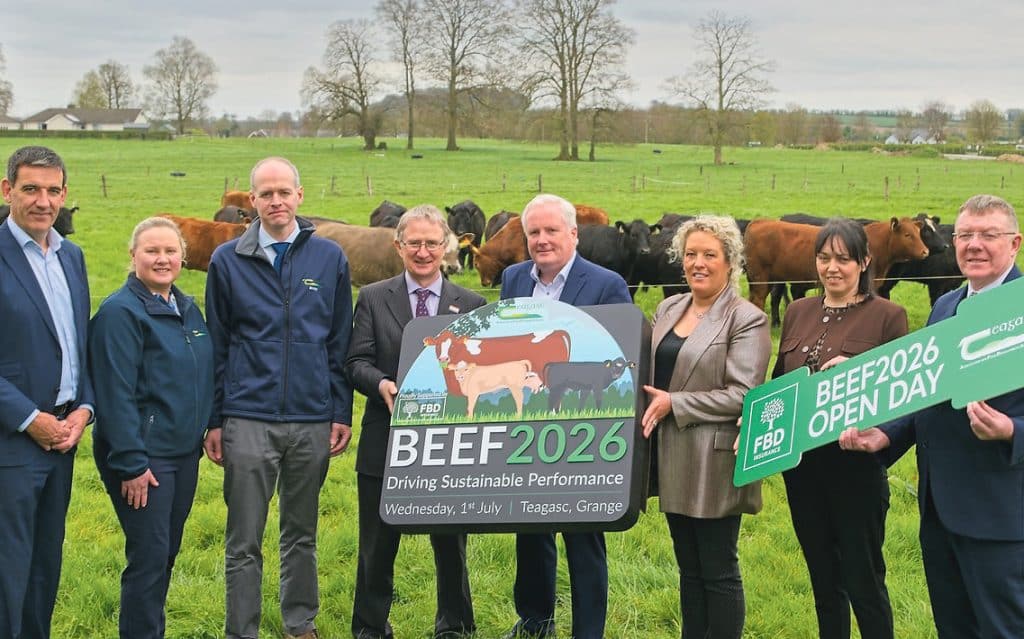
A date for your diary: The BEEF2026 open day takes place on Wednesday, July 1 at Teagasc Grange, Dunsany County Meath. It will showcase systems and technological advances that can be utilised by cattle farmers to increase production and drive income in a sustainable way.