
Something has shifted in the way we talk about ageing, and it goes deeper than semantics. For a long time, the beauty and wellness industries operated on a single, largely unexamined assumption: that growing older was a problem requiring a solution. Treatments promised to “reverse”, “correct”, or “fight’”the signs of age, as though time itself were the enemy and the goal was always to wind the clock back. However, times are changing and there is a big shift in the aesthetic and wellness spaces.
Longevity medicine, once the preserve of Silicon Valley optimists and academic outliers, has become one of the fastest-growing areas of mainstream healthcare. Researchers are increasingly focused, not just on lifespan, but on healthspan: the quality and vitality of the years we live. Central to this is a growing understanding of the body’s regenerative capacity; its ability, given the right conditions, to repair, renew, and function at a high level well into later life. The skin, as the body’s largest organ, is no exception.
This science has fundamentally changed what good aesthetic medicine looks like. The most interesting practitioners today aren’t interested in making patients look younger. They’re aiming to make them look well.
The treatments gaining traction in clinics reflect this shift. Polynucleotides (purified DNA fragments originally developed in wound-healing medicine) have become one of the more talked-about developments in skin health in recent years. Rather than filling or freezing, they work at a cellular level, stimulating fibroblast activity and supporting the skin’s own repair mechanisms. The results tend to be subtle and cumulative: improved hydration, better texture, a quality of skin that reads as healthy rather than treated.
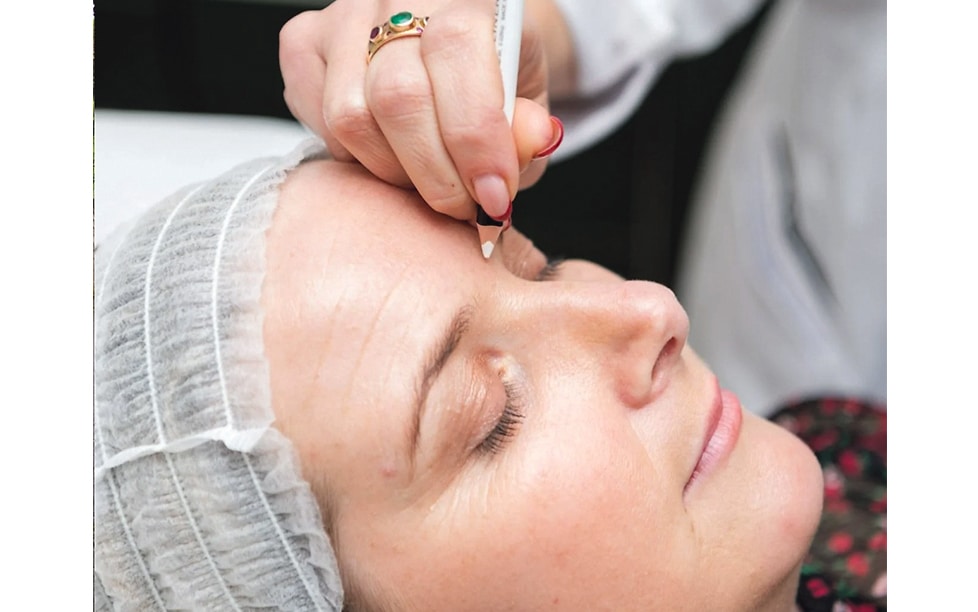
Microneedling operates on a related principle. By creating controlled micro-injuries in the skin, it triggers the body’s wound-healing response. This creates a controlled flood of collagen and elastin production that gradually improves firmness and resilience. It’s an intervention that works with the skin’s existing biology rather than overriding it.
More recently, exosome therapy has moved from research settings into clinical practice. Exosomes are essentially cellular messengers, carrying signalling proteins that instruct skin cells to repair and regenerate. Early clinical evidence is promising, and the approach fits neatly into a broader regenerative philosophy: less addition, more restoration.
Energy-based treatments have evolved along similar lines. IPL remains a reliable tool for addressing the cumulative effects of sun exposure — pigmentation, vascular changes, uneven tone — restoring a clarity that has more to do with health than youth. Erbium YAG laser resurfacing goes further, prompting significant collagen remodelling and skin renewal. Used thoughtfully, these technologies don’t alter the face so much as return it to a better version of itself.
Advanced skincare properly formulated, evidence-led products. rather than marketing-driven ones, underpins all of it. The barrier function, cellular turnover, and protection from environmental stressors determine the long-term health of the skin more than almost anything else.
What unites these approaches is a changed set of questions. Not “how do I look younger?” but “how do I look and feel my best?” Not “what can be corrected?” but “what does healthy skin actually need?” It’s a more honest conversation, and patients seem ready for it.
There’s also a growing recognition that the pursuit of a younger appearance has, in many cases, produced results that serve neither patient nor practitioner well. Overcorrection, homogenisation, the uncanny valley of faces that have clearly been worked on. These are the visible failures of an industry that prioritised a single aesthetic ideal over individual health and character.
The pro-ageing movement isn’t anti-intervention. It’s anti-erasure. The distinction matters. A person in their fifties who looks vital, rested, and healthy has aged well, regardless of whether they’ve had help getting there. The goal is function and vitality, not the simulation of a different decade or different person altogether.
Mainstream medicine is beginning to reflect this too. Preventive and regenerative approaches, from NAD+ protocols and peptide therapies to mitochondrial health and microbiome research, are entering clinical conversations that would have seemed fringe just a decade ago. The picture emerging is one in which ageing is not reversed but optimised: a process managed with intelligence and care, rather than one fought and resented.
Aesthetics, at its best, is part of that broader project. Skin health is health. Looking well is, more often than not, a reflection of being well. And the treatments and technologies now available make it increasingly possible to support both, not by chasing youth, but by investing in the conditions that allow people to age with vitality, confidence, and genuine wellbeing. I feel genuinely excited to see where this movement takes us.