


“Conformity is the only real fashion crime. To not dress like yourself and to sublimate your spirit to some kind of group identity is succumbing to fashion fascism.” Simon Doonan
Ageing is an inevitable part of life but how we approach it can transform the entire experience. Once upon a time growing older was embraced and people assumed the glorified position of ‘wise elders’ in the community.
Experience, hardships, laughter and love etched into the face, hands and fingernails showed the signs of hard work. There seemed to be an acceptance and even welcome to slowing down.Times were different then and today’s society is much more concerned with the slow down of ageing. I definitely feel that the emphasis on looking after your body as you age is becoming more and more important – moving more and, most importantly, challenging your brain, as you get older. I always loved to study and I’m studying again now at an age where focus and retention may have completely left the building, haha! Persistence, repetition and patience – these have become my mantra because they work. Research has shown that it is the 50-, 60- and 70-year-olds who need more intellectual stimulation than a younger brain. In the same way that you practise speaking a new language, when you stop, the parts of the brain that had been stimulated to retain that learned language die. Slipping into a daily non-challenging routine is detrimental to the brain and the body and expedites ageing.The exact same is true when it comes to moving the body and exercising. Emotional resilience also needs tending to, so that you can cope with life on life’s terms!
Our bodies change and, as we mature, many of us can get stuck in a rut and just stay comfortable when it comes to fashion. Ageing gracefully doesn’t mean pretending to be young, what it does mean is that you make peace with the ageing process while staying stylish and doing what you can (safely) to look your best. I’m not going to rant and rave about skincare procedures that are poisoning the body in order to look young – do your own research, of which there is limited longterm! Also, a wonderful college professor once told us that when you look at who funds safety studies, you need to sift through to find studies that are NOT funded by the product/procedure in question – in other words, the results may be compromised. Mindset is huge when it comes to ageing, it is so important to try to adapt a lighthearted approach and not obsess about it because if you allow yourself to get stressed, then you will flood your body with cortisol and look older. I don’t use anti-ageing creams – companies send them to me but, other than a Vitamin C cream that RSVP sent to me last year, I don’t use them at all. I eat well, use old remedies and drink Nettle tea to purify my blood. I have found my passion in life and embrace it, I garden without gloves (Google the benefits of doing that), I take a high dose of CoQ10 and I laugh at myself ‘all’ the time. I use Nivea body cream on my face and mix a little BioOil into it, every so often I use local honey as a mask and I’m of the mind that perhaps there are anti-ageing benefits to dogs licking your face!
Your wardrobe can and will dramatically influence how you feel as you age. You need to honestly ask yourself if you are still wearing a much-loved style from 15 or 20 years ago – a classic tailored cut is exempt from this. The longer you live, the more experiences that you go through and inevitably, these experiences will change you, so you need to ask yourself if your clothes reflect who you are today. Dressing for who you are now rather than who you used to be boosts confidence and is enormously liberating. Social media is a wonderful and useful tool when used carefully for advice and ideas when it comes to what to wear as you age. What you need to be careful of is who you follow for tips and how much is real or artificial. Most influencers use airbrushing apps, use products and treatments that are beyond our budgets and are well-informed on camera angles and so on.Reinventing your wardrobe is something that you have to do regularly as you age. Holding onto clothes that you haven’t worn in a long time creates a stagnant wardrobe and stops you from moving on. There will always be some items that will only be worn on rare occasions, like funeral attire, ball gowns and event style. These pieces, once they still fit comfortably, can occupy a section of your wardrobe, but jeans that you put on and take off and never wear, need to be given away, passed on to a friend or sold on an app like Vinted or Depop. Simplicity is key. Blazers, dressy blouses, kimono-style light long cardigans can change an everyday pair of jeans to a ‘going out’ look. The quickest way to revive your wardrobe is by experimenting with unexpected pairings. What about trying that silk blouse – usually reserved for a very formal event – with a pair of denim jeans and trainers? This is a great day-into-evening look, sophisticated yet effortless on a more mature body.
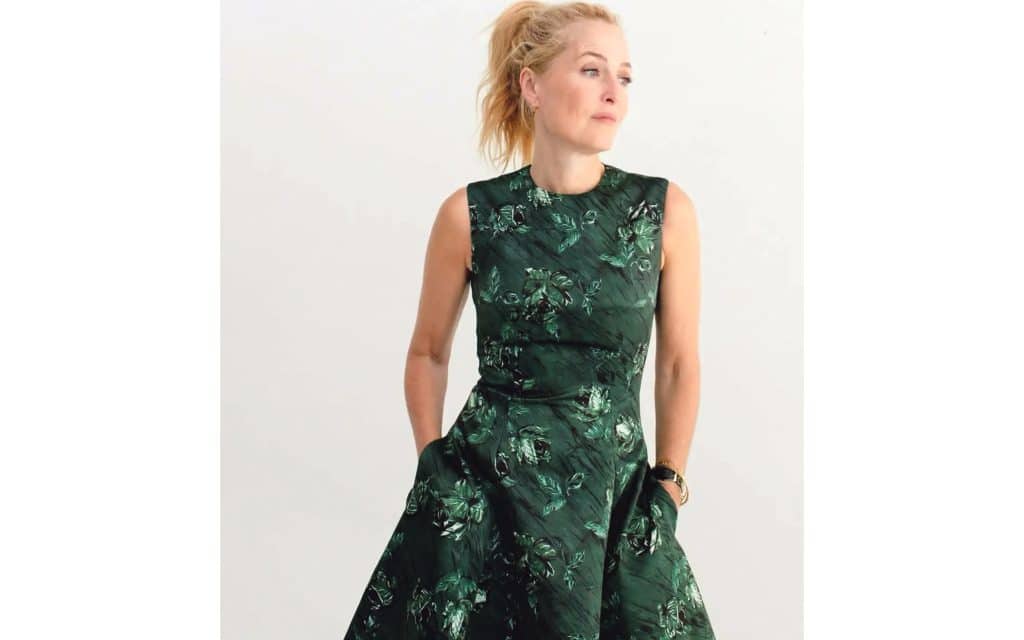
The colour and shape of clothes is a power tool as you age. We all know the colours that shine on us but, as we age, the shade might need to change somewhat. We change our make-up shade and texture, as our skin ages; our hair colour, as more greys appear, so it only makes sense that the colours of our clothes would change too. Have you ever put on an outfit that you used to love, only to feel like something is off? Maybe your features seem less defined, your skin looks a little tired or the colour just doesn’t ‘pop’ like it used to. Colours that once flattered you may now dull your natural glow instead of enhancing it. What you need to do is to stand in daylight with a mirror, put a colour near your face and you will see if it reflects light onto your face to make you ‘glow’. Another colour will absorb the light, which will make you look tired or washed-out. Black is a classic colour that will hide a multitude but, for some people, it can emphasise shadows and fine lines. Opt for a deep espresso or soft charcoal instead. Soft pale yellow may sound like a cheerful colour but it washes out most Irish people, as it lacks contrast and is too close to our natural skin undertone. Opt for a warm amber or golden yellow instead. Stark white can be surprisingly unflattering on many Irish women, as it is too bright and harsh and highlights an uneven skin tone. Opt for cream or ivory instead. Baby blues, lavenders or pale pink are shades that can sometimes feel ‘flat’. They lack warmth and can make the skin look less vibrant. Opt for coral, peach or warm rose instead. Deep navy and teal, burgundy and plum, warm greens, peach and coral and soft rose and blush can all work wonders on ageing skin. Wear brighter colours near your face or use layering by adding a softer tone between your face and darker pieces.
Accessories can be absolute game-changers! A belt can transform the feel of a familiar outfit and as we age, the thickness and position of a belt will need to change, perhaps to accentuate a curve where a waist is disappearing.
Shop intentionally. Always ask yourself if a new addition will pair with at least three of your existing items. This will stop the urge to impulse buy. There is no set guideline as to what you should wear when you are 40, 50, 60 or 70. What is imperative is that you have good-fitting enhancing underwear, which is always worth the extra cost. Don’t allow yourself to get into the habit of wearing the same clothes style everyday. The days that you are struggling with confidence and energy are the days that you should wear the brightest of colours, the best jeans or a piece that you get loads of compliments every time you wear it. Gone are the days where you save something good for an occasion, every day is an occasion, wear it now.