

I’m not a dermatologist but, as a GP with 30 years experience, I have seen one skin condition commonly affecting the face that can be particularly distressing for women: Rosacea can have a significant impact on confidence and quality of life.
What exactly is rosacea?
Many people think that Rosacea is a type of acne, but that is not the case.
Rosacea is a common female skin condition, mostly affecting the face. It predominantly affects fair-skinned individuals but may appear in any skin type. Rosacea can start at any age from childhood onwards, but most commonly appears in young adults.
While it is more common in women, when affecting men it may be more severe. It is a long-term condition and fluctuates from mild to severe. Rosacea mostly affects the cheeks, forehead, chin, and nose. What is going on in the skin is a mixture of inflammation and increased blood flow caused by rapid vasodilation, in the same way that blushing occurs. Women feel the skin on their face is often sensitive and the affected area can feel very hot or sting.
She finds that pretty much any cream she applies causes redness. As well as the redness there can be elements of thickening of the skin, with small bumps, and pus-filled spots similar to acne. There may also be uncomfortable redness and irritation of the surface of the eyes and eyelids. Some people affected by rosacea may develop eye problems such as painful inflammation involving the front part of the eye (rosacea keratitis) and this may cause blurred vision. If you develop symptoms affecting the eyes, see your GP, as they may need to refer you to see a dermatologist or an optician.
Because this skin condition affects the face, it can be very stressful, result in low self esteem, anxiety, social withdrawal and even depression.
What does rosacea look like?
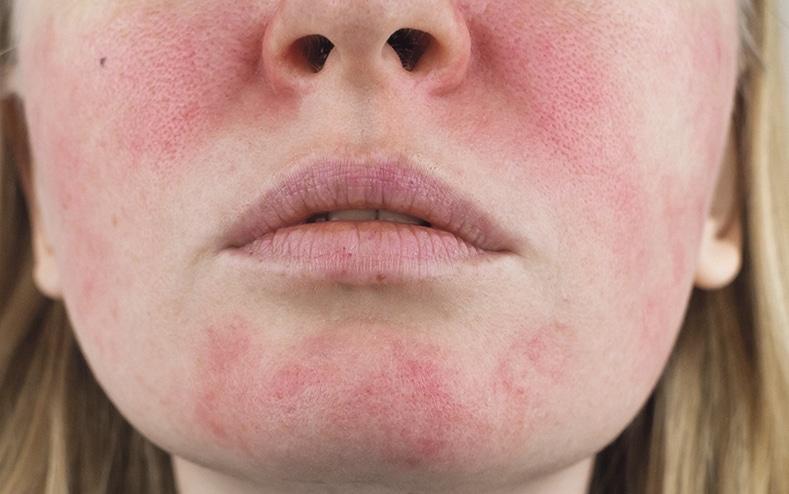
Rosacea usually starts with a tendency to blush easily. A red rash on the cheeks can be an early sign. After a while, the central areas of the face become a permanent deeper shade of red, with small, dilated blood vessels, bumps, and pus-filled spots.
Occasionally, there may be some swelling of the facial skin called lymphoedema, especially around the eyes. Occasionally, an overgrowth of the oil-secreting glands on the nose may cause it to become enlarged, bulbous and red called rhinophyma, but this rarely occurs in women.
What causes rosacea?
The cause of rosacea is not fully understood. Genetics, immune system problems and environmental factors may all play a part. Factors that trigger rosacea cause the blood vessels in the skin of the face to enlarge (dilate). The theory that rosacea is due to bacteria on the skin or in the gut has not been proven. However, antibiotics have proved helpful to treat rosacea. This is because of their anti-inflammatory effect. Rosacea is not contagious.
Is rosacea hereditary?
Rosacea does seem to run in some families, but there is no clear genetic link.
There are many triggers that may make rosacea worse. These include alcohol, exercise, high and low temperatures, hot drinks, spicy foods, hormone changes and stress. Rosacea patients can be sensitive to the sun. In my work as a menopause doctor, seeing women going through menopause skin changes is a common complaint. If there is pre-existing Rosacea, it often flares up and becomes very difficult to control, triggered by the hormone fluctuations of the menopause transition. Combined with the increased dryness of our skin as we age, the redness and inflammation seen in Rosacea can become really difficult to control over the age of 45.
How will rosacea be
diagnosed?
Rosacea can be diagnosed by its appearance. Specific tests are not usually required.
Can rosacea be cured?
No, but long-term treatments can be helpful.
How can rosacea be treated?
There is no magic cream! Resist the urge to buy expensive, lovely smelling and often coloured potions, as many ingredients in our cosmetic creams will aggravate the inflammation of Rosacea.
Use a simple, colour and scent free SPF 30 face cream daily. Avoid gritty exfoliation, as this will definitely flare the inflammation.
There are specific anti-inflammatory creams and oral anti inflammatories can also be helpful. But the redness is also caused by vasodilation or increased blood flow to the skin giving that bright red blush look. This is harder to manage.
Local treatments: The inflammatory element of rosacea may be controlled with a medication applied to the affected areas. It may take at least eight weeks for the effect to become evident. Some applications work specifically to reduce the redness associated with rosacea.
Oral antibiotics: These are helpful for the inflammatory element of moderate or severe rosacea. The most commonly used antibiotics belong to the tetracycline group and include tetracycline, oxytetracycline, doxycycline, lymecycline and minocycline. Erythromycin is another commonly used antibiotic. The duration of an antibiotic course depends on how your body responds to the treatment. Your doctor may suggest that you use a cream and an oral treatment together.
Other treatments for rosacea may be recommended depending on the severity of symptoms. An eye specialist can help manage severe eye complications associated with rosacea. For patients who develop rhinophyma, a bulbous enlargement of the nose, treatment by a dermatologist or plastic surgeon can help reduce its appearance. Persistent redness and visible dilated blood vessels may be improved with laser therapy performed by a dermatologist. If excessive blushing is a significant concern, medications such as beta-blockers or clonidine may be prescribed. In cases of severe rosacea, a dermatologist may also prescribe isotretinoin tablets to help control symptoms.
What can I do?
Protecting your skin from the sun is an important part of managing rosacea. Before going outdoors, apply a broad-spectrum sunscreen with a sun protection factor (SPF) of at least 30 to your face every day. Sunscreen should be reapplied regularly, especially during prolonged outdoor activities, to maintain effective protection.
When cleansing your face, avoid rubbing or scrubbing the skin, as this can aggravate rosacea symptoms. Perfumed soaps should also be avoided because they may irritate sensitive skin. Instead, use a soap substitute, such as an emollient cleanser, which is gentler on the skin. If your skin is dry or sensitive, regular use of a non-perfumed moisturiser can help maintain the skin barrier and reduce irritation.
Many people find that certain lifestyle factors can trigger or worsen their rosacea. Keeping a diary of flare-ups may help identify personal triggers, allowing you to avoid factors that aggravate your symptoms. In some cases, cosmetics can be used effectively to conceal redness, and specialised skin camouflage products may provide additional coverage for excessive facial redness.
Unless specifically recommended by your doctor, it is generally advisable to avoid some acne treatments, as these products can irritate rosacea-prone skin. Similarly, creams or ointments containing corticosteroids should not be used unless prescribed by a dermatologist, as they may worsen rosacea over time.
If your eyes are affected by rosacea, it is important not to ignore the symptoms. Consult your GP, as referral to a dermatologist or ophthalmologist may be necessary for further assessment and treatment. In addition, some medications can increase facial flushing and blushing. Your doctor or dermatologist can review your current medications and make appropriate adjustments if necessary.
For more information go to www.irishskin.ie and www.rosacea.org.
I hope this has been healthful. If you wish to request an article on any particular female health topics please email any
suggestions to the editor for consideration:
[email protected].