

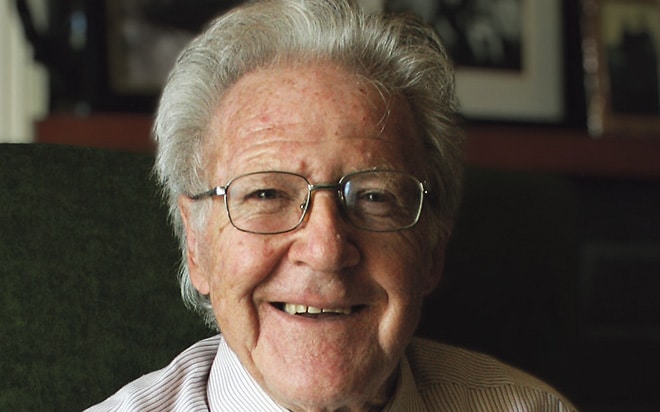
While it’s many moons since the clanging of the hammer on the anvil last rang out around the village of Butlerstown, it’s a sound that Michael O’Brien, 81, tells Mary O’Brien, he still hears as clearly as if it were yesterday. The small coastal village between Courtmacsherry and Barryroe once upon a time boasted two forges, three pubs and five shops, all within easy throwing distance of each other. While today the sleepy village, with it’s pretty pastel-coloured houses and one pub, is probably best known for being located on the Seven Heads Walk, Michael remembers a time when the sound of cockerels crowing followed by the chatter of women at the village water pump marked the start of each day with the shuffling of footfall leaving the public houses bringing it to a close. A storyteller and songwriter, Michael has been fondly crowned locally as the ‘bard of Butlerstown’ for his many evocative and often humorous compositions that capture life, past and present, in West Cork.
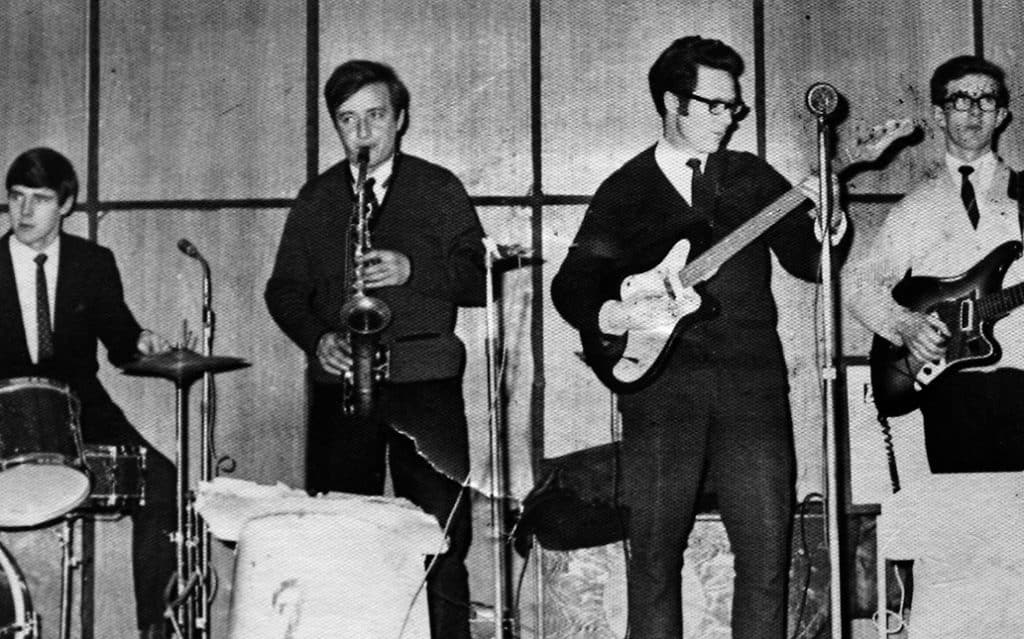
Music is in Michael’s blood. His father, a quiet man, taught his young son how to play the fiddle. However it was his mother’s instrument, the rich, reedy sound of the accordion that captured Michael’s attention, his natural aptitude for music allowing him to become self-taught in the instrument. ‘“My mother played but she would never pick up the instrument in front of my father, as she was very shy about it,” he says. For many years Michael played regularly in sessions at local pubs and, later on, in the 1960s, he was the guitar player for a band called The Concordes, playing at socials and weddings for over 20 years.
When The Butlerstown Variety Group launched in 1978 (starting as a fundraiser for Barryroe GAA), Michael’s talent as a wordsmith was put to good use and he became scriptwriter, as well as active participant. He passed on his musical talent to all of his children with his daughters Anne Marie and Evelyn both becoming involved in the Variety Group and his son Timmie also becoming a musician.
While his lighter compositions cover everything from port-a-loos – ‘I remember in the old days you could have a piddle free, but now that we have the Celtic Tiger, it will cost you 20p if you want to have a wee.’ – to potholes; he has recorded more sombre events in history too, such as the story of the soldier who sleeps at Lislee. Private Daniel Sullivan of the US Army was a native of the parish who died fighting in World War I. Repatriated from France, his final resting place is at Lislee Cemetery in Courtmacsherry.
Michael also wrote an article for The Echo’s Holly Bough publication on the sinking of the ‘Cardiff Hall’ off the Seven Heads in 1925, an event during which 28 men drowned.
In 1974, Ireland experienced one of its most severe weather events of the 20th century with a violent gale bringing gusts of over 100mph. “When an older man commented to me that the noise of the wind was worse than that on the night of the sinking of the ‘Cardiff Hall’, and with the following year being the 50th anniversary of the ship sinking, it struck me that many young people in the area knew nothing about this event,” he shares.
Travelling from South America, the ship was carrying a cargo of 6000 tonnes of maize headed for R&H Hall grainstore in Cork City. Michael’s father told him stories of locals harvesting the maize along the coast after the ship sank and drying it before selling it on.
Michael’s reminiscences go back to before he was born. His namesake, his uncle Mike, left Ireland for America in 1924, only returning for a visit 40 years later, in 1964. His uncle’s last vision of Butlerstown, as his ship sailed past the West Cork coastline – the early morning shimmer of sunlight on the rooftops of his home village and the big farewell fire blazing in his honour on the cliff – left a lasting impression on young Michael, whose grá for words, history, and music perhaps preordained that he would go on to preserve memories of the old way of life through storytelling and song.
When Michael was growing up there were three pubs in Butlerstown village: O’Donovan’s (known as the Eastern house), O’Regan’s (known as the middle house) and O’Donovan’s (known as the western house). If someone from the village left to start a new life in America, then an all-night ‘racket’ with singing and dancing was traditionally held to bid them farewell in one or all of the pubs. “It was usual for the person emigrating, like my uncle Mike, to leave directly from the pub in the morning to catch their ship from Cobh and a farewell bonfire was always lit for them at the old watch tower on the peninsula,” explains Michael.
Built in 1804 by the English to watch for French invaders, the old watch tower was one of a series built along the southwest coast. Interested in the history behind the towers, Michael says the open ruin on the Seven Heads “was built well back from the edge of the cliff so it wouldn’t be vulnerable to cannon fire.”
Before he left for America, uncle Mike, like so many others of that era, relied on his bicycle for transportation. He worked and lived in Cork city and every Sunday morning he’d attend mass at St. Augustine church on Washington Street – which this month saw its almost 800-year history coming to an end with its closure – and afterwards travel by bicycle down to Butlerstown for the day.
“He’d have his dinner at the homeplace and afterwards cycle over to Dunworley to take part in the platform dancing there,” says Michael. “The accordion player would arrive in one of the boats rowed over from Dunowen in Ardfield, ready for a grand evening of entertainment.”
Uncle Mike’s employment involved driving a steam lorry so, after the dancing finished, he’d stop off again quickly in Butlerstown for his tea, before returning to Cork by bicycle, where on his arrival he’d light the fire in the steam lorry, so it would be ready for work on Monday morning, before finally retiring for the night.
“Different times indeed,” says Michael laughing. His own memories of travelling by pushbike include day trips to Dunworley beach with his parents. “My brother Pat and I were passengers on their bikes. My mother would pack a bottle of lemonade and a packet of biscuits and we’d picnic on the beach.” In the old days rural communities near the sea believed that if a boat went down, knowing how to swim only prolonged the inevitable drowning. “None of my family learned how to swim,” confirms Michael, who recalls his father rolling up the legs of his trousers and paddling in the shallow water.
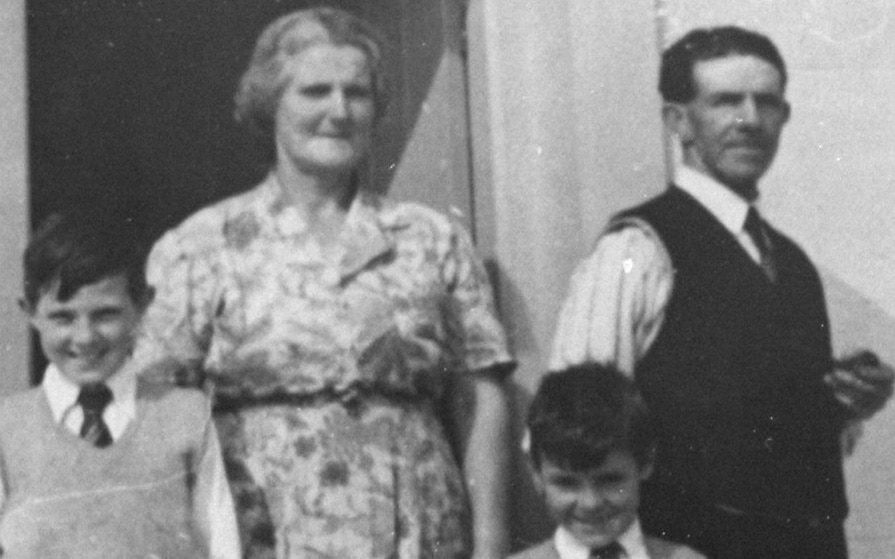
After finishing primary school, Michael travelled by bicycle every day for two years to attend the technical college in Clonakilty. “By the time you’d reach the pier at Ring, the rain would be down inside your shoes,” he remembers. Every evening he’d return home to warm clothes placed in front of the fire by his mother.
He mentions how he had the offer of a scholarship at Hamilton High School in Bandon but the family couldn’t afford the 12 shillings and six pence for the bus fare.
As a young boy Michael found part-time work with local farmers, thinning beet by hand. ‘it was very hard work,” he recalls. “We’d tie hessian bags around our legs so we wouldn’t wear out the knees of our trousers and the going pay at the time was half a crown a drill.”
Farms were small back then. “Most farmers had five or six cows and the milk was taken to the co-operative by horse and cart.”
Fish was sold in the village by the Hurley brothers, known locally as the Raghnall brothers. “They’d bring fresh mackerel and pollock to the shop in the summer and stockfish, usually dried hake, in the winter. Michael remembers his mother soaking the fish in water overnight to remove the salt and cooking it with onions and white sauce the following day. ‘You’d be licking your fingers after that meal,” he says smiling.
“We’d go fishing ourselves too,” he adds. He recalls how after salting the fish they had caught, his mother would place the lot into a big tub, before covering it up with a sheet of asbestos in the yard outside. “I can still hear her warning me not to sit on top of the sheet, but of course I did, breaking the asbestos, which fell into the fish” shares Michael. “The fish was eaten nonetheless!”
He says his mother would break an egg into milk for them every day after school and cook rice with milk until it was almost congealed. “I had to put a clothes peg on my nose to eat that meal and I’ve never been able to drink milk since,” he shares.
She would bake cakes on the bastible over the fire and in summertime, when the weather was fine, Michael and his brother would be sent out into the fields to collect dry cow dung to burn instead of turf. “Sometimes the dung would be mixed with whitewash, as it created a barrier to stop smoke stains coming through a wall,” shares Michael.
As the children got older, they were allowed to help out at local threshings, always a major event in the calendar for everyone in the community. Michael recalls the great feasting and night of singing and dancing that took place afterwards.
While he was too young to remember his paternal grandmother, who died in the early 1940s, she was well known and respected in the locality for her voluntary work during the 1918-1919 Spanish Flu pandemic. “She travelled around the parish helping to lay out corpses in houses,” shares Michael. “When she died, each of those families she had helped brought a bottle of whiskey to her wake. Any whiskey left over after the three-day funeral was sold in one of the local pubs with the funds passed on to my mother.”
Just across the road from Michael’s home, where he still lives today, was the village post office – it closed in 2001 and, in recent years was bought and renovated by Michael’s son Timmie and his partner Siobhán O’Mahony – where for many years parcels would regularly arrive from America. “My aunt Mary lived in Boston and would collect clothes from family there to send home in a parcel every year at Christmas,” says Michael. “There was always a lovely smell from those parcels, maybe of disinfectant!” he adds laughing.
Michael’s mother told him that during the war years her sister-in-law would sew teabags into the arms of the overcoat in the clothes parcel for fear they would be stolen by customs officials before reaching their intended destination.
The first phone in the village was installed at the post office in the 1950s. Up until then all communication with America would have been by telegraph. Michael recalls seeing his mother and her friend crying on the street outside the post office, overcome with emotion, the very first time a local woman spoke to her daughters in America over the telephone.
In 1961, Michael secured a trainee technician position with the Posts and Telegraphs (P&T) service and the still regular arrival of the clothes parcel from America was suddenly very much appreciated when he acquired a heavy fur-lined pilot’s leather jacket, keeping him from freezing during an exceptionally cold winter in the P&T van. “The van had holes in the floor by the pedals and no heater,” he explains.
Ten years later, June 20, 1971, marked one of the most important dates in Michael’s life story, as it was the day he met his future wife, Marian. She had come over to the parish with her family to celebrate the centenary of the church in Barryroe but was eager to attend a dance in Ballinascarthy afterwards. Fortunately Michael loved to dance too and he and his friends happened to be heading the way. “She got a lift with us and I asked her for a dance towards the end of the night,” shares Michael. “That’s how it all started, we just clicked!” Marian was 17 and Michael was 27. “She celebrated her 21st birthday in Clonakilty as Mrs O’Brien,” he says with a smile.
Michael retired from An Post in 1999, enjoying the extra time this allowed to dedicate to his passions of music and history, even working part-time for a while as a tour guide at the Michael Collins Centre just outside Clonakilty.
While today the passage of age means that his fingers are stiffer and the stage has been replaced with his sitting room, the music hasn’t stopped for Michael… This bard will always be singing.