

“It is a privilege to age….” Phrases like these may make you want to scream. It is not easy being positive about ageing in the face of all that modern society hurls at us over-50s when everything about ageing for women is negative: We are not fertile, not deemed attractive and the physical changes of ageing, such as wrinkles, are deemed ugly, to be erased with serums, injections, or the knife. But the same criticism is not wielded at men; if they have grey hair they are a ‘Silver Fox’ – their wrinkles looked on as distinguished not ugly features.
What we should be asking is Why? Why do women, especially in West Cork, live to such an old age? What is our purpose?
We seem to have an evolutionary mystery here: Why do we live so long beyond the age when we can reproduce? Classic Darwinian theory would predict otherwise, as natural selection favours mutations that increase reproduction and tends to put a cap on survival after reproduction ceases. In fact, almost all female mammals from elephants to squirrels, badgers and meerkats, live only for relatively short periods of time after reproduction ceases.
For human females, a third of our lives will be lived after menopause and only a handful of mammals do this; orcas, beluga, narwhal and short-fined pilot whales and, according to a recent study, chimpanzees from one population in western Uganda.
The evolutionary purpose of women living 20 or 30 years post reproductive age is that we bring intrinsic value to our society, and I am not talking about being a babysitter on tap for grand kids. I mean sharing our skills, nurturing and teaching others. All of our gleaned wisdoms and skills have value: be it music, art or poetry; it could be crochet or baking, organising and decluttering. Me? I started to write for West Cork People in 2023. I like sharing my knowledge and hope it helps women. As we age, we learn patience, tolerance, acceptance and therefore become better listeners, better friends and partners.
I say embrace being part of the matriarchy and, dare I say it, embrace your inner crone!
I went to visit my Auntie Breda, age 98, today and wanted to share her insight. She was born, raised, married, had seven children and lived all her life in the small village of Whitegate in East Cork. She currently is living in Youghal community nursing home. Physically frail but still mentally sharp as a tack, we talked about what it meant to age, to get old. We talked about dying and we decided we are all dying, because in the end, we all will die – but that is not the point of life.
She felt the important thing is that we enjoy life and I am happy to share my East Cork matriarch’s advice here, salty language and all: just don’t give a f#ck what others say or think about you; stop trying to change; just be you.
Women’s physical health:
the facts
• One in two women over the age of 50 will suffer an osteoporotic fracture.
• One in three women, age 75 will die of a heart attack or stroke.
• One in two women over 60 years have high blood pressure and most are unaware. High blood pressure is the lead cause of heart attack and stroke in women if left untreated. The harsh reality with high blood pressure is that you get no symptoms; you feel absolutely fine until you have that stroke or heart attack.
• Women’s cholesterol changes through menopause transition, with total, as well as the bad LDL cholesterol, going up. High LDL is thought to be the strongest predictor of heart disease in women.
• A high BMI, over 30, increases a woman’s risk of heart attack threefold.
Menopause transition results in weight gain, on average 7kg according to studies, but in reality it is more. That weight sits around the belly, known as central obesity and is incredibly difficult to shift. The combination of central obesity and lipid changes is called metabolic syndrome and is associated with higher risk of developing diabetes.
Women over 60 increasingly experience urinary symptoms of frequency, passing urine many times in the day, nocturia; getting up at night to pee, discomfort when you wee like a cystitis feeling and recurrent urinary tract infections (UTIs) are common in the over-70s. Incontinence is sometimes thought to be the inevitable companion of ageing and we will all end up in pads by the age of 80. Not true: UTIs and incontinence in our old age are preventable!
While the medical conditions mentioned above are related to falling oestrogen levels through menopause, they are not inevitable. So what can we do to stay healthy into our 80s? Well, prevention is better than cure!
Cardiovascular disease
(CVD) prevention
Hypertension or high blood pressure, diabetes and heart disease are prevalent in women over 60. Diabetes, heart disease and stroke, however, are all preventable.
Regular aerobic exercise, a healthy low fat, Mediterranean diet, not smoking, moderate drinking, weight loss, keeping BMI under 30 will all result in a massive reduction in your risk of having a heart attack or stroke or becoming diabetic.
See your GP once a year for blood pressure, cholesterol and HbA1C. The HbA1C test picks up pre-diabetes. If diabetes is caught at this stage and you make changes to diet, increase exercise even if you don’t loose weight, you will stop yourself becoming diabetic. Once diabetes is diagnosed you have a one in three risk of heart attack or stroke in the next 10 years so you want to catch that bugger early.
If you are found to have even slightly raised blood pressure, you take a once a day tablet. If your pressure is kept low, the high blood pressure effects on the heart, kidney and brain simply does not happen and you prevent your heart attack, heart failure, atrial fibrillation, stroke and kidney failure.
If cholesterol and LDL are raised, a once a day statin tablet has been shown in studies to result in a 50 per cent reduction in your risk of heart attack or stroke over the next 10 years. Even if your cholesterol is not raised, this benefit is seen.
The female heart
Most studies looking at heart disease or trials developing cardiac drugs have been done using male participants. Female coronary heart disease (CHD) is different to male; we tend to have issues with our small coronary arteries; men tend to block off their big arteries. Symptoms can be completely different between the sexes.
Women tend not to get classic chest pain when exercising that men present with; there can be pervasive fatigue; you might feel breathless or lightheaded when you exercise or just feel you don’t have the energy to get out for a walk. Symptoms can be triggered by worry or stress rather than exercise, so can be put down to psychological chest pains rather than cardiac symptoms resulting in delayed diagnosis.
Don’t ignore symptoms, see your GP: if you are diagnosed with CHD before you have that heart attack you prevent damage to a section of heart muscle. This part will not move properly after a heart attack resulting in a weak heart pump, a condition called heart failure. Yes, once diagnosed with CHD, you need to take a few tablets every day but surely that is better than being dead or very breathless and unable to exercise or walk.
Osteoporosis and falls prevention: calcium and vitamin D, exercise and weight training
We need a minimum 1000 units Vit D per day and this is impossible to get in our food plus we live in the wrong country; 80 per cent of people in Ireland are vitamin D deficient because of lack of sunshine.
We need 1200mg calcium per day. Use this calculator (www.osteoporosis.foundation/educational-hub/topic/calcium-calculator) to work out if you are eating enough and if not your GP can prescribe a combination calcium plus Vitamin D tablet.
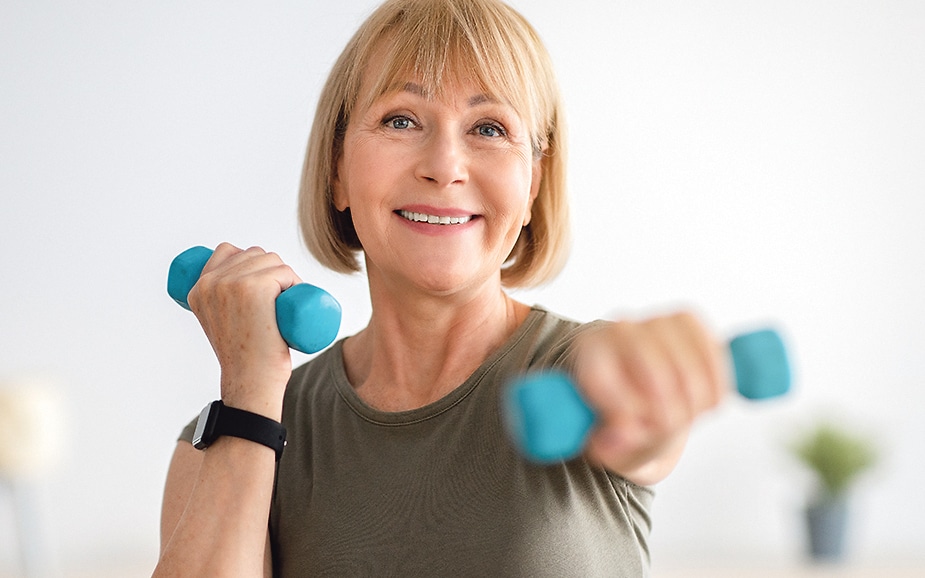
Walking helps muscle and bone strength and West Cork women are big walkers. But weight training is also really important. I am not talking about massive dumbbells and hours in the gym; most gyms throughout West Cork are running women-only weight training sessions. A session involves using very low weights in a repetitive way, 10 to 20 movements in each set, to build up different muscle groups. This results in better core strength and balance, prevents falls and will increase your bone density.
Studies have shown that you get benefits from what they call exercise snacking; just doing a 10 to 15 minute session several times per week. Once you know what exercises to do, get yourself a set of weights and you can do them at home.
Oestrogen therapy for the over 70s
Vaginal oestrogen is safe and, in my opinion, essential for all women over 60. Systemic HRT, not so much.
Systemic HRT means using oestrogen as a tablet or through the skin as patch, gel or spray, which is absorbed into your bloodstream and acts all around the body.
Evidence from recent studies and Cochrane analysis suggests that systemic HRT started under the age of 60 or within 10 years of the last menstrual period is associated with a reduction in atherosclerosis progression, coronary heart disease, CHD, and death from all cardiovascular causes as well as all cause mortality. More recent evidence points to greater CVD benefits by starting within six years of last period.
Four to five years systemic HRT use is associated with almost halving of risk of osteoporotic hip fracture by the age of 65.
However, studies have repeatedly failed to show any benefit for CVD or osteoporosis prevention when systemic HRT is started for the first time in women over the age of 60. There is also some evidence that doing so might lead to slightly increased risks of heart attack or stroke. Studies showing that, however, did include women aged 69 to 75, who inherently have a higher risk of CVD.
In short, as a menopause doctor, do I ever start systemic HRT for the first time in a woman over 70? No, because of the lack of evidence for benefit.
However, if a 70-year-old patient already using systemic HRT for many years wants to continue, that is a different situation. The issue here is that prolonged HRT use for greater than five to 10 years, is linked with slightly increased risk of breast cancer.
Genitourinary Syndrome of Menopause (GSM)
GSM is the term used to describe the effects that oestrogen deficiency has on three areas: genital skin, the vagina and the urinary tract.
Local oestrogen therapy is not just about sexy time; many women assume because they are not sexually active, or they are, but do not experience discomfort, that there is no need to use vaginal oestrogen. Not true!
The urinary symptoms so common in women over 70 are caused by oestrogen deficiency. Using vaginal oestrogen will usually completely cure the symptoms.
Local oestrogen therapy can be a cream or pessary. Cream can be applied to skin of external genital area and also inserted inside the vagina with an applicator. Cream is preferable if there is any soreness burning, itching of skin of genital area.
Think of it like filling an empty tank; if you are 70, your bits have not had any oestrogen for 20-plus years; you will need to use it daily for four weeks, then two to three times per week.
Skin symptoms usually resolve quickly in a week or two. For urinary symptoms of dashing to the loo, leaking if you cannot get there fast enough, getting up at night to pee, leaking when you sneeze and discomfort when peeing and UTIs, it tends to take longer before you see a benefit; sometimes a few months, so stick with it.
Studies have shown that long term use of vaginal oestrogen is associated with reduced risk of incontinence and recurrent UTIs in our old age.
Is local oestrogen therapy safe? Yes, even if you have had breast cancer in the past.
Studies looking at vaginal oestrogen use in women with a history of breast cancer have not shown any increase in cancer recurrence or in mortality.
Studies of women using vaginal oestrogen long term have showed it is not significantly absorbed as their blood oestrogen levels remain very low.
You will find more information on GSM in the British Menopause Society Women’s Health information leaflet accessible on www.thebms.org.uk.
If you have symptoms suggestive of GSM, please see your GP. If needed, your GP can refer you to be seen at the gynaecology clinic in Bantry.“I
t is a privilege to age….” Phrases like these may make you want to scream. It is not easy being positive about ageing in the face of all that modern society hurls at us over-50s when everything about ageing for women is negative: We are not fertile, not deemed attractive and the physical changes of ageing, such as wrinkles, are deemed ugly, to be erased with serums, injections, or the knife. But the same criticism is not wielded at men; if they have grey hair they are a ‘Silver Fox’ – their wrinkles looked on as distinguished not ugly features.
What we should be asking is Why? Why do women, especially in West Cork, live to such an old age? What is our purpose?
We seem to have an evolutionary mystery here: Why do we live so long beyond the age when we can reproduce? Classic Darwinian theory would predict otherwise, as natural selection favours mutations that increase reproduction and tends to put a cap on survival after reproduction ceases. In fact, almost all female mammals from elephants to squirrels, badgers and meerkats, live only for relatively short periods of time after reproduction ceases.
For human females, a third of our lives will be lived after menopause and only a handful of mammals do this; orcas, beluga, narwhal and short-fined pilot whales and, according to a recent study, chimpanzees from one population in western Uganda.
The evolutionary purpose of women living 20 or 30 years post reproductive age is that we bring intrinsic value to our society, and I am not talking about being a babysitter on tap for grand kids. I mean sharing our skills, nurturing and teaching others. All of our gleaned wisdoms and skills have value: be it music, art or poetry; it could be crochet or baking, organising and decluttering. Me? I started to write for West Cork People in 2023. I like sharing my knowledge and hope it helps women. As we age, we learn patience, tolerance, acceptance and therefore become better listeners, better friends and partners.
I say embrace being part of the matriarchy and, dare I say it, embrace your inner crone!
I went to visit my Auntie Breda, age 98, today and wanted to share her insight. She was born, raised, married, had seven children and lived all her life in the small village of Whitegate in East Cork. She currently is living in Youghal community nursing home. Physically frail but still mentally sharp as a tack, we talked about what it meant to age, to get old. We talked about dying and we decided we are all dying, because in the end, we all will die – but that is not the point of life.
She felt the important thing is that we enjoy life and I am happy to share my East Cork matriarch’s advice here, salty language and all: just don’t give a f#ck what others say or think about you; stop trying to change; just be you.
Women’s physical health:
the facts
• One in two women over the age of 50 will suffer an osteoporotic fracture.
• One in three women, age 75 will die of a heart attack or stroke.
• One in two women over 60 years have high blood pressure and most are unaware. High blood pressure is the lead cause of heart attack and stroke in women if left untreated. The harsh reality with high blood pressure is that you get no symptoms; you feel absolutely fine until you have that stroke or heart attack.
• Women’s cholesterol changes through menopause transition, with total, as well as the bad LDL cholesterol, going up. High LDL is thought to be the strongest predictor of heart disease in women.
• A high BMI, over 30, increases a woman’s risk of heart attack threefold.
Menopause transition results in weight gain, on average 7kg according to studies, but in reality it is more. That weight sits around the belly, known as central obesity and is incredibly difficult to shift. The combination of central obesity and lipid changes is called metabolic syndrome and is associated with higher risk of developing diabetes.
Women over 60 increasingly experience urinary symptoms of frequency, passing urine many times in the day, nocturia; getting up at night to pee, discomfort when you wee like a cystitis feeling and recurrent urinary tract infections (UTIs) are common in the over-70s. Incontinence is sometimes thought to be the inevitable companion of ageing and we will all end up in pads by the age of 80. Not true: UTIs and incontinence in our old age are preventable!
While the medical conditions mentioned above are related to falling oestrogen levels through menopause, they are not inevitable. So what can we do to stay healthy into our 80s? Well, prevention is better than cure!
Cardiovascular disease
(CVD) prevention
Hypertension or high blood pressure, diabetes and heart disease are prevalent in women over 60. Diabetes, heart disease and stroke, however, are all preventable.
Regular aerobic exercise, a healthy low fat, Mediterranean diet, not smoking, moderate drinking, weight loss, keeping BMI under 30 will all result in a massive reduction in your risk of having a heart attack or stroke or becoming diabetic.
See your GP once a year for blood pressure, cholesterol and HbA1C. The HbA1C test picks up pre-diabetes. If diabetes is caught at this stage and you make changes to diet, increase exercise even if you don’t loose weight, you will stop yourself becoming diabetic. Once diabetes is diagnosed you have a one in three risk of heart attack or stroke in the next 10 years so you want to catch that bugger early.
If you are found to have even slightly raised blood pressure, you take a once a day tablet. If your pressure is kept low, the high blood pressure effects on the heart, kidney and brain simply does not happen and you prevent your heart attack, heart failure, atrial fibrillation, stroke and kidney failure.
If cholesterol and LDL are raised, a once a day statin tablet has been shown in studies to result in a 50 per cent reduction in your risk of heart attack or stroke over the next 10 years. Even if your cholesterol is not raised, this benefit is seen.
The female heart
Most studies looking at heart disease or trials developing cardiac drugs have been done using male participants. Female coronary heart disease (CHD) is different to male; we tend to have issues with our small coronary arteries; men tend to block off their big arteries. Symptoms can be completely different between the sexes.
Women tend not to get classic chest pain when exercising that men present with; there can be pervasive fatigue; you might feel breathless or lightheaded when you exercise or just feel you don’t have the energy to get out for a walk. Symptoms can be triggered by worry or stress rather than exercise, so can be put down to psychological chest pains rather than cardiac symptoms resulting in delayed diagnosis.
Don’t ignore symptoms, see your GP: if you are diagnosed with CHD before you have that heart attack you prevent damage to a section of heart muscle. This part will not move properly after a heart attack resulting in a weak heart pump, a condition called heart failure. Yes, once diagnosed with CHD, you need to take a few tablets every day but surely that is better than being dead or very breathless and unable to exercise or walk.
Osteoporosis and falls prevention: calcium and vitamin D, exercise and weight training
We need a minimum 1000 units Vit D per day and this is impossible to get in our food plus we live in the wrong country; 80 per cent of people in Ireland are vitamin D deficient because of lack of sunshine.
We need 1200mg calcium per day. Use this calculator (www.osteoporosis.foundation/educational-hub/topic/calcium-calculator) to work out if you are eating enough and if not your GP can prescribe a combination calcium plus Vitamin D tablet.
Walking helps muscle and bone strength and West Cork women are big walkers. But weight training is also really important. I am not talking about massive dumbbells and hours in the gym; most gyms throughout West Cork are running women-only weight training sessions. A session involves using very low weights in a repetitive way, 10 to 20 movements in each set, to build up different muscle groups. This results in better core strength and balance, prevents falls and will increase your bone density.
Studies have shown that you get benefits from what they call exercise snacking; just doing a 10 to 15 minute session several times per week. Once you know what exercises to do, get yourself a set of weights and you can do them at home.
Oestrogen therapy for the over 70s
Vaginal oestrogen is safe and, in my opinion, essential for all women over 60. Systemic HRT, not so much.
Systemic HRT means using oestrogen as a tablet or through the skin as patch, gel or spray, which is absorbed into your bloodstream and acts all around the body.
Evidence from recent studies and Cochrane analysis suggests that systemic HRT started under the age of 60 or within 10 years of the last menstrual period is associated with a reduction in atherosclerosis progression, coronary heart disease, CHD, and death from all cardiovascular causes as well as all cause mortality. More recent evidence points to greater CVD benefits by starting within six years of last period.
Four to five years systemic HRT use is associated with almost halving of risk of osteoporotic hip fracture by the age of 65.
However, studies have repeatedly failed to show any benefit for CVD or osteoporosis prevention when systemic HRT is started for the first time in women over the age of 60. There is also some evidence that doing so might lead to slightly increased risks of heart attack or stroke. Studies showing that, however, did include women aged 69 to 75, who inherently have a higher risk of CVD.
In short, as a menopause doctor, do I ever start systemic HRT for the first time in a woman over 70? No, because of the lack of evidence for benefit.
However, if a 70-year-old patient already using systemic HRT for many years wants to continue, that is a different situation. The issue here is that prolonged HRT use for greater than five to 10 years, is linked with slightly increased risk of breast cancer.
Genitourinary Syndrome of Menopause (GSM)
GSM is the term used to describe the effects that oestrogen deficiency has on three areas: genital skin, the vagina and the urinary tract.
Local oestrogen therapy is not just about sexy time; many women assume because they are not sexually active, or they are, but do not experience discomfort, that there is no need to use vaginal oestrogen. Not true!
The urinary symptoms so common in women over 70 are caused by oestrogen deficiency. Using vaginal oestrogen will usually completely cure the symptoms.
Local oestrogen therapy can be a cream or pessary. Cream can be applied to skin of external genital area and also inserted inside the vagina with an applicator. Cream is preferable if there is any soreness burning, itching of skin of genital area.
Think of it like filling an empty tank; if you are 70, your bits have not had any oestrogen for 20-plus years; you will need to use it daily for four weeks, then two to three times per week.
Skin symptoms usually resolve quickly in a week or two. For urinary symptoms of dashing to the loo, leaking if you cannot get there fast enough, getting up at night to pee, leaking when you sneeze and discomfort when peeing and UTIs, it tends to take longer before you see a benefit; sometimes a few months, so stick with it.
Studies have shown that long term use of vaginal oestrogen is associated with reduced risk of incontinence and recurrent UTIs in our old age.
Is local oestrogen therapy safe? Yes, even if you have had breast cancer in the past.
Studies looking at vaginal oestrogen use in women with a history of breast cancer have not shown any increase in cancer recurrence or in mortality.
Studies of women using vaginal oestrogen long term have showed it is not significantly absorbed as their blood oestrogen levels remain very low.
You will find more information on GSM in the British Menopause Society Women’s Health information leaflet accessible on www.thebms.org.uk.
If you have symptoms suggestive of GSM, please see your GP. If needed, your GP can refer you to be seen at the gynaecology clinic in Bantry.