

This month Branch Chair Jez Simms looks forward to the arrival of birds here after their long journeys from west and southern Africa.
We are fast approaching the time of year when our bird population is enhanced by the arrival of our spring migrants winging their way from Africa, whilst at the same time our myriad of winter visitors, ducks, geese, swans, waders, thrushes, and divers are all beginning to head north back to the Arctic, Scandinavia, Greenland, Iceland, and Canada.
Why do birds migrate? The main reason is to maximise survival and reproductive success by moving between seasonal habitats, allowing them to access abundant food and better nesting sites. The mechanisms that trigger migration vary and are not completely understood: changes in day length, lower temperatures, changes in food abundance and genetic makeup are all factors. For many years people who keep cage birds have noticed that migratory species go through a period of restlessness each spring and autumn, repeatedly fluttering towards one side of their cage.
Migrating birds can cover thousands of miles in their annual travels, often travelling the same course year after year. First year birds, i.e. newly fledged, often make their first migration on their own; somehow they find their way to their winter home and return the following spring to where they were born. The secrets of their amazing navigational skills aren’t fully understood, partly because birds combine several different types of senses when they navigate; compass information from the sun and stars and by sensing the earth’s magnetic field, they also get information from the position of the setting sun and from landmarks seen during the day, but the bottom line is that we don’t know all the secrets and birds continue to amaze us.
A couple of recent discoveries were learned from the new technology of satellite trackers. One was placed on a Eurasian Cuckoo in Kenya; it was expected to be tracked back to Eastern Europe but it dumbfounded the scientists by flying to China. Another recent discovery was from a Red-Necked Phalarope, which was tagged in Scotland, but instead of heading down to the Arabian Ocean as expected, it took off for 10,000 kilometres to the Pacific Ocean so, as you can see, we still have a lot to learn.
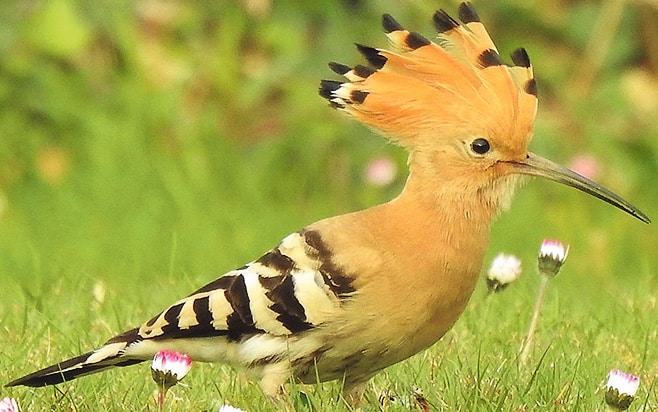
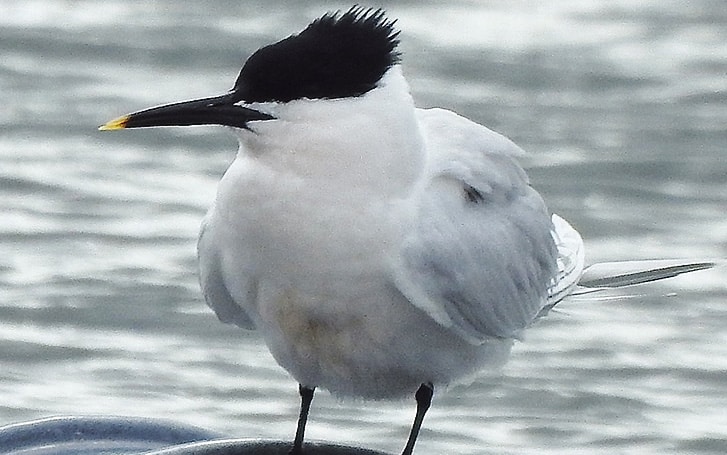
Our spring migrants will soon arrive from West and Southern Africa: The best known are our Barn Swallows and Cuckoos, but the first to arrive are usually our Sand Martins, Northern Wheatears, and Sandwich Terns. Here’s hoping we get a spring like last year when the weather conditions combined to bring record numbers of Hoopoes and other rarities, such as the Purple Heron. When the right conditions coincide, which is sadly not that often, we can get what is known as a ‘fall’ of migrants, as the birds literally appear to tumble from the skies, which is every birder’s dream.
To get a wonderful insight into bird migration, I recommend reading ‘Adventure Lit their Star’ by Kenneth Allsop. Here is the first paragraph:
‘On a late night in April in the year 1944 the north-bound migration streams, which had been slowed by a three-day storm off Eastern Spain, swelled to a concentrated intensity. During the temporary check the flow of birds toward Europe coagulated and became an armada and for all the hours of the night there was a rush of wings and a clamour of voices in the great vault above the layer of alto-stratus cloud ten thousand feet over the English Channel. Through the thin light of the moon’s first quarter the birds moved in a fluctuating river which converged upon a knob of the chalk jutting out from the English coast like the toecap of a heavy boot.’
They are on their way folks!
BirdWatch Ireland West Cork Branch News
Our next events are:
Sunday, March 22, 2026. Timoleague and Courtmacsherry Estuaries. Join us on the lookout for the waders, herons, divers, and ravens that call the estuaries home.
Wednesday, March 25, 2026. Annual General Meeting followed by a fascinating talk by John Horton (bird warden on Cape Clear Island), entitled: ‘Establishing South Africa’s First Bird Observatory’. Our AGM is a great chance to meet the team and get involved in the Branch.
Visit our website www.birdwatchirelandwestcork.ie for more information about these events. To receive news and reminders about our events join our mailing list by sending an email to mailinglist@birdwatchirelandwestcork.ie.
Facebook @BirdWatchIrelandWestCork
Instagram @ birdwatch_ireland_west_cork