


After clocking up some 20,000 flying hours over the course of his career, today retired, well-respected Aer Lingus pilot Charlie Coughlan, 83, is content to simply be looking skyward. Charlie survived breast cancer – a very rare condition in males – just over a decade post-retirement, and has since gained a newfound appreciation for the simple pleasures of life: Cooking for his longtime partner Sylvia at their home in Rosscarbery, producing his local historical journal, attending a weekly French conversation class in Skibbereen, getting stuck in to mechanical projects like the rebuilding of an engine and motorbike with his men’s shed or building his own computer from scratch. In reflecting on 40 years in the air, Charlie shares a few high-flying tales with Mary O’Brien.
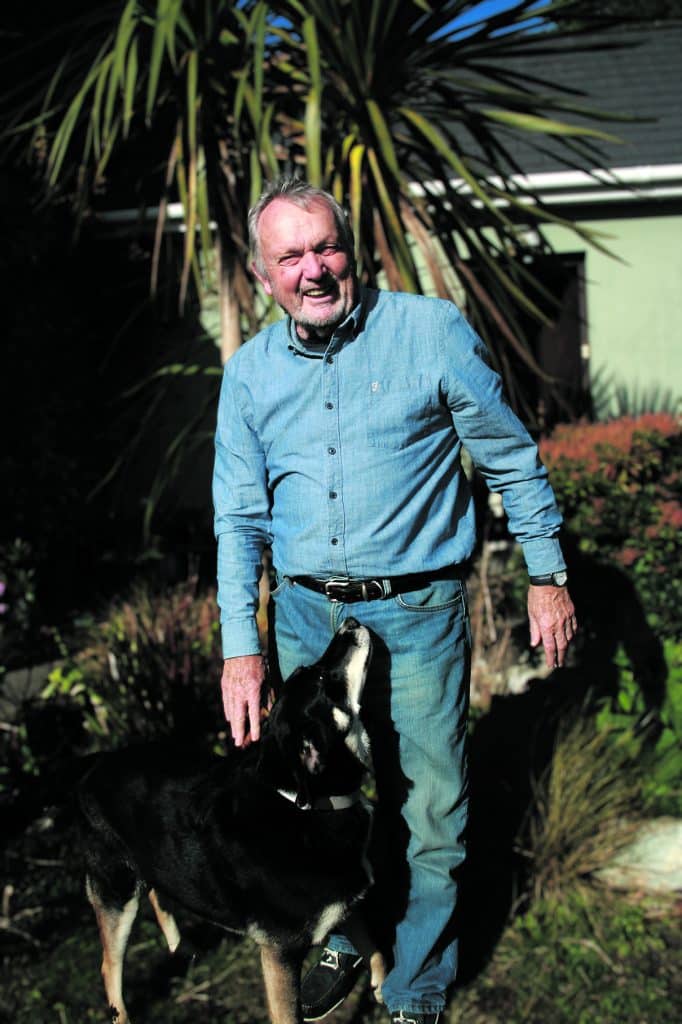
Retired pilot Charlie Coughlan pictured at this home in Rosscarbery
While his academic performance at school was poor, Charlie Coughlan, or Captain Charlie, as he later became known by, demonstrated a very high mechanical aptitude since he was knee-high. He was a late-starter as a pilot, only gaining entrance to the Aer Lingus pilot programme, age 20, after his father sent in the application form on his behalf.
“I used to maintain his car, so he knew I had it in me,” shares Charlie. Following a job at John Atkins and Sons in Cork City, Charlie joined Aer Lingus in 1962 as a temporary traffic clerk at Cork Airport, working for the weekly sum of £6 10s or €8.23.
After being accepted onto the pilot programme – he got 98 per cent in the mechanical aptitude exam – Charlie spent 11 months in the Air Corp at Gormanston, Co Meath, before completing his 200 flying hours in the Chipmunk, a single engine tandem-seat primary trainer aircraft, in order to gain his commercial licence.
The first commercial aircraft Charlie flew for Aer Lingus was the twin-engined Fokker F27 Friendship aircraft, one of the most successful European airliners of its era. He quickly graduated to the Viscount, the first turboprop airliner to operate a passenger service, before moving on to the Carvair, an unusual aircraft that flew both passengers and cars, followed by the Boeing 707 and then the Boeing 747, nicknamed ‘Queen of the Skies’.
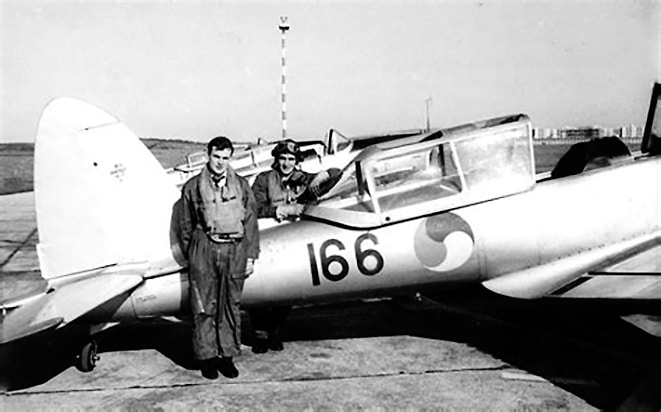
After becoming a captain at the age of 37, Charlie graduated to the BAC One-Eleven, Boeing 737 and finally the DC-8, known for its spacious cabin and speed.
Respected for his confidence and calm, particularly in tricky situations, there wasn’t much that phased this pilot during his 40-year tenure.
He describes a hijacking incident at Shannon Airport during a flight scheduled to carry lamb carcasses to Libya.
As the crew prepared the aircraft, a man who had slipped past cattle drovers on the ramp climbed aboard, pressed a gun into the systems pilot’s stomach, and ordered him to close the door.
“Thinking fast, the systems pilot told the hijacker he needed to retrieve the key from the cockpit,” he shares. Charlie immediately radioed for help, calmly announcing, ‘There’s someone out here with a gun’. After confirming the message had been received, Charlie suggested the crew escape through the lower 41 hatch – accessible by pulling forward the jump seat behind the captain’s chair – which led down into the electronics bay and out onto the ramp. Once the crew evacuated, the hijacker was left alone with the running inertial navigation systems, each worth half a million and at risk of overheating if the aircraft lost power.
While Charlie and the others pushed to be allowed back aboard to pull the circuit breakers, the immigration officer in charge refused, insisting on waiting for the army.
“Eventually the officer decided to take matters into his own hands, marched out and shouted, ‘Hey you, get off that f**king airplane!’” laughs Charlie.
“The hijacker surrendered immediately, waving his gun and yelling ‘Freedom for black Africa’.
“It later emerged he was a barman from Six Mile Bridge, who had been on the batter for a few weeks, carrying only a cap gun bought on his way home,” continues Charlie. “He spent the next six months in a sanatorium sobering up. I’m not sure he would have been given that second chance anywhere else in the world!”
On another flight from Shannon to the US, Charlie had to deal with a bomb scare. Descending the plane to 10,000 feet to match the lower pressure of the ground before landing – a step that’s necessary to equalise the pressure in the cabin and allow the doors to be opened safely – Charlie flew back to Shannon as fast as possible. “There were alarms going off because of the speed,” he recalls. “Ironically our biggest dilemma was, from a religious point of view, whether or not we should inform passengers about the bomb scare,” he adds.
The crew eventually decided not to make an announcement because of the panic it might cause and, after the aircraft reached Shannon safely and was isolated, the bomb turned out to be a false alarm.
In 1966, Charlie was charged with flying the Carvair, a since-retired air ferry. “it was very unreliable,” says Charlie, recalling how on two nights in a row in the same region, an engine failed on two separate aircraft.
On another occasion, when Charlie was flying from London to Dublin, the hydraulics of the aircraft overheated and the cockpit filled with smoke. “It was a very frightening experience,” he recalls. While the hydraulics were too hot to be handled, Charlie did manage to turn them off using a pen. “It was melting from the heat,” he says. He turned the aircraft around and landed it safely in London.
Another time, when he was a co-pilot on a Boeing 707, the aircraft flew into a flock of starlings just after take-off from Dublin. “There were over 60 bird strikes on the plane and the birds flew into two of the four engines,” he says. Luckily they were able to land safely back at Dublin Airport within minutes.
Charlie remembers how the ‘redcap’ – the guy on the ground who supervises departures – told the captain, ‘We’ll have another aircraft ready for you in an hour.’ “The captain just shook his head and said, ‘I think we’ve had enough for one day.’”
In 1962, Flying Tiger Flight 923, an aircraft transporting military personnel, ditched in the North Atlantic after a catastrophic engine failure, resulting in 28 fatalities and 48 survivors.
Charlie was standing on the ramp at Cork airport when the survivors were landed by Royal Air Force helicopters.
He remains in awe of the extraordinary achievement by the Flying Tiger’s pilot, Captain Murray, to make a controlled emergency landing in difficult conditions.
“It happened at night, way out in the Atlantic,” says Charlie, “yet so many survived.”
One of the passengers, Fred Caruso, was so delighted to pull through that he changed his name to O’Caruso, became an Irish citizen, and bought a house in Glengarriff!
In the eighties, Charlie was one of the pilots charged to fly 8,000 Ethiopian Jews with Trans European Airways from Sudan via Brussels to Israel under ‘Operation Moses’ – the covert evacuation of Ethiopian Jews (known as the ‘Beta Israel’ community from Sudan) during a civil war that caused a famine in 1984.
A co-operative effort between Israel, the US and Sudan, although thousands made it successfully to Israel, many children died in the camps or during the flight to Israel.
“There was a doctor at the door of the aircraft checking everyone, but sadly many of the parents – afraid of the unknown – hid their children under their clothes, and many babies died onboard,” he shares.
Some of Charlie’s happiest memories are of his time spent flying for a Nigerian airline. He captained the BAC One-Eleven for almost two years, flying for Okada Air, the privately-owned airline of Sir Chief Gabriel Osawaru Igbinedion. “I grew very fond of Nigeria and its people,” he says.
He recalls how pedestrians used to walk across the runway all the time in Nigeria. “You got used to it,” he says, laughing. “People used to dig up the glass lights on the runway to make jewellery.”
He chuckles remembering the Nigerian co-pilot who used to go around saying Captain Charlie taught him everything. “In fact he knew nothing and was the worst co-pilot I ever had,” Charlie laughs, remembering how one time the co-pilot, who had somehow graduated to Captain, abandoned take-off after take-off (something that’s unheard of), subsequently running the plane off the end of the runway.
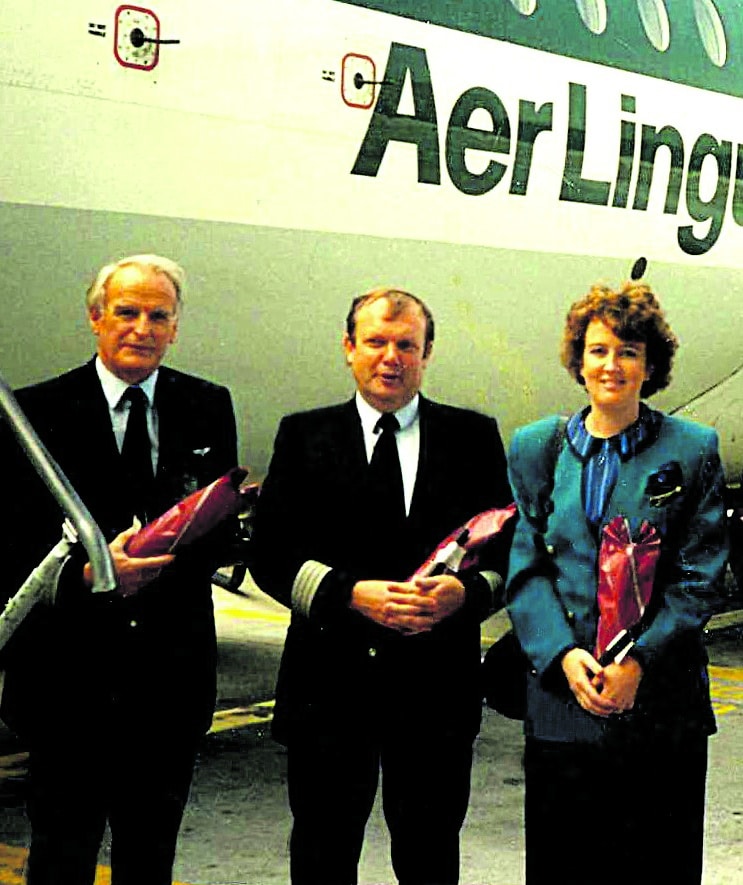
Charlie flew for Aer Lingus until 1992, leaving to work for Aer Turas, an Irish airline and freight operator based in Dublin. He retired in 2002.
While for some retirement can be challenging, after leaving a demanding job with such irregular hours, Charlie is relishing the freedom of later life, especially as he has Sylvia to share it with.
“I do miss the camaraderie,” he shares “and it’s a wonderful feeling being up there just above the cloud, especially when you pilot an aircraft to the best of its ability, but I’m very happy in retirement,” he says.
“I think I could drive a tractor all day long without getting bored!” he adds laughing.