

With much of the world experiencing rapid and extensive urbanisation over the past few decades, authorities have been confronted with various problems, not least the significant pressure that urban sprawl is putting on green spaces like community gardens and allotments. Ireland’s ongoing housing crisis has resulted in new developments increasingly encroaching on green space with Bandon Community Allotments in West Cork becoming one of the latest casualties writes Mary O’Brien, after meeting some of the plot holders fighting to save this community space.
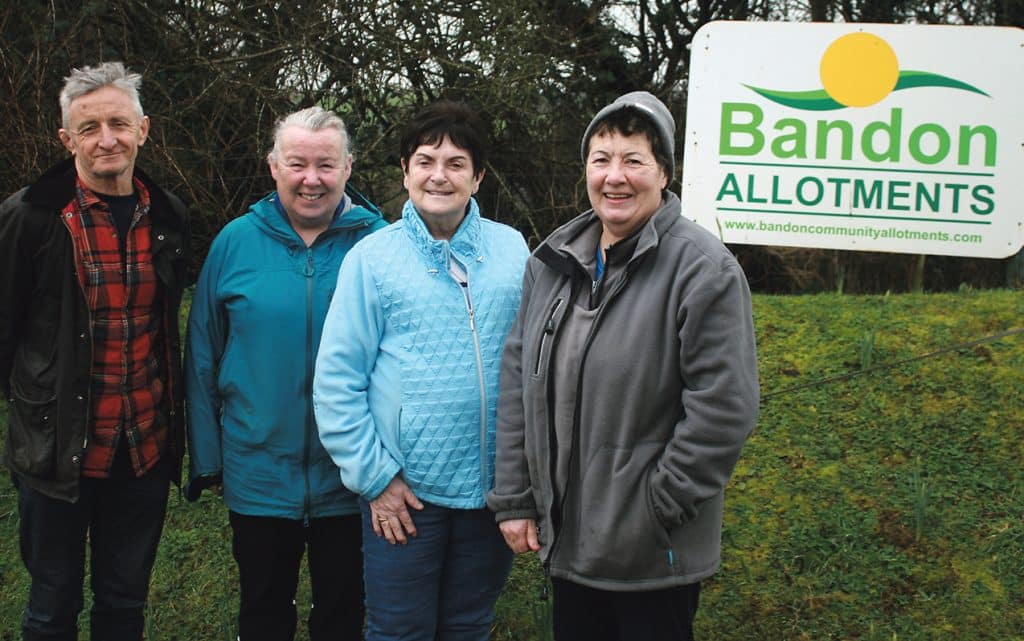
At the end of last year Cork County Council informed the Bandon Community Allotments group that their lease would not be renewed beyond 2027 due to the land being zoned for housing.
“It’s been a devastating blow to the town,” says Bandon Community Allotments Chairperson Adrienne Murphy. “Over the past 16 years we have built strong partnerships within the community and run many activities and workshops here so the impact of losing the Allotments goes way beyond the individual plot holders.”
Started in 2010 on Cork County Council land behind Coláiste na Toirbhirte off the Bandon Bypass; following the sale of the original site to the Department of Education, in 2019 Bandon Allotments relocated to an alternative site nearby provided by the Council. Today the Allotments, which has charitable status, is an established group of 37 members with a number of local community groups also benefitting from use of the space.
Cork ETB Further Education and Training Service has been delivering courses there for the past five years and West Cork Development Partnership (WCDP) has been using the Allotments to facilitate wellbeing activities for marginalised groups under the social inclusion programme (SICAP). WCDP also hosts workers at the Allotments under the Tús initiative, a community work placement scheme for the unemployed. Bandon Education and Action Group (BEAG), an initiative that has been commended for its commitment to biodiversity, recently created a small tree nursery and leaf mould system on-site, which shows the wider value of the allotments as a hub for environmental projects.
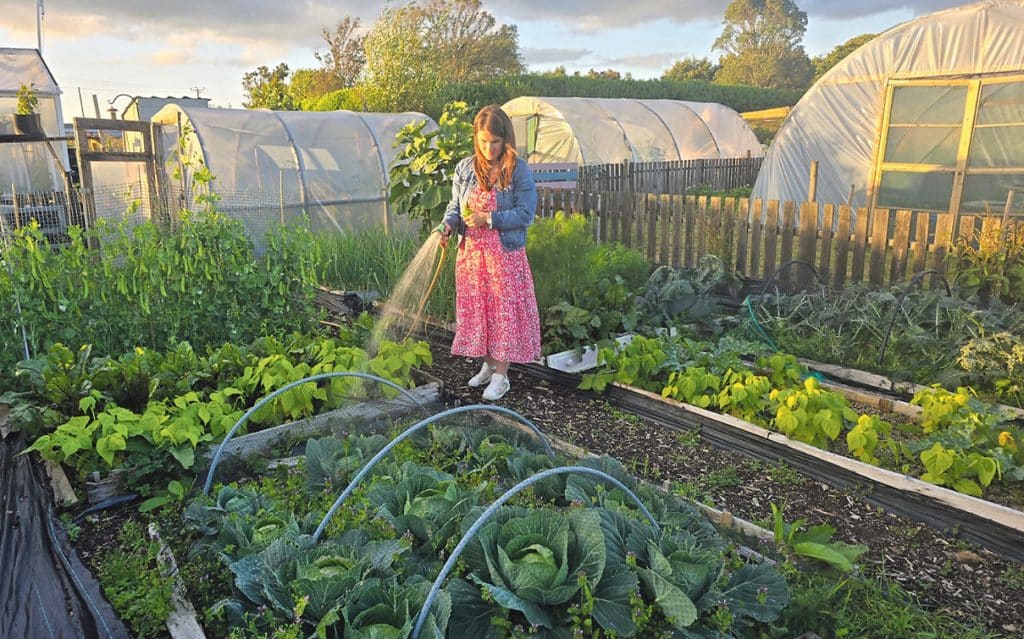
Throughout the world, green spaces like community gardens and allotments are recognised as offering numerous advantages, not only for the gardener, but also for the community, yet today Ireland has one of the lowest number of allotments and community gardens in Europe – only 2,500 compared to Denmark’s more than 60,000 allotments, a country with a similar population to Ireland.
Interestingly, back in the 1940s Ireland had far more growing spaces, with up to 40,000 allotment sites across the country. In Bandon, land in Town Park, Kilbrogan was divided into allotments for people of the surrounding area during the ‘Emergency’, with four ridges of potatoes assigned to each family. Locals remember playing on the uneven surface created by these ridges up to a few years ago. There were also allotments on the grounds of the town’s cottage hospital in the 1940s.
Today, for areas like Bandon, which have experienced significant and diverse population growth in recent years, spaces such as the allotment gardens are crucial in meeting the needs of the community.
During the period 2002-22, Bandon’s population grew by 59 per cent, a higher-than-average population growth across all age profiles. The 2022 Census also showed that 24 per cent of the total population of Bandon were born outside of Ireland (non-Irish citizenships) which is significantly above the national average of 16 per cent.
According to the West Cork Development Partnership, which runs SICAP, some new communities, especially those with limited English, struggle to integrate into the local community.
Providing funding to tackle poverty and social exclusion at a local level, SICAP has been renting one of the allotment plots to facilitate wellbeing activities on the programme, which has had a hugely positive impact on marginalised groups in the town. There are four disadvantaged SAs (small areas) in Bandon equating to approximately 14 per cent of the total Bandon population.
Research has shown that the benefits of allotments are far-reaching beyond providing fruit and vegetables. These include mental and physical health, community resilience, social connection, experiencing nature, and a culture of sharing knowledge and produce.
Community Development Worker Damien Quinn, who works as part of the Social Inclusion and Community Activation programme under the WCDP sees the Allotments as a microcosm of the wider community of Bandon.
“For many in Bandon, this space is a vital source of social connection,” he says. “Often it can be so hard to break down walls and barriers between people and the Allotments provide a fantastic space for fostering integration and developing connections between communities that might not otherwise mix.”
Damien has seen firsthand the impact the Allotments has on people from disadvantaged backgrounds. “I work with many people who struggle with drug use, social media addiction and solo parenting and I’ve seen the conversation change once individuals are exposed to the Allotments. This environment has a strong social purpose beyond the gardens.”
Dana Orosan from Romania and her family have been renting a plot at Bandon Allotments since 2020. Dana keeps chickens there and grows enough vegetables to feed her family through the summer months and to make jams and pickles for the winter. Within walking distance of their home, Bandon Allotments has become a wonderful social space for the Romanian family, helping them to integrate and make friends in the local community.
“We see our sameness rather than our differences here,” says plot holder Ann Conwell, who invested her savings into her plot after retirement. Ann suffers from depression and says being a member of the allotments has been hugely beneficial to her mental health.
Janet Pearson suffers from rheumatoid arthritis and joined the allotments after her doctor recommended gardening to improve and maintain joint mobility. Today she’s not only a plot holder, but the site manager, involved in everything from mowing grass paths to taking in fees to salvaging materials. “It’s a wonderful space that means so much to so many,” she says.
Eddie Collins grows plants for the Bandon Tidy Towns Group on his plot. As a retired person living on his own, he says “it’s been a wonderful way to make neighbours”.
The community is made up of many nationalities and people from all walks of life, which is reflected in each growing space.
Sharon Tonner says it’s a peaceful space where every plot-holder shares knowledge, skills and personal stories, as well as produce, throughout the year. “The continued existence of Bandon Community Allotments is essential in our growing town where green space is scarce and immersion in nature is a privilege.”
While in the UK the Small Holdings and Allotments Act 1908 places a legal duty on councils to provide allotments if six or more residents request them, here in Ireland supportive legislation was only introduced a few years ago under the The Planning and Development Act 2024.
Section 48 of the Planning and Development Act 2024 requires every planning authority in Ireland to prepare strategy relating to creation, improvement and preservation of sustainable places and communities. This must include objectives for the reservation of land for use and cultivation as allotments and prescribed community gardens.
Social Democrats councillor Ann Bambury has spoken up for the group, calling on Cork County Council to actively support the Bandon Community Allotments group in securing an alternative permanent site.
“The Bandon Community Allotments have delivered enormous benefits for the town, and it is vital that we do everything we can to protect their future,” she said.
She stressed that supporting the allotments would represent a relatively low-cost intervention with long-lasting positive impacts for the town.
“By supporting this project, the Council would be demonstrating a clear commitment to community wellbeing and sustainable development in Bandon.”
“We’ve been guardians of this land of 16 years,” says Adrienne. “I think the Council has an obligation to find land for us.”
“When you intensify living space with little green space available for the public to congregate, you create ghettos – the rate of isolation goes up and crime follows,” says Community Development Worker Damien Quinn. “Social profit can’t be monetised. You can’t just look at the Allotments as just a garden where 30-odd plot-holders are doing things, you have to recognise the positive impact it has on the broader community.”
Bandon Community Allotments is currently looking for land to lease in order to continue to support community members who do not have access to private gardens, maintain partnerships with local organisations, and promote biodiversity and sustainable living in Bandon town.
At the time of going to print, Cork County Council had not yet responded to the question of what is being done by the authority to help secure an alternative site for the group.