

With over 30 years experience in the area of environmentally-friendly garden and farm supplies, West Cork’s Fruit Hill Farm has long been the shop of choice for Ireland’s organic producers and gardeners. As we head into Spring, now is the ideal time to start thinking about creating a vegetable garden and building raised beds can help you overcome space or soil limitations. Fruit Hill Farm business owner Elmer Koomans gives some advice for building a raised bed, explains how to get the best results from your vegetable crop and shares a list of edible flowers that bring flavour as well as colour to the table.
What are the advantages of growing vegetables in a raised bed?
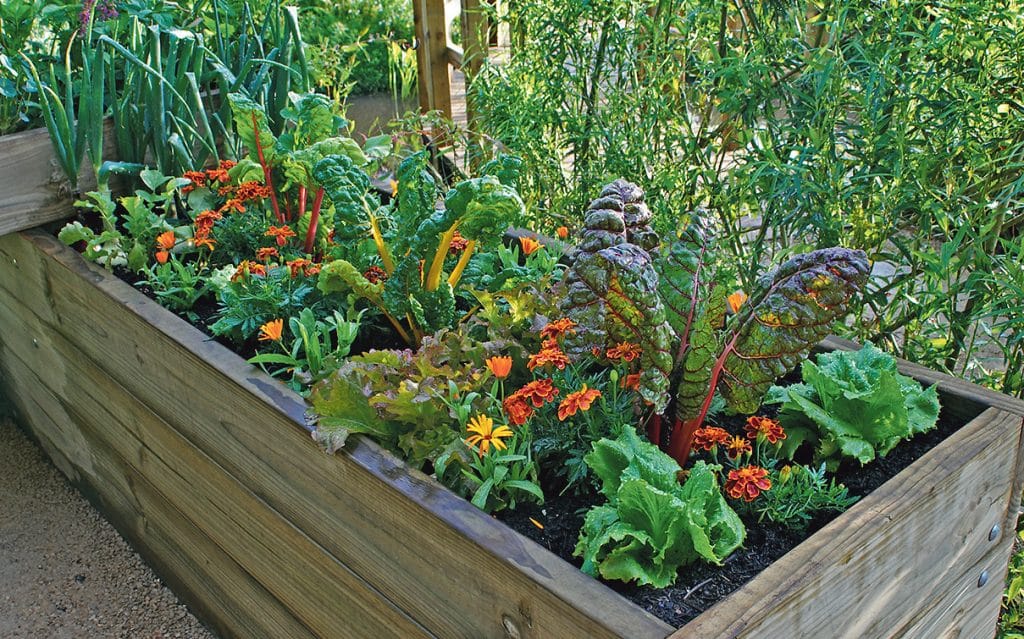
There are some clear advantages to growing vegetables in a raised bed. The soil will be drier, which makes it easier to work, with possibly less slug problems. This is particularly advantageous when working with a heavy soil.
Raised bed growing also creates a demarcation between path and bed, making it easier to keep on top of weeds. Without footfall on beds you also avoid soil compaction.
Gardening at ground level can be physically demanding so raised beds are slightly easier on the body as, depending on the height of the bed, you probably won’t have to stoop so low when weeding or harvesting.
What is the best location for a raised vegetable bed?
A raised bed is best made in a sheltered garden that faces South and preferably close to the house. It is best laid out roughly North to South, so the sun will get to both sides of the bed and, in the middle of the day, neighbouring beds won’t be shaded in case some beds have taller plants.
What kind of materials do I need to build a raised bed?
Safely treated wood is best but you’ll also find galvanised steel raised beds for sale. Thin concrete walls can be good too, with the added advantage that the slugs don’t like a fresh cement surface. Fill the bottom of the bed with coarse organic material and finish it off with a nice topsoil mixed with good compost at a depth of approx 25cm.
What is the best size and depth for my raised bed?
The bed should measure 1m to 1.20 wide with a total depth of soil at a minimum of 25cm.
The height of the beam will depend on the needs of the grower and the extra soil available.
In a tunnel you don’t want to make the beds too high as plants like tomatoes and cucumbers need to be able to grow up.
A depth of 15 to 30cm, about path level, is ideal from my perspective, but people with mobility problems may like the beds to be higher
How do I prepare my soil for planting seeds/plugs directly in and what is the best time of year to do this?
You can mix in well rotted garden compost/ farm yard manure or one of our general organic fertilisers (4-3-7 or 5-3-8) at the correct rate; say 1kg/4m2. This can be done now, if planting soon or closer to planting time. If sowing directly in the soil, make sure the soil is raked well and there are no big lumps. When transplanting, the soil needs to be even, but doesn’t have to be as fine.
What type of compost would you recommend for growing vegetables?
We recommend the Klasmann Proline Organic Composts for sowing and potting on. These are of professional quality and all the commercial organic growers in Ireland use these for raising their plants.
If you need compost to fill your raised beds we can supply bulk bags of organic-approved compost for this purpose at a very reasonable price.
What vegetables would you advise growing?
I would recommend to grow salads, scallions, radish, spinach and chard/leafbeet, early carrots and beetroot and possibly peas or french beans. A few early potatoes can be nice too, but they will take up a lot of space. If you like herbs, it can be nice to have your own parsley, chervil, coriander and so on.
Are there vegetables that work best planted together?
Planting different crops in close proximity can mutually benefit each other, improve plant health, and increase yields. The following are some examples of companion planting.
Three Sisters: This Native American planting technique involves growing corn, beans, and squash together. Corn provides support for the beans to climb, beans fix nitrogen in the soil, and squash acts as a living mulch, suppressing weeds and conserving soil moisture.
French Marigolds and numerous Vegetables: French Marigolds (Tagetes Patula) are renowned for their ability to repel nematodes and aphids. They also attract beneficial insects such as ladybugs, lacewings, hoverflies, parasitic mini-wasps and other predatory insects that will feed on aphids and other garden pests. Marigolds are often planted with tomatoes and carrots.
Borage and Strawberries: Borage is a magnet for pollinators such and bees, butterflies and hoverflies which help pollinate the strawberries. It’s also said it can he,lp improve their flavour.
Carrots and Onions: Planting carrots and onions together is beneficial because the pungent smell of onions can help deter the carrot root fly, while the scent of carrots helps repel the onion fly.
Nasturtium and Broad Bean/Brassicas: Nasturtiums serve as an effective trap crop when planted with broad beans. They attract black flies away from the beans, safeguarding the primary crop. They work similarly with brassicas luring hungry caterpillars away.
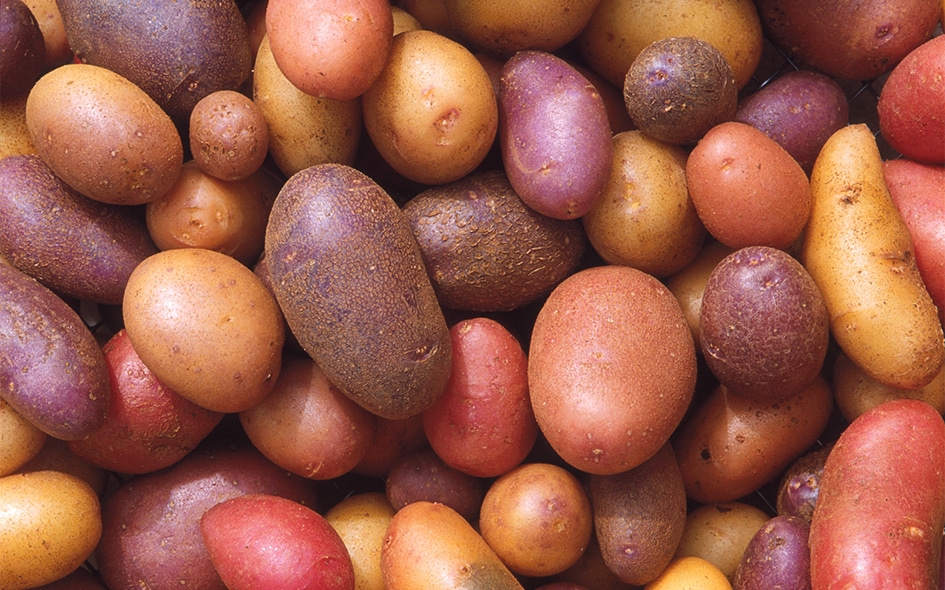
I would like to grow potatoes this year in my raised bed. What varieties would you advise on and why?
Vitabella are a good second early crop for a raised bed, as the tops don’t grow too tall and they are very blight resistant. As a first early, Sharpes or Home Guard work very well.
When is the best time to plant potatoes and can you share any advice for encouraging a good crop?
There is no need to plant outside earlier than mid March. Often the crops planted in April actually do better.
Can potatoes be grown with other vegetables?
Potato plants become very large, so they are best grown by themselves. The early crop will be harvested in June/July, so another later vegetable can be planted after.
How do I keep slugs and pests off my vegetables?
First make sure the plants are healthy and the soil is fertile enough for the particular crop. Crops can be made stronger with a regular liquid feed or foliar spray of liquid seaweed at the right dilution rate. If there are still problems with slugs you can use organically-approved slug pellets.
What are the best edible flowers to grow?
There are many edible flowers that are a treat to eat, as well as adding colour and texture to dishes. Edible flowers can be used in salads, as cake decorations or beverage garnishes. Below is a list of the different edible flower varieties we stock at Fruit Hill Farm.
• Anise Hyssop (Agastache foeniculum): Anise hyssop boasts a sweet, licorice-like flavour with hints of mint. Its delicate purple flowers and fragrant leaves make it a versatile herb for both sweet and savoury dishes. Use it to infuse syrups, teas, and cocktails, or sprinkle the blossoms over salads and desserts.
• Borage (Borago officinalis): Borage flowers have a refreshing cucumber-like taste, making them a delightful addition to salads, cold soups, and cocktails. They can also be candied or frozen into ice cubes for an elegant touch to beverages.
• Calendula Marigold (Calendula officinalis): Calendula petals have a mild, tangy flavour reminiscent of saffron. They can be used to add a golden hue to rice dishes, soups, and stews, or infused into oils and vinegars for a pop of colour and flavour.
• Chamomile (Matricaria chamomilla): Chamomile flowers have a delicate, apple-like flavour with subtle floral notes. Chamomile is commonly used to brew soothing herbal teas, known for their calming properties. The fresh flowers can also be added to salads.
• Chive Blossoms (Allium schoenoprasum): Chive blossoms feature a mild onion flavour and can be used fresh or dried to garnish salads, soups, and savoury dishes. Their delicate purple blooms add a pop of colour and a hint of oniony goodness to any dish.
• Chrysanthemum ‘Shungiku’ (Glebionis coronaria): Shungiku is a species of annual edible chrysanthemum with shoots of up to 100 cm. The 10-20 cm long shoots can be used fresh in salad or steamed as a vegetable. The buds and flowers are also edible. It can be cut repeatedly, providing high yields and is an ideal addition to baby leaf salad.
• Clary Sage (Salvia sclarea): Clary sage flowers impart a delicate, herbal flavour with hints of citrus and mint. Use them to garnish salads, desserts, and cocktails, or infuse them into syrups, vinegars, and liqueurs for a fragrant twist.
• Cornflower (Centaurea cyanus): Cornflowers offer a subtle, earthy flavour and a stunning blue hue that can enhance both sweet and savoury dishes. Add them to salads, desserts, or baked goods for a touch of elegance and natural beauty.
• Dandelion (Taraxacum officinale): Dandelion flowers have a slightly sweet and mildly bitter taste, reminiscent of honey and endive. Use them in salads, fritters, or infused into syrups and wines.
• Dill (Anethum graveolens): Dill flowers boast a delicate, feathery appearance and a subtle, aromatic flavour reminiscent of the herb’s leaves and seeds. They are perfect for garnishing seafood dishes, salads, and pickles, or for infusing into vinegars, sauces, and dips.
• Fennel Herb (Foeniculum vulgare): Fennel flowers have a delicate anise flavour that complements a variety of dishes, from salads and seafood to desserts and cocktails. Use them to garnish salads, soups, and pasta dishes, or infuse them into oils and vinegars for a hint of aromatic sweetness.
• Lavender (Lavandula angustifolia): With its distinct floral and slightly sweet flavour, lavender can be added to both sweet and savoury dishes. Use it sparingly in baking, cocktails, salads, and even savoury dishes like roasted meats.
• Nasturtium (Tropaeolum majus): These cheerful blooms come in shades of orange, yellow, and red. The flowers have a slightly sweet flavour with a peppery, spicy kick. Add to salads, sandwiches, and savoury dishes. Nasturtium flowers can also be stuffed with soft cheeses or herb spreads for a delightful appetiser. The green seeds can be chopped and used with parsley as a garnish or pickled like capers.
• Sunflower (Helianthus annuus): Sunflower buds, petals and seeds are all edible. Add the petals to a green salad for a colour contrast and a mild nutty taste. The green buds can be blanched, then tossed in garlic butter – similar in flavour to a Jerusalem artichoke. The kernels inside the seeds can be eaten raw or toasted as a snack.
• Sweet William (Dianthus barbatus): Sweet William flowers feature a subtly spicy, clove-like flavour and vibrant colours ranging from white and pink to red and purple. They make a charming addition to salads, desserts, and cocktails.
• Thyme (Thymus vulgaris): Thyme flowers possess a subtle, earthy flavour similar to the herb’s leaves but with a slightly sweeter undertone. They can be used to garnish soups, stews, and roasted meats, or infused into oils, vinegars, and honey for a fragrant twist
• Pansy (Viola tricolor): Pansy flowers have a lettuce-like flavour and make a decorative addition to a green salad or to garnish a pâté or dessert. They can be crystallised and used to decorate cakes.
I’ve heard that herb spiral is a good way to grow herbs. Can you explain what this is and how do I create one?
Herb spirals can be very pretty, but are mainly suitable for perennial herbs, annuals like Chervil, Coriander, Dill and so on are best grown like vegetables, a small patch at the time, as they usually go to seed very quickly and need to be sown a few times during the growing season. A herb spiral is best made with solid walls from cement and stone, it will make it easier to keep on top of the weeds and keep it looking good.