


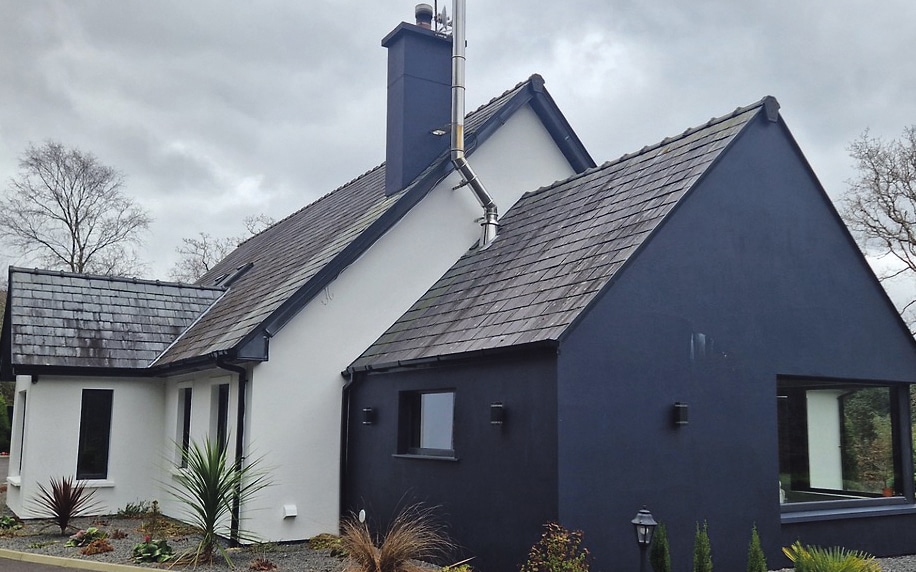
We spoke in detail last month about the new windows and doors grant, recently launched under the Individual Energy Upgrade Grant. First of all, I need to make a correction to one of the grant rules, which has been clarified by SEAI in the meantime. My understanding was that, in order to be eligible for the window or door grant, all your windows or doors in the house would have to meet the minimum SEAI specification (a U-value of 1.4 W/m2K or lower). This was always the rule for window and door grants under the One Stop Shop Scheme and would normally mean replacing all the windows or doors. I have since been informed by SEAI that they will offer the grants towards a partial window or door replacement, but that it is a one time grant, you can only make the claim once. Obviously you still need to meet the minimum insulation standards we discussed last month, which may be harder to do if only changing a few windows.
This month we are continuing on the glazing subject, discussing sunrooms. Sunrooms or conservatories are great spaces for capturing heat when the sun comes out and making the most of a site with a good view. These glass-walled retreats are a common architectural feature on both old and new houses across West Cork. However, as we move toward higher insulation standards for retrofits and new builds, the humble sunroom is coming under the microscope. While they feel warm on a sunny April afternoon, they can often be the ‘weakest link’ in a home’s thermal envelope. There are also complications regarding how they are treated in BER assessments.
Firstly, let’s look at efficiency. I’m sure we have all experienced fully glazed sunrooms that get roasting hot in the summer and freezing cold in the winter. This is simple physics: glazing allows for solar gain. While this ‘free’ heat can be useful, it can quickly lead to overheating, and the heat loss during nights and winter usually outweighs the gains. In terms of heat loss, a wall built to modern standards will be almost 4.5 times better at retaining heat compared to the best triple-glazed window. Finally, the ‘form factor’ of these spaces is often inefficient. They are usually three-sided structures attached to the main house, often with vaulted ceilings. This creates a high proportion of heat-loss area; glazing, walls, floor, and roof, in comparison to the useable floor area.
If you are designing a sunroom from scratch, my advice is to reduce the proportion of glazing. Aim for a solid roof with a few rooflights and no more than 30 per cent glazing on the walls. This provides ample solar gain while minimising heat loss. If you are clever with the design, this shouldn’t restrict how the space captures views or connects to the surroundings. To be fair, most sunrooms on new-build homes already follow these principles; in fact, it would be nearly impossible to meet current building regulations with a fully glazed space that is thermally part of the house.
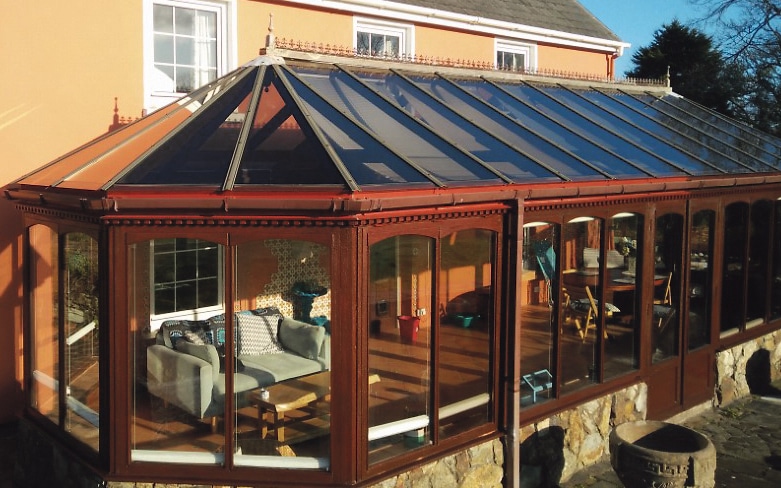
This leads to my second point: existing sunrooms that are more or less fully glazed. I’m currently sitting in one while writing this article. It’s a slightly overcast April day; about 16 degrees Celsius outside and 28 degrees inside with the door open! We don’t have any heating in this space, and the door into the living room is an external-grade door. We don’t use the room much in the winter; it’s great in spring and autumn, if we have sunshine, but as soon as it gets dark, it’s very cold. In the height of summer, it needs all the doors open to stay cool. Despite this, it is still a useful space, and I’m glad we spent the time and money repairing it when we moved in rather than demolishing it. My advice if you have this type of sunroom is to treat it as a seasonal space: don’t try to heat it, and ensure it is thermally separated from the rest of the house when temperatures drop. You could also consider closing in part of the roof and walls with insulated panels; I have seen some very effective examples of this.
How sunrooms are treated in your BER (Building Energy Rating) roughly follows the principles above:
Separated: If it is thermally separated from the rest of the house (e.g., by an external-grade door), is mainly glazed, and has no fixed heating, it is not counted as part of the house’s internal floor area.
Included: If these criteria aren’t met, for example, if you have a radiator in there, the room is counted as part of the heated envelope. This generally leads to a poorer BER rating because of the high heat loss through the glass.
This classification becomes important when looking at the SEAI window, door and heat pump grants, which all require a certain level of insulation of the home. If your sunroom is classified as part of the house, it is likely to negatively impact your Heat Loss Indicator (HLI). This is a critical metric, as the heat Pump Grant requires an HLI of 2.3 or lower. It is also one of the routes to grant compliance for windows and doors.
Sunrooms are not necessarily a bad thing; they can be very useful spaces. It is simply important to be aware of their impact on your energy use, BER, and grant eligibility.
Heads up: For those planning a BER soon, from May 24, 2026, the BER scale is being simplified from 15 categories (A1, B2, and so on) to a basic A to G scale. This is part of wider changes to the Energy Performance of Buildings Directive (EPBD) at a European level. We will dive into this in more detail next month.
As always, if you would like to get in touch about anything in this article or your own retrofit project, feel free to reach out: [email protected].