


Herbal Healing by Rosari Kingston
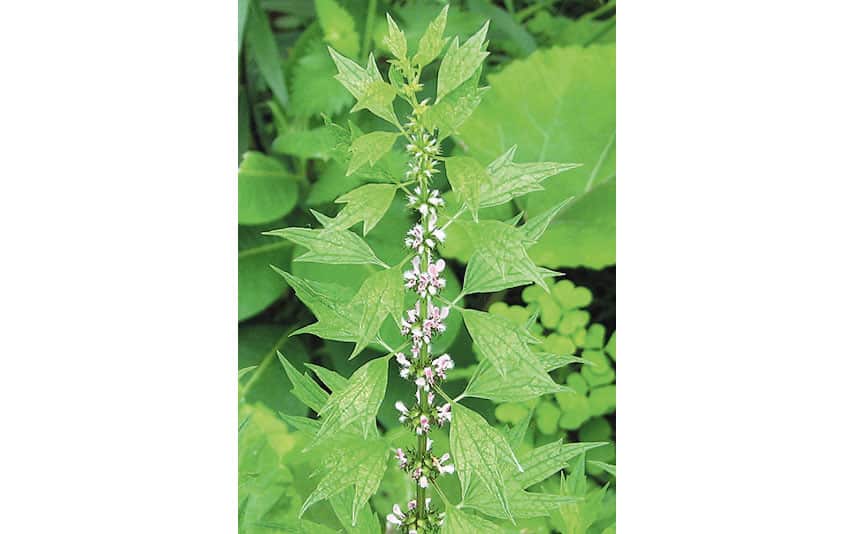
April is the month we become very busy in the garden and notice gaps in borders and beds that need to be filled in. ‘Leonurus cardiaca’, or motherwort, is one plant that will return year after year and is usually available at markets or garden centres. It belongs to the mint family, and it has square stems, pinkish flowers, and deeply cut leaves.
Motherwort is an old European medicinal herb that, not only deserves a place in the garden, but is also useful in the home pharmacy. The Committee on Herbal Medicinal Products of the European Medicine Agency approved its use in 2010 for the relief of symptoms of nervous tension and “symptoms of nervous cardiac complaints such as palpitations, after serious conditions have been excluded by a medical doctor”.
Norway disagreed with the latter point, so we must wait to see if the EMA will consider their dissent in this year’s review of Leonurus.
Many women find this herb helpful during menopause because it has traditionally been used to ease tension and heart palpitations.
It was used throughout Europe to treat menstrual and menopausal symptoms, such as anxiety, irritability, and cramps, as well as anxious palpitations, moderate cardiac problems, and “weakness of the heart”. By the 17th century, English herbalists were referring to it as a herb that “comforts the heart” and relieves childbirth pangs.
Nicholas Culpeper wrote in 1652’s ‘Complete Herbal’ that motherwort is the best way to treat “melancholy vapours” that affect the heart, make people happy, and make the spirit stronger. He says, “There is no better herb to drive melancholy vapours from the heart, to strengthen it, and make a merry, cheerful, blithe soul.” He calls it “Mother’s Herb” because it “makes women joyful mothers of children and settles their wombs as they should be”.
He suggests using it to ease painful periods, and he sees it as a herb that warms and dries.
Culpeper suggests using it as a syrup or preserve, which makes it a staple in the store cupboard.
Its reputation has a significant “mother” component. According to monastic and cottage herbalists, it helps with postpartum recuperation, painful or short periods, and the anxious nerves of overworked mothers. It was considered a guardian against “heartache”, both physical and emotional.
Using motherwort at home
A simple home tea can be made by infusing about 1-2 teaspoons of the dried aerial parts in a cup of boiling water for 10-15 minutes, taken up to three times a day for short periods such as a few days around a stressful event:
Some people feel like their heart is “thumping” or have palpitations when they are stressed, but only after a heart problem has been ruled out.
Tension during or before your period that is accompanied by worry, restlessness, and a tight feeling in your chest.
General “frazzled” feelings, especially when worry is felt in the chest instead of as thoughts that are going fast.
European guidance usually limits self‑care use to a few weeks before taking a break. The taste is distinctly bitter and slightly aromatic, so many people combine it with gentler herbs such as lemon balm or lime blossom to make it more palatable.
As Leonurus is quite bitter, I think Culpeper’s syrup suggestion is excellent. It is easy to make a simple herbal syrup for any herb, including Leonurus, as follows:
To create a herb syrup, combine equal parts of sugar and water (e.g., 1 cup each) in a saucepan, bring to a simmer, and stir until dissolved. Add one to two cups of fresh herbs, simmer for two to five minutes, then let it steep for 30–60 minutes before straining, cooling, and refrigerating for up to four weeks
You can also make a herbal syrup by making a strong decoction (boiled infusion) and sweetening it with honey.
Ingredients: 30 grams dried (or 60 grams fresh) motherwort aerial parts, 450 ml water, 225 ml honey.
Decoct: Combine the herb and water in a non-reactive pot. Bring to a simmer over low heat.
Reduce: Cover partially and simmer until the liquid is reduced by half (down to roughly 1 cup).
Strain out the herbs through a fine mesh strainer and discard the plant matter.
Sweeten: While the liquid is still warm (but not over 110°F to protect the honey), stir in the honey until fully dissolved.
Bottle & Store: Let it cool, bottle in a clean container, and store in the refrigerator.
Shelf Life: Four to six weeks, or up to six months if one part brandy is added as a preservative.
Dosage: 1 tablespoon added to water or sparkling water once or twice daily.
Some caution is needed when taking motherwort.
According to new research, motherwort is mostly safe when used in small amounts for short periods of time. However, there are some important things to keep in mind as to possible side effects if used for too long or at high doses.
It could cause digestive problems, like loose stools or slight stomach pain, especially when the dose is higher.
If you are sensitive or use it too much, it can make you dizzy or cause your blood pressure to drop.
Skin sensitivity or dermatitis has been linked, but very rarely, to touching the plant or high intake of it as medicine.
Motherwort should be avoided or taken only as directed in the following instances:
Pregnancy: it may stimulate the uterus and is considered unsafe in pregnancy.
Breastfeeding: there is not enough safety data, so it may be unwise to take it.
You already know you have low blood pressure, a slow heart rate, or heart disease that you are being treated for.
Use of blood thinners or anticoagulants (like warfarin) because they may make you more likely to bleed.
Use of sedatives, including benzodiazepines, as motherwort can theoretically add to their effect.