
The Listening Project does what it says on the tin. It’s an apt name. Partly because of where the listening takes place: the Skibbereen Town Hall. “It is not a pub environment,” says one of the organisers, Robin Foley “When people are playing you can hear a pin drop so you get to fully immerse yourself.” The Hall has got quite a history behind it, having been constructed in the 1860s. Meat market on the ground floor, theatre above, and even a roller-skating rink in the early 20th century. Occupied by British soldiers during the War of Independence, it later housed the library. That old building was gutted by fire in 1955, leaving only a shell.
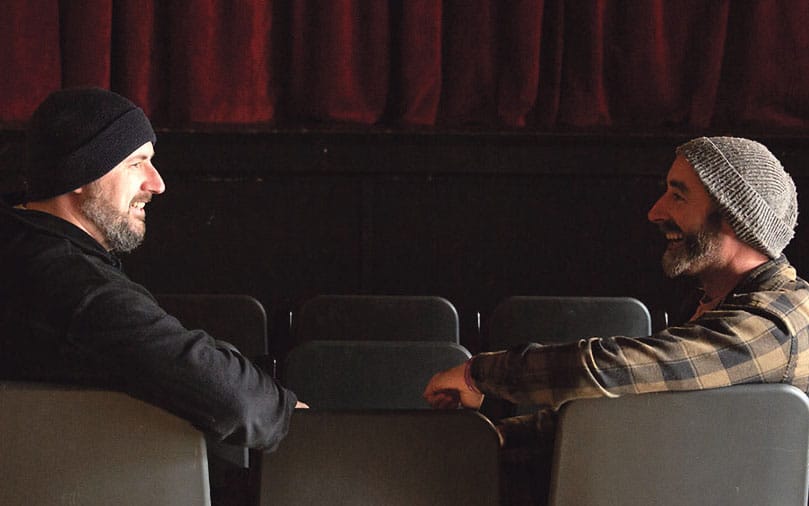
The Town Hall was completely rebuilt and expanded. It was last renovated three years ago (new entrance with lots of glass, new toilets and heating system). And yet it still has a somewhat old-fashioned theatre vibe. Wooden floor, high “classic” stage with long red curtains, a balcony. An environment that is suitable for all sorts of cheerful entertainment – from line dancing to world music – albeit with a classy, cultural undertone. The effect is reinforced when The Listening Project is in town, as the seating is rearranged so it circles the artists, who play under the soft glow of house lamps with small Persian carpets underfoot.
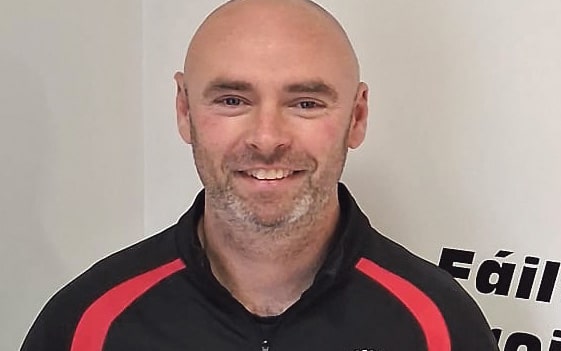
Robin Foley (an artist and designer who also sells prints at the Skibbereen market) and co-organiser Brian Granaghan (a teacher with a background in visual art) did think long and hard before launching the concert series. Adamant that they wanted the Town Hall as a venue, they eventually succeeded. Deciding which musicians to invite is also a lengthy process. “We communicate with the artists a good bit. Depending on who we reach out to, we might be building relationships in the long term. It takes up a lot of time and energy in the background to get people to come here, organise their accommodation, their travel arrangements. All because Skibbereen is so tucked away, really far from everywhere.”
Robin and Brian met as their kids were going to the same national school. They started talking about music. Enthusiastically. Although each plays an instrument – guitar (Brian) and tenor banjo (Robin) – the conversation revolved more around listening. Genres, albums, bands, artists of their liking.
“We discovered that our tastes are very similar,” shares Robin. “In the sense that both of us are fascinated by where traditional meets experimental music. That is happening more and more across Ireland. There’s so much great stuff around.”
Their events always feature combinations of two or more different ensembles or artists. “It’s not a matter of headliners and support acts. That’s not how we run. The band before is as good as the act after, they’re on an equal footing.”
A prime example is the Listening Project concert on October 10. The first act is a collaboration of two solo artists, the multi-instrumentalists Eoghan Ó Ceannabháin (concertina, séan-nos) and Ultan O’Brien (fiddle, viola). So far, they’ve collaborated on two albums. ‘Solas an Lae – The Light of the Day’ (2020) and ‘The Deepest Breath’ (2022). Eoghan is a powerful and award-winning singer-songwriter, both in Irish and English, who hails from a musical Irish-speaking family. He is a passionate political activist and formidable poet, based in Dublin, albeit with Connemara roots. His lyrics may pack an emotional punch (‘Ringing That Bell’) or be melodic and wordless (‘Máirseáil na Sióg, The Fairies’ March’). Ultan O’Brien is not the only musician he plays with (‘The Deepest Breath’ has a cast of ten) but their “songs and strings bounce off one another … the human voice and the fiddle are often thought of as musical cousins,” as he wrote on Bandcamp.
Ultan, based in Clare, is a composer and improviser with a background in traditional music. He released a solo album, ‘Dancing the Line’, in 2025. It contains traditional folk elements (such as a slow air) as well as drones, soundscapes, collages, voice clips, animal-ish sounds, ultra-short and longish songs. O’Brien plays with dancers and creates experimental films around music compositions that are screened in prestigious venues all over Europe. In other words, he’s a breath of fresh air, claiming his artistic freedom. The next band on October 10 is MacBóchra, from Cork, featuring Brendan Duffin, Angelique Everett, Colin Marge and Brian Leach. Bilingual, they use various disciplines to develop and realise their projects (in collaboration with Strive Theatre): dance, experimental theatre, music, poetry, medieval literature, video and are steeped in Irish mythology, history and traditions. “We take our name from the shape-shifting salmon, eagle, hawk and oldest seanchaí Fintan mac Bóchra. Our band explores tradition as a force living on and remembered in different forms … A shared journey with the audience. Our music features arrangements for two bodhráns, tin whistles, tiompán, voices, hammer dulcimer, sean nós, dance and electronics, exploring territory that is informed by Irish traditional music yet distinctive in its own right,” it says on their website.
In February, they performed a fairy fort folk opera, Goll, at the Briery Gap in Macroom. Their follow-up project, Seachrán Sí (led astray by fairies), is announced as an exploration of stories and beliefs concerning ‘The Stray Sod – An Fóidín Meara’. It uses photography as well as information from the National Folklore Collection: “It is said that if you walk on the graves of soldiers at night you will step on a ‘stray sod’ and you will be walking round the field all night.” MacBóchra’s music can be found on Bandcamp. Not surprisingly, it is slightly haunting, in a good way. Very rhythmical; the two bodhráns and tiompán create excitement. The jaw harp brings suspense. The vocals, harmonies, whistle, dulcimer, and guitar add sweetness while the words create visual images (often borrowed from nature) that border on magic.
The Listening Project will continue to host bi-monthly sessions in the Town Hall. On December 19 and 20, they are launching the winter homecoming series with concerts by Shimmer Boy, Muiris, Trá Pháidín, Rita Lynn, DJackulate, plus a choir.
“The idea of homecoming is about people coming back for Christmas, having been away or abroad. It’s nice that we can use the town hall for this purpose,” says Robin.
Coincidentally, October 10 is World Mental Health Day and this specific concert is in collaboration with the West Cork Feel Good Festival, which also focuses on the Irish language and heritage, on creativity, and on lifting people’s spirits. For further updates keep an eye on the website, www.thelisteningproject.ie and social media, www.instagram.com/listening.project.skibb/