


Since moving back to Cork three-and-a-half years ago after working as an a GP for the NHS for 28 years, I have taken on a number of roles, from setting up and running the pilot of a dedicated Women’s Health Clinic in both Skibbereen and Bantry to working as a menopause doctor in CUMH Complex Menopause Service and a gynaecology GP in Bantry Hospital. A recurring theme within all these different roles has been the tremendous struggle that women experience through perimenopause.
Menopause is defined as having been 12 or more months since a woman’s last period. Post menopause describes the phase of a woman’s life beyond 12 months after her last period.
The definition of perimenopause is not so straightforward and sounds a bit woolly: It is described as the time from first onset of any menopause type symptoms until 12 months after the last period. Symptoms usually start in the 40s but can occur in late 30s, so this transition could last from four to 10 years.
So how is perimenopause diagnosed? With great difficulty, as blood tests do not help with diagnosis in women aged 45 and over.
Symptoms
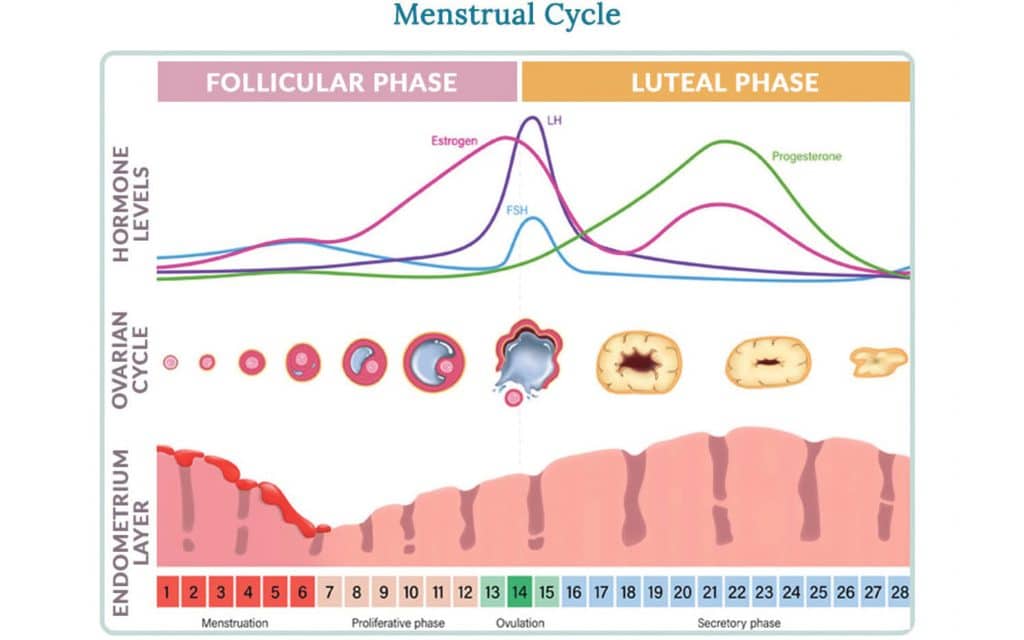
Let me first explain the hormonal gubbins of a normal fertile, ovulatory menstrual cycle. Starting from a few years after the first period, most women get a period at the same time interval, give or take three days. For some that is bang on four weeks and for others it is a longer 30-day cycle; whatever it is, that is what is normal for that woman.
Both female hormones, oestrogen and progesterone, are at a low level through menstruation when we bleed. From the end of the bleed onwards, the follicular phase of the cycle, oestrogen levels slowly rise to a level that triggers ovulation; the release of an egg. The phase after ovulation is called the Luteal phase where we see a falling off in oestrogen levels and a rise in progesterone. If fertilisation of the released egg does not happen, menstruation will again occur. So there is a rise and fall of hormones through a fertile or ovulatory cycle.
At some time, usually starting in early 40s, this regular, clock-like cycle changes. In simple terms, the twin engines that are your ovaries begin to behave like your car does when it reaches 150,000 mileage; they just don’t work like they used to. It can be a stop-start with a few months of irregular ovulation, then settling again for another six months. It is entirely unpredictable and no two women have the same perimenopause experience.
Any of the following might happen:
Ovulation may not happen at all in a cycle, which means oestrogen levels continue to rise into the second half of the cycle and progesterone remains low. This higher than usual level of oestrogen can result in sore boobs, bloating, nausea and headaches. Women can experience worsening of pre-existing migraines and some women get migraines for the first time in perimenopause.The combination of high oestrogen and low progestogen can cause very heavy, flooding periods.
In some cycles ovulation can happen twice; giving more swings of oestrogen and progesterone and two bleeds in the month.
Both the above scenarios contribute to PMS symptoms. This can be de novo but often women who had bad PMS in their teens notice it returns with boots on in their 40s.
Mood changes and, in particular anxiety, even in women that have never had anxiety issues, is a common feature of perimenopause. This is often cyclical with severe mood swings, anger, rage and low mood in the seven to 10 days before menstruation. However, mood changes can be pervasive. Many women find anxiety bubbles away throughout the month.
Poor sleep and brain fog is often reported, starting a few years before the last period.
Some women get hot flushes, which can be cyclical; ie worse at certain times of the month.
Genitourinary Syndrome of Menopause (GSM) is the term given to symptoms that result from low and fluctuating oestrogen levels that affect three anatomical areas: the genital skin resulting in burning, itching and sensitivity; the vagina giving dryness, soreness, itching and discomfort or even pain with intercourse; the urinary system, resulting in increased daytime frequency, with some women needing to pee every one to two hours; getting up at night to pee, increased urgency – meaning when we need to pee we need to go NOW and new or worsening of pre-existing incontinence; stress incontinence, leaking when you cough or sneeze and urge incontinence, leaking or completely emptying your bladder if you cannot get to a loo fast enough. Discomfort passing urine, akin to cystitis, can occur and urinary tract infections (UTIs) can start to become recurrent.
GSM symptoms commonly start several years before the last period and many women do not report them. I ask specifically and bluntly about symptoms, as patients often do not volunteer them. If you ask most Irish women “how things are down below?” the answer invariably is “fine doctor!” as she is keen to brush over that embarrassing area…hoping you will not want to have a look.
Ladies, it is so important we get a mirror out and have a look at your vulva every now and again. If it looks odd, especially if it is sore, sensitive, itchy; get your GP to examine or refer you to see us in the gynaecology clinic in Bantry.
Dry skin is very common and we need buckets of more moisturiser from age 40 onwards. Acne or rosacea. Chin hairs. Thinning of hair. All these phenomenon reflect an imbalance between oestrogen/testosterone.
Then there are what I call the odd symptoms: Some women experience odd sensory and skin symptoms; flitting patches of burning skin or a feeling of bugs crawling under the skin.
Tinnitus, often reported with no previous history and ,we do not know why, but it tends to resolve.
Dry eyes.
Pre-exising medical conditions
Pre-exising medical conditions can worsen in perimenopause.
It is not unusual for women with stable epilepsy, fit-free for many years to have a breakthrough fit in her late 40s. This can have catastrophic knock-on effect on her life, as she then is not allowed to drive for at least a year.
Women with ADHD, previously well and high functioning in their life and job, be they on ADHD meds or not, can find themselves unravelled and overwhelmed in perimenopause and this can be worse in the second half of the cycle.
Carers of women with learning disability can report behavioural changes, often cyclical.
Fibromyalgia and rheumatoid arthritis patients can experience exacerbations of symptoms.
Women with severe mental illnesses like schizophrenia or bipolar disease can encounter flares. In addition, the prevalence of these illnesses is complex; there are two spikes; one in the 20s and a second peak in late 40s in those at risk, such as those with a family history. So women can experience a first psychotic or hypomania episode at this time.
So what is the treatment?
There are no hard and fast evidence-based guidelines on managing perimenopause, leaving both patients and GPs a bit at sea. No two GPs will manage perimenopause symptoms in the same way, and that is as it should be, as every woman’s collection of symptoms and circumstances are different. But there are some core principles to adhere to.
I want to address a few elephants in the room here with a list of what not to do!
There is an incredible amount of unhelpful misinformation out there on social media put forward by influencers and self-proclaimed experts on the ‘correct’ treatment.
The following are the top four best/worst I have come across:
1) All women need progestogen from age 40, as this will prevent/delay onset menopause. Complete rubbish.
2) All women in perimenopause should have testosterone. Not true.
There is no drop in or fluctuation of our natural testosterone levels through perimenopause. What happens physiologically is there is a very slow, gradual decline in our testosterone from age 18 onwards, same as in men but no further rapid drop through menopause.
3) All women should be started on HRT from the minute any perimenopause symptoms start. No! See below.
4) Doctors are conspiring to deprive perimenopausal women of HRT, and just fob them off with the pill. You must demand your GP give you HRT!
There is no conspiracy.
What will work in your early 40s is switching off ovulation.
‘Contraceptive HRT’
Perimenopause symptoms occur as a result of hormone chaos, not oestrogen deficiency. It is the erratic, rollercoaster fluctuation in both oestrogen and progesterone levels that cause the symptoms.
The normal contraceptive pill contains oestrogen and progesterone and will stop ovulation. If you had side effects with pills in the past, this is not a problem, as the newer pills contain body identical oestrogen; such as Zoely and Drovelis. In fact this is the same oestrogen that is in HRT. In menopause speciality circles we call these contraceptive HRT. I generally recommend using back to back.
The result will be: resolution of PMS, the oestrogen usually stops hot flushes and having steady non-fluctuating hormone levels usually resolves low mood, anxiety, brain fog and poor sleep.
If you are unable to take oestrogen because of blood pressure or a previous leg clot, a progestogen only pill such as Slynd will have the same effect.
If you’re not keen on a pill, the Mirena coil is really useful in perimenopause, as it resolves heavy periods and, for many women, also suppresses ovulation.
Vaginal oestrogen
It’s really important to get in early and treat GSM symptoms with vaginal oestrogen, which comes as a cream or pessary.
Then what?
See your GP again in four months time to review all of the symptoms.
It is possible that in amongst the many perimenopause symptoms may be a real mental health issue and, if anxiety and depression are not settling, that needs review.
Why not HRT in my early 40s?
Your hormones are not low in your early 40s, in fact oestrogen can run high. HRT will introduce a second set of hormones on top of your own chaotic ones, which usually results in women feeling no better, in fact it can make them feel worse and can result in two bleeds or chaotic erratic bleeding. HRT does not switch off ovulation. HRT is not contraceptive.
When is it not just the perimenopause…when to worry?
Changes to your bleeding, especially heavier bleeding, more frequent bleeds and bleeding in between periods needs investigation.
The concern is that this may be caused by a change to the womb lining or endometrium, called hyperplasia which is a precursor to endometrial cancer.
Minimum investigation is a pelvic scan. Your GP can refer you to consultant Dr Aenne Helps’ gynaecology clinic in Bantry where we will arrange pelvic scan and if needed, a hysteroscopy to look inside the womb.
I hope this is helpful. If you have any questions do see your GP to discuss.