

For more than 20 years, I’ve had the privilege of working at Organico. Every day I talk with people who are looking for simple, practical ways to support their health. Some come in looking for Vitamin D to help them through the winter months, others are searching for magnesium to improve their sleep, Vitamin C and Zinc to support their immune system, or a good multivitamin to fill nutritional gaps in a busy lifestyle.
What I see every day is that people are becoming increasingly proactive (and concerned) about their health. They want to take responsibility for their own wellbeing and make informed choices about the products they use.This is why I’ve become involved in the Save Our Supplements campaign.
Over the past few weeks, something quite remarkable has happened. What started as a small group of concerned health food shops has grown into a national consumer campaign. In just five weeks, more than 25,000 people have signed our petition (in stores and online), thousands have shared information online, and we’ve raised almost €10,000 to help spread awareness of an issue that, until recently, very few people knew anything about.
So what is the issue? The European Commission is advancing proposals to introduce harmonised Maximum Permitted Levels (MPLs) for vitamins and minerals in food supplements across Europe.
At first glance, harmonisation sounds like a sensible and reasonable idea. Common standards across Europe can make a lot of sense in many areas. (although strangely we cannot seem to harmonise European electricity prices, insurance, low cost mortgages, car prices etc!)
But the main issue is that nutrition is not something you can harmonise. There are other factors a play which are cultural, nutritional, genetic and geography related. Ireland has a very different relationship with supplements than many other European countries. Because of our rainy, northern latitude, Vitamin D deficiency is a recognised public health issue, with supplementation widely recommended. Irish consumers have also developed a long history of using higher-strength nutrients such as Magnesium, Vitamin C and Zinc safely as part of their everyday health routines.
What concerns me most is not simply the legislation itself, but the fact that the people who will be most affected appear to have had very little opportunity to contribute to it. Nutritional therapists, GPs, health food shops, supplement manufacturers and, most importantly, Irish consumers have not been meaningfully consulted about changes that could significantly affect the products they rely on.
That is why we launched the Save Our Supplements campaign. Our first aim is simply to let people know what is happening. Most of the customers I speak to have no idea these proposals are moving forward. They naturally assume that the supplements they have been buying safely for years will always be available.
The reality is that if these proposals are implemented in their current form, many higher-strength supplements could be reformulated or disappear from shelves altogether.
For me, this is fundamentally a consumer choice issue. This isn’t about whether supplements should be regulated. They already are. Food supplements sold in Ireland are subject to strict food safety legislation and are regulated under both Irish and European law. Consumer safety should always come first.
Equally, if there was evidence that people were being harmed by the products currently available, that would clearly need to be addressed.
But that simply isn’t what we’re seeing. After more than two decades serving customers, I don’t see people experiencing problems because they’ve chosen a higher-strength Vitamin C, Magnesium or Zinc supplement. Nor is there any evidence of a widespread public health problem arising from the products currently available through regulated retailers.
So naturally many consumers are asking: if there isn’t a significant safety issue, why should our choices be restricted?
I also believe Ireland deserves to have its own circumstances properly considered. Our climate, our public health needs and our long history of responsible supplement use are not necessarily the same as those of every other European country. A one-size-fits-all approach may not always produce the best outcome for Irish consumers.
There also is a hidden knock-on effect in this proposal of higher consumer pricing. Two 500mg tablets of something is always dearer than one 1000mg tablet – so for the customer currently taking one high dose supplement there will be a cost to bear. This cost might seem inconsequential when you are earning €22,000 a MONTH as an EU Commissioner or €11,000 a MONTH as an MEP but for elderly people on the state pension at only €1,297 per month every penny matters!
The proposals could also have significant consequences for Irish businesses. Health food shops, pharmacies and Irish supplement manufacturers have spent decades developing products that meet the needs of Irish consumers. If harmonised limits are introduced without proper consideration of those needs, many familiar products could change dramatically.
I feel this conversation is very important as many people see these proposals as the thin end of the wedge -–a beginning rather than the end of the regulatory process. Once maximum levels are established for vitamins and minerals, there is understandable concern that further restrictions on natural healthcare products could follow in the years ahead.
The SOS Campaign is calling for a meeting with the Minister for Health to ensure that Irish consumers are properly represented as these proposals continue to develop at European level.
The response so far has been incredibly encouraging. More than 25,000 signatures in just five weeks show that this issue matters to people. They want to understand what is happening, they want to have their say, and they want decisions that are transparent, proportionate and based on sound evidence.
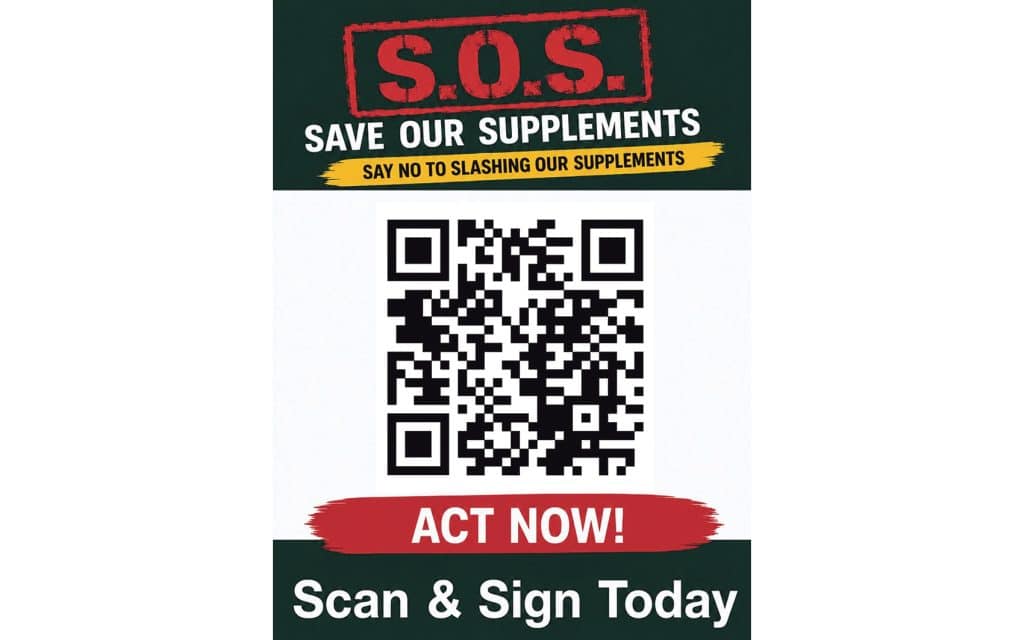
If you value the freedom to make informed choices about your own health, I encourage you to learn more. Please visit SaveOurSupplements.ie, where you’ll find clear information about the proposals, our growing petition, and simple ways to get involved. If, having read the facts, you share our concerns, you can also send a message directly to your local TDs and MEPs through the website.
Every signature, every email and every conversation helps ensure that Irish consumers have a voice in decisions that could shape the future of natural healthcare in Ireland. Whatever your views on supplements, I believe that decisions affecting our health choices should be made with us, not simply for us.