


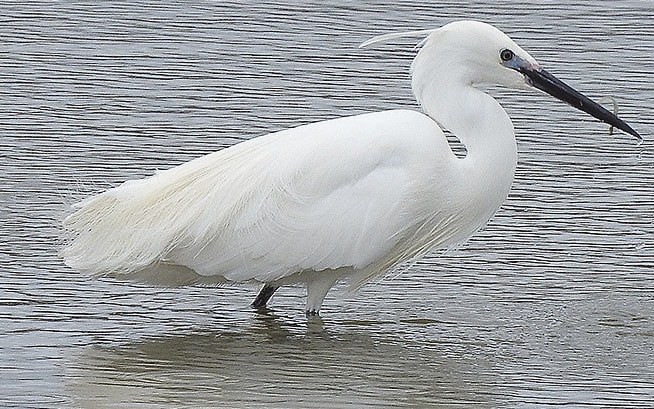
This month, branch Chair, Jez Simms, describes how some Egret species began to visit Ireland regularly, one species even breeding here now.
It was not until the latter half of the last century that birders in Ireland began to regularly encounter a beautiful pure white heron known throughout Europe and Africa as the Little Egret. A bird so beautiful it was nearly wiped out in Europe in the 1800s due to the great demand for its breeding plumes to make ladies hats. The campaign to save the bird led to the formation of the Royal Society for the Protection of Birds (RSPB) in 1889, now the largest bird conservation group in Europe with over a million members.
A rarity in Ireland up to the late seventies, the first ever Little Egret was recorded in County Cork in 1940, more and more kept arriving until they were finally confirmed as a breeding species in 1997 at Fota in Co. Cork. Nowadays these beautiful birds can be seen gracing most waterways, lakes and coastal areas in the country with a population, including wintering birds; of approximately 1,500 birds with a breeding population of around 500 pairs.
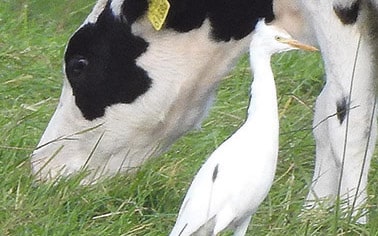
The next Egret to start regularly visiting Ireland is the Cattle Egret, slightly smaller and less elegant than the Little Egret, these birds are not exclusive to water margins but, as their name suggests, like to roam amongst cattle and other herbivores in quest of the flies and other insects they attract, returning to water margins to roost and sometimes hunt. The first one recorded in Ireland was at Kilkeran Lake in West Cork on March 7, 1976, and then there were only around 10 more records between then and 2006. In 2007 there was a massive influx of Cattle Egrets during the winter with around 80 birds arriving along the south and west coasts, forever changing its status in Ireland. It is now a regular late Autumn and Winter visitor to our shore with flocks of birds into the high twenties sometimes occurring here in West Cork.
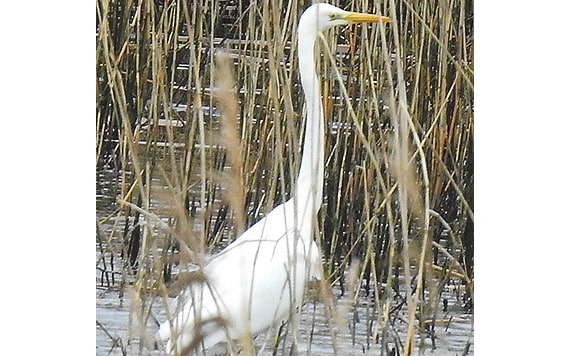
But that’s not all folks, back in 1986 Ireland’s first ever Great White Egret was found in Cobh; this was a very early sign of another major Egret expansion with a big influx starting in the 2000s. They first bred in the UK in 2012 and are now well established in Ireland, particularly in Co. Cork. They can often be seen on wetlands and marshes; breeding is suspected but not confirmed yet. These are magnificent birds, pure white and the size of our Grey Heron, with a distinctive long yellowish bill, unlike the black bill of the Little Egret, so they are hard to miss. They are almost resident at the Gearagh Nature Reserve near Macroom, with numbers sometimes building into double figures in the Autumn and Winter. At White’s Marsh near Clonakilty, I have seen all three of our Egrets feeding together.
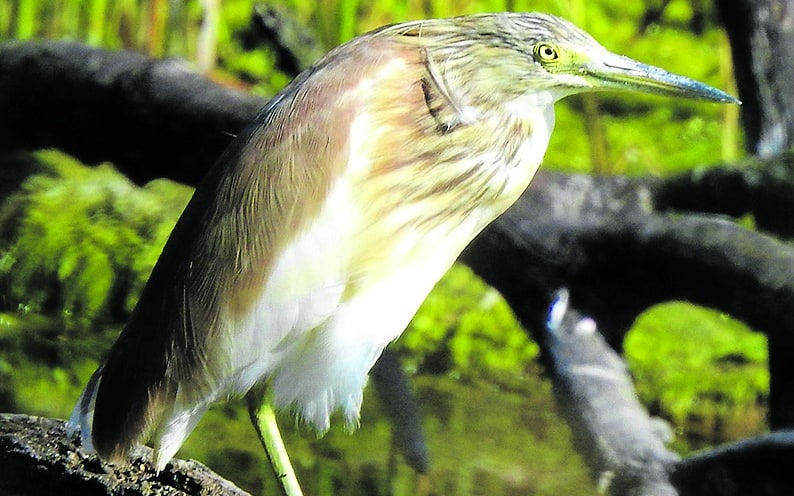
While not a true Egret, there is another bird which might be showing signs of following them, this is the mega rare Squacco Heron. It is Egret-like in flight with its pure white wings, but when in reeds or in foliage its beautiful buff and brown plumage can make it hard to spot. In recent years the odd one has shown up in Ireland and this year an unprecedented three have been seen with quite a few in the UK as well, so maybe they are following a similar pattern. So, check your field guides and bird apps and keep an eye out for all these truly beautiful birds.
BirdWatch Ireland West Cork Branch News
Our next events are:
July 12: Nature walk on Whiddy Island.
August 9: Timoleague Educational Garden.
Visit our website www.birdwatchirelandwestcork.ie for more information about these events. To receive news and reminders about our events join our mailing list by sending an email to [email protected].
f@BirdWatchIrelandWestCork
c @ birdwatch_ireland_west_cork