


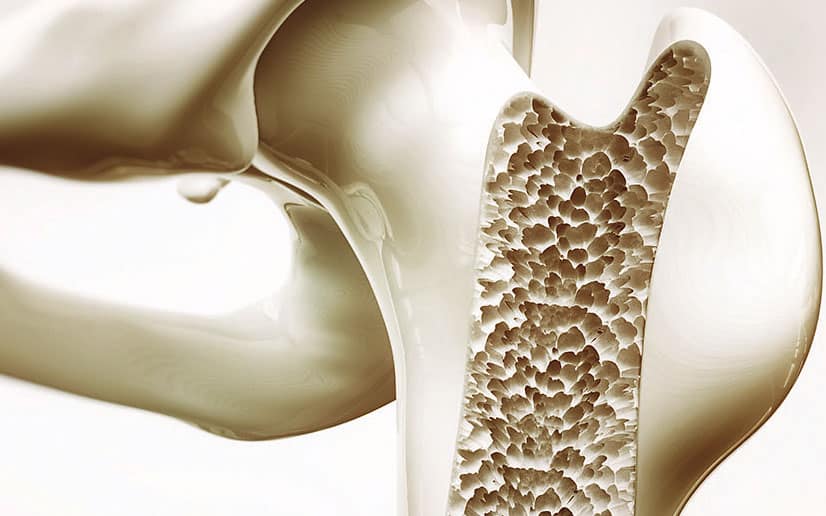
We think of osteoporosis as a condition that affects the older adult, but it is a condition that is established in youth. Bone mass peaks in your 20s but what builds your bone mass is exercise and loading the bone through heavy weight or resistance. This means that the amount of bone mass you acquire as a child and through young adulthood will determine your risk of acquiring osteoporosis as an older adult even though we actually begin to lose bone mass from about 35 onwards.
Bones are the rigid structures that form the framework of your body, making up the skeleton. And maybe it is our collective association of the skeleton with death that makes us think of bones as inert, dry, dead matter but this association could not be further from the truth. Bones are dynamic organs composed mostly of collagen and calcium phosphate, which provide strength and flexibility. Bones protect internal organs, support muscles, store essential minerals, and house the marrow, where blood cells are produced.
Bones are constantly renewing themselves through a process called remodelling, where old bone tissue is replaced with new. Bone cells called osteoclasts are our demolition crew which break down and absorb old bone tissue, while osteoblasts are our construction crew, building new bone tissue. This ongoing renewal is crucial for maintaining bone health and strength. Because of their critical role in movement, protection, and overall health, keeping your bones strong is essential – especially when thinking about preventing conditions like osteoporosis.
Osteoporosis is often referred to as a silent disease, as the loss of bone density is painless in the early stages. In fact, the primary way it is diagnosed is through a low radiation scan of the body (DEXA scan) which your doctor may recommend based on your age or risk factors. There are several risk factors to consider.
Women are more likely to develop osteoporosis than men because they have smaller bones than men and women with smaller frames are more at risk than women with larger frames for the same reason. Loss of oestrogen and testosterone in menopause contribute to a loss in bone density with some women experiencing excessive bone loss at this time. In fact, if there are no mitigating familial contra-indications against the use of Hormone Replacement Therapy, this should be something to discuss with your doctor, particularly if you have several risk factors for osteoporosis and are below 50.
If there is a history of osteoporosis in your family this further increases risk, especially if either parent has experienced a fracture from a trip or fall or less.
Certain medications and treatments leave one vulnerable to bone tissue loss. S.S.R.I.s commonly prescribed for depression, long term steroid use, some medications used in the treatment of breast cancer, prostate cancer and epilepsy can be risk factors. Conditions such as coeliac disease or Crohn’s and having an overactive thyroid can contribute to loss of bone density. And all patients undergoing radiation or chemotherapy need preventative treatment to protect against bone loss.
The obvious lifestyle apply here: excessive alcohol consumption (more than two drinks a day), smoking and inactivity. Poor dietary choices factor too, whether it is consuming a limited range of nutrients or poor quality foods, which can lead to chronic inflammation, which underlies so many of our health woes these days. Under-eating and over-exercising in younger years can have serious long-term effects on bone density.
So what can we do?
Far from presenting a negative and hopeless picture there is much we can do, whether we wish to prevent osteoporosis or even reverse it. Diet and exercise are the two most important tools in your toolbox, so let’s look at the specifics.
One third of bone tissue is made of collagen, a flexible tissue that gives bone the ability to bend under pressure without snapping. Calcium is a mineral that hardens bone and gives it rigidity while collagen provides elasticity, bone health requires both. Calcium supplementation is often the first port of call regardless of the degree of bone loss. We can get calcium in our diets from leafy greens such as kale, spinach and bok choy but if you wish to pursue the supplementary route, ensure that your vitamin D source is combined with the mineral K2, which activates a protein that acts as a guide directing the calcium to the bones and not the arteries. In fact, the Rotterdam Study, which tracked nearly 5,000 people over a ten-year period from 1990 to 2000 found a high dietary intake of k2 resulted in a decrease in aortic calcification or hardening of the arteries. K2 can be found in the Japanese dish of Natto (fermented beans) or perhaps more palatably in Kefir, should you wish to obtain it from food.
An important mineral to include here is magnesium. Calcium and magnesium work as a tag team in the bone tissue, while calcium provides the structure and strength, magnesium regulates calcium balance and bone crystal formation. If your magnesium is low, your body can’t use calcium efficiently.
Other foods to consider for calcium are beans and legumes, sesame seeds and in particular tahini, one tblsp of which contains the same amount of calcium as a small glass of milk. According to research published in the #publication Osteoporosis International (2024), consuming 100g of prunes daily has favourable impacts on bone mineral density.
I mentioned above the importance of collagen to keep our bones ‘elastic’. There is recent and ongoing research into hydrolysed collagen peptide supplementation to increase bone mineral density. Research is ongoing but there are positive noises coming from this area; however, we remain at the ‘studies suggest’ stage for the moment. If you do choose to supplement with collagen peptides, note that Vitamin C really matters for the production of collagen in the body so ensuring your collagen supplement incorporates vitamin C and that you continue to consume a variety of fruit and vegetables in your diet is essential.
Bone needs mechanical stress in order to grow. In a recent study in Queensland Australia a group of post-menopausal women with low bone density underwent a supervised training regimen using heavy lifting such as dead lifts, squats and overhead press exercises. This trial, known as the LIFTMOR trial (2018), has been groundbreaking in that it has proven that supervised, heavy resistance and impact training has positive impact on bone density. The trial consisted of 2 x 30 minute sessions weekly. There is a change in thinking when it comes to exercise and osteoporosis. Rather than fearing fragility we can be empowered to build stronger bones safely. Undertaking strength training should always be supervised properly especially if you are a novice and have low bone density but it is encouraging to know that we can rebuild what has been lost by simply safely increasing load. Start gently and progress. First you should learn how to breathe, how to engage your core and hold your posture to maximise your gains and prevent injury. And of course, walk! Walk briskly, walk uphill, take your stairs but put those joints under load.