


by Cadhla Ó Conchobhair
As the old saying goes ‘a wet and windy May fills the haggard with corn and hay’. I think we could all do with seeing a pleasant summer after a long spring!
We would usually have the calves out to grass by the start of May. The farm sits on a hill and, as those cold northeasterly/westerly winds postponed their turnout, we are counting ourselves lucky to have gotten them out just ahead of the June bank holiday. As I type this month’s article, I can see the calves out my kitchen window, basking in an unexpected two days of blistering sun in the field; they are delighted with themselves and I am happy with them too because they have been very well-behaved outdoors and not gone through any fences.
The hedgerows are looking beautiful, with the whitethorn blossoms, cow parsley and wild bluebells, to name just a few. Even the blossoms are a little later this year, as if they have been waiting for warmer weather too. There is a great buzz about the place and it isn’t just the pollinators that are busy – the silage contractors are like busy bees, going from farm to farm harvesting first cut silage. Our silage ground wasn’t grazed this spring and we spread less organic N because the ground was too wet when we would normally spread it, so we decided to cut it a little earlier than usual, and we hope to have a better quality and heavier crop for the second cut in July.
Most of the cows had calved by the first week in April with the exception of Cow 728 who, by way of a miraculous conception, calved three weeks later. Paul, our Hereford bull, must have paid a little sneaky visit last season!
After calving season finished, we barely had time to catch our breath before breeding season kicked off, the first round being AI. We used a combination of sexed and conventional straws for dairy replacements on the best cows and a selection of easy calving high DBI beef bulls on the rest. Good old Paul the bull is now spending a few weeks with the cows and will happily oblige if any of the cows do not hold to AI.
The Innishannon Steam Rally takes place over the June Bank holiday weekend, which is always a family favourite event every year; it is like a step back in time with the steam engines, many of which serviced the agricultural sector back in the day. The steam engine revolutionised not just work on farms, but also transport. Upton, where the steam rally is held every year, was once a stop on the West Cork Railway line that connected communities from the city all the way to Bantry. The railway closed, despite fierce local opposition, which included massive petitions, protests and even saw a delegation travelling from West Cork to plead their case. However the then government refused to overturn CIE’s decision to close the West Cork line on April 1, 1961 – how apt for a foolish decision to be enacted on Fool’s Day.
CIE proceeded to lift the tracks and, because the railway had originally cut directly through many agricultural properties, local farmers purchased back these tracts of land to unify their fields. Over the decades these sections were integrated into active farmlands, roadways and farmyards with other landowners building new houses and businesses.
Because the land was completely broken up and sold off by Iarnrod Eireann, it is no longer state-owned or semi-state-owned land.
You might be wondering why I am reminiscing about the rail line in the farming section?
Cork County Council and their handling of the proposed Cork-Kinsale Greenway has caused a fierce backlash from the farming community, businesses and homeowners on Cork County Council’s preferred route, which cuts right through farmland, some of which was never even on an old rail route. By all accounts, the process of consultation and communication has not been handled well and farm families on the route are fearful of CPOs (Compulsory Purchase Orders) being imposed on their land.
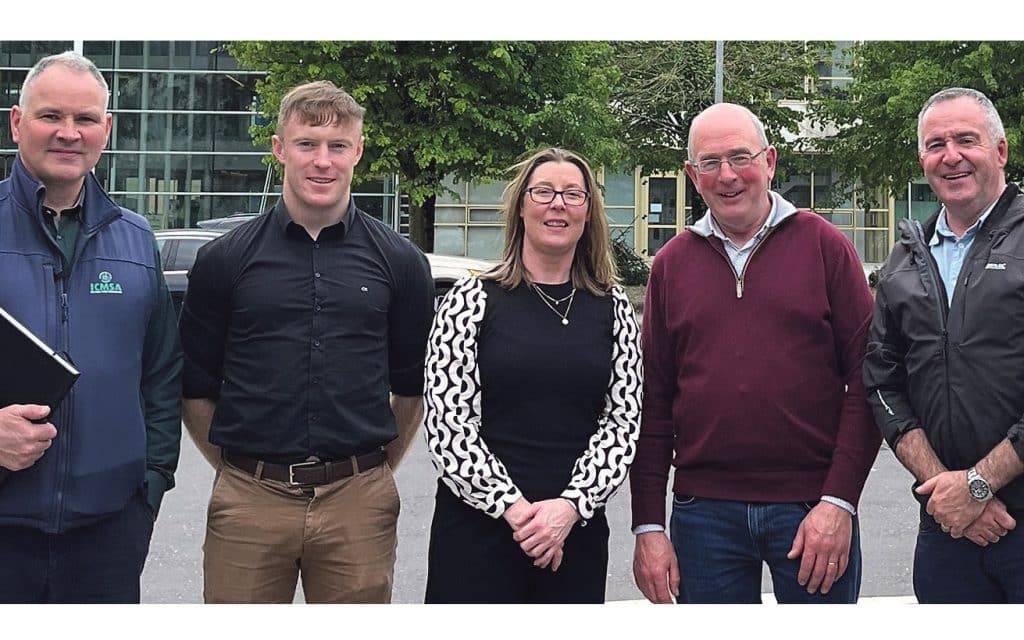
DJ Keohane, Chairperson of West Cork ICMSA spoke to West Cork People about these concerns. Mr. Keohane informed us that he and an ICMSA delegation had met with the Council at County Hall on behalf of their members. He described it as a very “straight talking” meeting, during which they raised the concerns of members who would be directly impacted by this route, as well as the concerns of other farm families farming between Cork City and Bantry. They also expressed fears that, if CCC is allowed to enforce CPOs on the proposed Cork–Kinsale route, their communities could be next on the list.
The Council stated to the ICMSA that it was implementing government policy to deliver greenways, and that Compulsory Purchase Orders would only be used as a measure of last resort.
ICMSA emphasised to the Council that their members were not opposed to greenways, they are opposed to CPO use for greenways, especially when, without proper engagement, the landowner’s livelihood, privacy and the natural biodiversity of the farm may be impacted. “Greenways can only be achieved through voluntary access and proper, on-farm and face-to-face consultations and constructive engagement”.
Mr. Keohane added that the affected ICMSA members had lost confidence in the engagement process, particularly due to the absence of an impact assessment on the farms and families affected, leaving them feeling they had no control over the future of their family farms.
There are always alternative route options to consider, such as utilising Council-owned land to allow a greenway to run parallel to existing roads, rather than cutting directly through farms and undermining the viability of farming businesses. Projects of this nature can remain in limbo for years, depending on the availability of government funding and shifting Council priorities — a level of uncertainty that no other business sector would be expected to endure.
Reflecting on the meeting, Mr. Keohane said he believes the Council and its consultants acknowledged the concerns raised and accepted that engagement and communication regarding the route should have been handled in a more respectful manner.
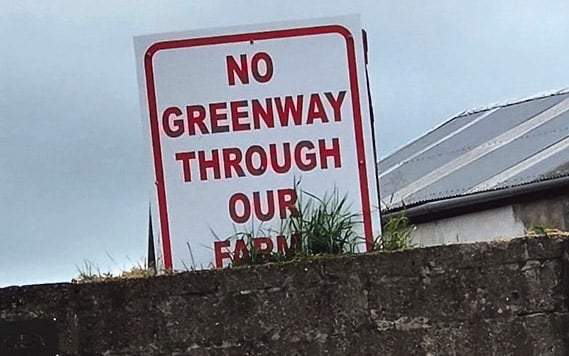
This is not just an issue within this county; similar concerns regarding greenways are being raised across the country, leading groups of citizens to bring their protests to Dáil Éireann, where their concerns have been heard by the Joint Committee on Transport, while local TD Michael Collins has also raised the matter directly with An Taoiseach in the Dáil.
As I write, the Minister for Transport, Darragh O’Brien, has engaged consultants to carry out a review of the National Strategy on Greenways, with some elements of the Code of Best Practice National and Regional Greenways expected to be included in the review. Transport Infrastructure Ireland (TII) will oversee the review and Minister O’Brien has said “It is expected that the review of both the code and the strategy will conclude in 2026”.
The importance of personal engagement is often overlooked when decisions are driven by desktop policies and prescriptive procedures developed in an office setting.
No doubt farmers along the old railway line to West Cork will be closely watching how this project progresses. Hopefully, following the review of the greenway process, confidence in engagement procedures can be restored and workable solutions reached.