


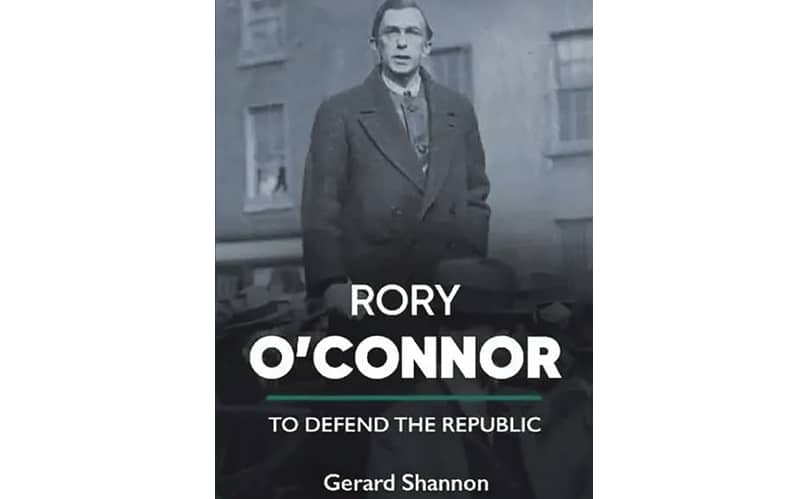
Gerard Shannon, author of ‘Rory O’Connor: To Defend the Republic’, writes on the connection between Dick Barrett and the subject of his new book, Rory O’Connor
The public memory of the Irish republican and revolutionary Dick Barrett looms large over Cork, especially the west of the county, during the revolutionary period of the early 20th century. Born in 1889, in Hollyhill, Ballineen, Co. Cork, Barrett, by the time of the Irish War of Independence, would emerge as a prominent leadership figure in the Cork No. 3 Brigade that encompassed West Cork. He would be the brigade’s quartermaster and later would ascend to the staff of the First Southern Division under General Liam Lynch. His comrade Peader O’Donnell later remarked how Barrett had once been close to Michael Collins, on the pro-Treaty side, and recalled Barrett as “a keen, searching mind with strong conspiratorial genius.”
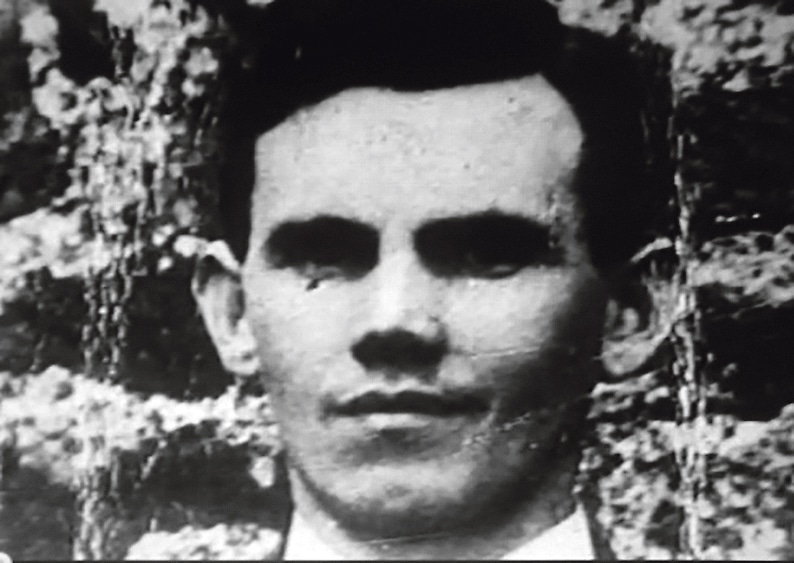
Barrett remains best known for the circumstances of his death at the height of the Irish Civil War, when Barrett was opposed to the Anglo-Irish Treaty, regarding it as a betrayal of the Irish Republic as declared in 1916. On December 8, 1922, Barrett was executed before a firing squad along three other prominent republicans and anti-Treaty IRA leaders: Joe McKelvey, Liam Mellows and Rory O’Connor. All four had publicly opposed the Treaty and creation of the Irish Free State, a British dominion consisting of twenty-six counties of Ireland (the remaining six counties encompassing Northern Ireland). The National Army had imprisoned all four shortly after the defeat at the anti-Treaty IRA’s Four Courts garrison, of which Barrett was part, at the beginning of the Civil War.
Their execution was an illegal reprisal, and on the instruction of the Irish government at the time headed by WT Cosgrave. Of particular cruelty was the fact the four men were put to death for an incident none of them had a part in: The assassination of pro-Treaty TD, Seán Hales, by members of the anti-Treaty IRA, the day before. Hales, in a great irony had been a close friend and comrade of Dick Barrett in the West Cork Brigade prior to the split over the Treaty. Hales’ family would even publicly condemn the executions of Barrett and the other three men.
Hales had been shot on Dublin’s quays because of orders issued by the anti-Treaty IRA leader, Liam Lynch. Lynch strongly opposed new government legislation that had allowed for the executions of republican prisoners, which had included the leading figure Erskine Childers. However, the executions of Barrett and his three comrades were illegal and outside the parameters of this. Their deaths were intended to demoralise the anti-Treaty members still fighting and prevent further shootings of pro-government TDs. In one of his last letters, addressed to his fellow prisoners in Mountjoy, Barrett wrote: “I hope you will all live through to the Faith of our National Fathers and when called on to do a great thing for Ireland, you will face it manfully. Do not bear ill will or dream of reprisals, the cause is too holy for ignoble deeds.”
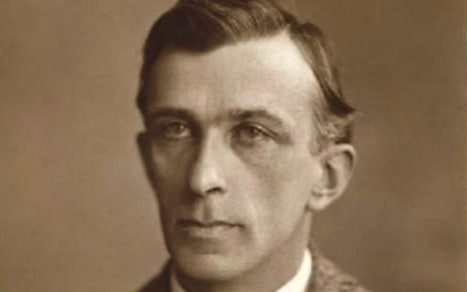
Among the men executed with Barrett, most ambiguous today is undoubtedly the popular memory of Rory O’Connor. Ironically, at the time of his death at the age of 39, O’Connor was perhaps the best known of the four men. His background suggested an unlikely revolutionary, the son of a wealthy, prominent, Dublin-based solicitor. O’Connor had risen in the ranks of the Volunteers and became the IRA’s Director of Engineering. He also masterminded several high-profile prison escapes of republicans and IRA operations in Great Britain. O’Connor was also the first of the IRA’s General Headquarters Staff to oppose the Treaty. In April 1922, O’Connor would direct members of the IRA’s Dublin Brigade to seize the Four Courts complex on Dublin’s quays in defiance of the new pro-Treaty government. The Four Courts would be where Mellows and O’Connor would be arrested several days after the fall of the garrison at the start of the Irish Civil War on 28 June 1922.
Most poignantly, one of those ministers that approved their executions months later was Kevin O’Higgins, then Minister for Home Affairs. Only over a year before, Rory O’Connor was the best man at O’Higgins wedding – several weeks before the signing of the Treaty. Both men shared a genuinely warm and close friendship. Days after O’Higgins wedding, he wrote to O’Connor and referred to him as “the bestest best man that ever rounded up a bridegroom”.
Over a year later, O’Higgins agonised over the decision to execute the four men. There was no signing of a death warrant as persists in popular lore, but O’Higgins was without question part of the collective cabinet decision, and the death of the four men became a central component of his legacy. Nearly five years later, and four years after the end of the civil war, O’Higgins was assassinated by members of the IRA’s Dublin Brigade while walking the streets of south Dublin – a particularly violent result of the executions on December 8, 1922.
Gerard Shannon is the author of ‘Rory O’Connor: To Defend the Republic’, now available from Merrion Press.