


Canine Corner by Liz Mahony
Since my youth, I’ve been an avid people and animal watcher totally fascinated by interactions between the human and animal species. And it has never lost its appeal for me. So, over the beautiful weekend we experienced a fortnight ago, I took Saffron, my Boxer, into Dunmanway, to sit outside my favourite cafe to watch the world go by in the town square. She particularly loves this pastime, believing that anyone who appears on the pavement is specifically interested in saying hello to her
Not only that, the girls in the cafe spoil her, bringing out a bowl of water especially for her and giving her cuddles. She’s a gentle dog and affectionately leans into them, appreciating all the attention. There are only two small tables with four chairs outside the building, set pretty close together. While we were sitting there, a lady, having placed her order at the counter inside, arrived out and began hovering around the second table, making it obvious that Saffron was bothering her. I might add that Saffron was, in fact, sitting on my left side, and furthest from this person.
Yes, she was looking hopeful to make her acquaintance but, other than that, her manners were impeccable!
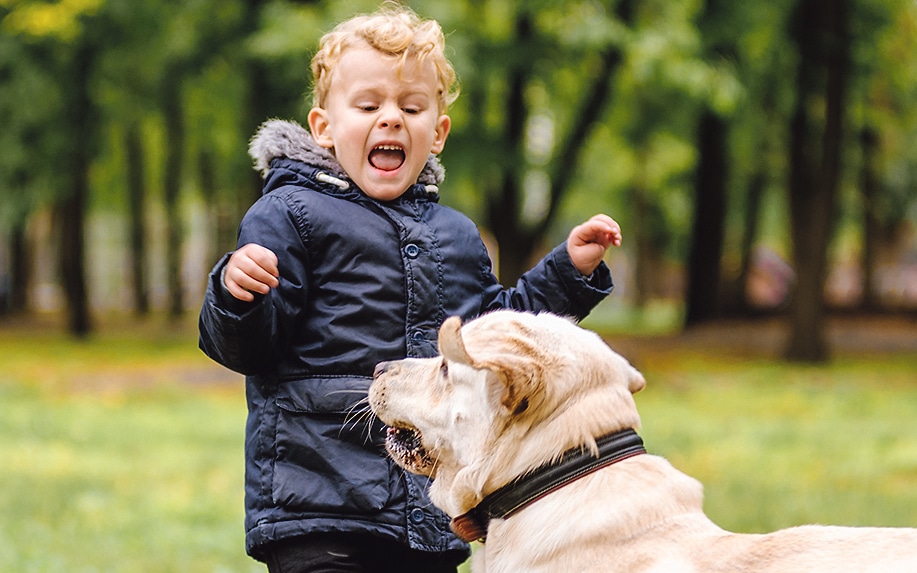
During the ensuing conversation, it transpired that this woman had had dogs in her childhood and had experienced no problems with them or any others. However, a recent encounter with her brother’s dog had frightened her because he had allowed him to bark at her in an intimidating manner, which made her feel very uneasy. Despite her discomfort, instead of dealing with the dog’s bad behaviour, her brother suggested that all she had to do was say ‘hello’ to the dog and stroke him which would appease him!
I fully understand that many of us are less than sympathetic to our siblings when they appear to overreact to a given situation but in this instance I was able to sympathise with her plight. She realised that her own fear was exacerbating the circumstances but there was much more to this.
Firstly, her brother was allowing his dog to behave rudely to visitors instead of teaching a more polite way to ‘meet and greet’ them. Suggesting that his sister approach the dog stroke him in order to calm him down was quite a feat. Not only that, by condoning this action, both his sister and the dog’s owner were simply reinforcing this bad behaviour, and over time, this appeasement rather than education, could lead to an escalation of it.
Let’s put this scenario into human terms. Would it be in order for a child to rudely confront a visitor and intimidate him/her? I think not! And would we, as parents, allow it? Again, I think not. Then why do we allow a dog to do it? It’s unjust to both dog and visitor.
The lady in question couldn’t believe that Saffron wasn’t barking at her. But then, she hadn’t really looked at her in a meaningful way. She just imagined that because her brother’s dog was ill-mannered and confrontational, ergo, all dogs are like that. When you translate that view into general terms, it means that, as dog owners, we are starting off at a disadvantage. People seem prepared to believe the worst in others – and, more importantly, their dogs. It puts a huge responsibility on us, as owners, to prove them wrong, not for our own sakes but for the good of our precious canines.
The more people decide that dogs are all ill-mannered, likely to bite, noisy or confrontational, the more open spaces, towns, and so on, are going to become ‘no-go’ areas for us and our companions. And the more that happens, the harder it will be to re-open those spaces to us. And if that occurs, it will be even harder to convince people, other than dog owners, that our canine companions are actually welcome in our urban and country life.
Where can we start to remedy this situation? Firstly, I think we have to prove to others that our dogs can behave politely in all situations. That means training them at home and socialising them outside the family milieu – just like I was doing with Saffron on that Saturday. It means teaching our dogs to behave on every occasion and rewarding them for it.
Secondly, we really have to address this business of picking up after our dogs in towns and areas where there will be human contact. Apart from the hygienic point of view, it doesn’t look so good seeing dog excrement left lying on pavements and, as already said, it doesn’t help our case for allowing us to socialise our dogs in any and all areas. In doing so, we might help others to see our well-behaved dogs as pleasant individuals rather than an unruly collective!