

Women’s Health by Dr. Paula Stanley
If we ask our aunties and mothers what their menopause was like, the answer is usually ‘what menopause?’!
In the 60s, 70s and 80s, midlife female health was not an area, in medicine or in our society, that got any attention: women were expected to get on with it and they did.
Many women feel that the now infamous Joe Duffy week-long radio feature on menopause in 2021 marked the beginning of permission for Irish women to speak the ‘M’ word aloud. Davina McCall also highlighted the importance – on both sides of the water – of talking about menopause.
So, it is great that women now seek out information on menopause and HRT and are becoming aware of the benefits of HRT, not only for current symptoms, but for their general health over the next 30 years:
Evidence from recent studies and Cochraine analysis suggests that HRT started under the age of 60 or within 10 years of the Last Menstrual Period (LMP,) is associated with a reduction in atherosclerosis progression, coronary heart disease and death from CVD causes, as well as all cause mortality. It is thought that starting HRT within six years of LMP is a sweet spot for optimal cardiovascular benefit.
Four to five years of HRT use is associated with almost halving the risk of osteoporotic hip fracture under the age of 65 and will reverse pre-existing osteoporosis.
The bogey man of HRT and breast cancer has been scared off and current evidence suggests that being on HRT for four to five years does not significantly increase the risk of breast cancer over background population risk.
What to read?
There is a huge problem with women accessing high quality, evidence-based information. Unfortunately, many go to social media and it can be easy to mistake perky enthusiasm for expertise; a smooth-skinned 50-year-old influencer, who swears by a supplement or a certain HRT brand, is not an expert.
Go to valid, evidence-based sources for your information and then go to see your GP with all your questions to figure out what is best for you.
womens-health-concern.org is the patient information arm of the British Menopause Society.
Definitions
Perimenopause is defined as the time from onset of first menopause-type symptom to one year after your last menstrual period.
The term menopause is used if a woman has not had a period for 12 months.
A woman is said to be post-menopausal if it has been over 12 months since her LMP.
I like to use the term menopause transition, as that is what is happening; women transition from their fertile state to an infertile state. Talking about perimenopause and menopause like they are two separate entities and not a shifting continuum, is just confusing and misleading for women. This transition can take five to eight years, during which time there are many symptoms, not all of which will be fixed by HRT.
What hormones?
I want to go through the different components of HRT and the role of each.
Oestrogens: There are four natural human forms of oestrogen. Three, Estrone, E1, Estradiol, E2, Estriol, E3 are produced in the female adult, by the ovaries mainly, but some production also happens in the adrenal glands and fatty tissue. The fourth, Estetrol, E4, is produced by the foetal liver in pregnancy.
The oestrogen in the normal contraceptive pill is oestradiol valerate, and in all HRT products is oestradiol hemihydrate; both are a salt of our own E2 oestradiol, so are pretty much body-identical.
Oestrogen production in our ovaries reduces, slowly initially, from mid-40s, then more rapidly after 45. Post menopause we do still produce small amounts of oestrogen from our fat tissue and adrenal glands.
Progestogens: Progestogens is the group name. The progestogen produced in the female body is called progesterone. Progesterone does not fall off dramatically like oestrogen during menopause. Progesterone supports pregnancy so you may wonder why you need it in your HRT, as menopause is not a progesterone-deficient state.
We got the answer to that the hard way; in the 1960s in America gynaecologists started to treat menopausal women with oestrogen therapy. Within six months they saw a sharp increase in cases of endometrial or womb lining cancer. When a progestogen was added in, this ceased. Oestrogen has a stimulating or proliferative effect on the endometrium which, if left unchecked, leads to hyperplasia, a pre-malignant condition, then womb cancer. Progestogen prevents this so its role in HRT is endometrial protection. Not all progestogens are lisenced for endometrial protection. Those that are, are included in HRT products.
Testosterone: Studies have shown a gradual, slow fall in testosterone levels in women from age 30. There is no sharp drop during menopause transition like with oestrogen. Menopause is not a testosterone-deficient state. Testosterone production then increases in women over the age of 65. In studies, the only symptom that testosterone has been proven to benefit is low libido; not energy, fatigue, bone or muscle strength. You can read the article on Testosterone that I wrote previously online (westcorkpeople.ie) for more information on testosterone therapy through menopause.
I want to take HRT, what can I expect?
The answer to that question depends on two really important factors: 1) What you think HRT will do for you?; and 2) When are you planning to start HRT?
Expectations – laying good foundations for therapy: Some women might find me a bit blunt, if not brutal. I advise she is never going to feel better unless she also starts exercising regularly, loses weight if needed, takes up some form of resistance training and eats a healthy diet. I tell her HRT is not a magic potion and will not turn us back into our 25-year-old selves, sleeping eight hours at night, with a big libido and with the energy that goes with that. Neither will it fix all the stresses in our life, be they family, work or partner-related and it won’t make us lose two stone. I spend a long time discussing not only her symptom but what her beliefs and expectations are, before starting HRT.
I emphasise the timeframes to expect for various symptom improvement, as well as possible side effects. I explain that bleeding might happen and is not a reason to panic, as it usually settles in the first three months.
So when should I start HRT?
Over the last five years there has been a real push, powered by content on social media rather than by any science, that women should start/must start HRT, as soon as any symptoms occur; not true! Studies show that the benefits for the cardiovascular system of reduced heart attacks and strokes and for bones of reduced osteoporotic fractures are gained by starting HRT under the age of 60 or within 10 years of LMP. More recent evidence indicates that starting HRT within six years of LMP is more beneficial.
So, what hormones do I need in my HRT and how do I take them?
If you still have your womb, or if you have had a hysterectomy and have a history of endometriosis, you need to take a progestogen along with your oestrogen.
If you do not have a womb and don’t have a history of endometriosis, you will be prescribed oestrogen alone.
Oestrogen: You can take oestrogen as a patch, a gel or a spray. HRT is also available in tablet form but we tend to use this less often because oral oestradiol may put your blood pressure up and will increase your risk of a leg or lung clot by two to four times. There are a few different brands, the only difference is the size of the patch.
You need to change the patch every three to four days; the gel and spray are used daily.
Lenzetto, the spray, you apply to the same place because this works by building up a reservoir of oestrogen under the skin that is then released into the body.
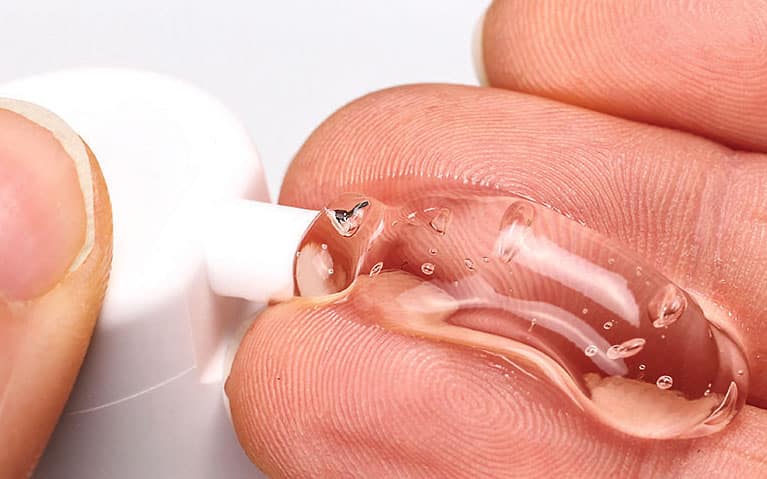
Oestrogel, the gel, can be applied to different places, as it is absorbed pretty much immediately. For all forms, avoid applying anywhere near breasts.
Progestogen: You can use a combination patch with oestradiol, EVOREL CONTI, which contains norethsterone, a synthetic progestogen also found in many contraceptive pills.
Utrogestan is an oral progestogen, which is most similar to our natural progesterone. It contains peanut oil, so is not suitable if you have peanut allergy. Utrogestan capsules can also be used inside the vagina but is not licensed for use in that way.
Duphaston is the other licensed oral progestogen containing didrogesterone.
Both rarely result in side effects but, if that happens, we choose a different delivery system or a different progestogen. Utrogestan often results in improved quality of sleep, a welcome side effect for many.
If it has been more than a year since your LMP, you take a progestogen every day.
If you are still getting periods, or it has been less than 12 months since your LMP, you will be told to take the progestogen two weeks on and two weeks off. This is because your endometrium or womb lining is still active and the on/off pattern allows the womb to bleed and avoid a chaotic bleeding pattern.
If using EVOREL CONTI, you change the patch every three to four days. This represents a continuous dosing with progestogen, so will be appropriate for women who have not had a period in 12 months.
The Mirena coil contains levonorgestrel progestogen and is licensed for endometrial protection for five years.
How much do I need?
There is no one size fits all and it’s a load of rubbish that everyone should have 75 mg oestrogen. We go by symptoms and doctors usually start with 25mg or 50mg oestrogen, then review three months later. The dose of progestogen is dictated by the dose of oestrogen; if oestrogen dose goes up, so may your progestogen.
Starting HRT after my periods have stopped
Symptoms: Hot flushes, night sweats, brain fog, dry skin/itching generally on the body and aches dan pains in muscles and joints are directly related to oestrogen deficiency:
Genitourinary Syndrome of Menopause (GSM) is the term given to oestrogen deficiency symptoms affecting three areas: the skin of external genital area, the vagina and the urinary tract.
The urethra or wee pipe, the bladder, and the pelvic floor muscles can all be affected. All these areas contain oestrogen receptors. Symptoms can be; dryness, soreness and itching of vulval skin and inside vagina, resulting in painful sex; frequent urination, getting up at night to pee, urgency, leaking and urinary tract infections, UTIs.
Women rarely volunteer these symptoms so I always ask. If present, I prescribe vaginal oestrogen as a cream and/or pessary, as well as HRT.
The following symptoms – low mood, anxiety, low energy, poor sleep and low libido – are more complex and multifactorial although they are made worse by falling oestrogen levels:
What to expect on HRT
Hot flushes reduce or disappear quite quickly.
GSM symptoms affecting skin and vagina typically similarly resolve quite quickly with vaginal oestrogen.
The urinary symptoms often take longer, sometimes up to three months. Think of it as filling an empty tank; your bits have been without oestrogen for some time, so I recommend daily use for four weeks then x two to three times a week.
Studies have shown longterm vaginal oestrogen use is linked with reduced risk of incontinence and recurrent UTIs in our later years. Vaginal oestrogen is not absorbed into your blood and is safe to use by women with a history of breast cancer.
One of the slowest symptoms to respond to therapy can be brain fog but most women are fine with that, as long as they know what to expect.
How much and how fast mood, energy and libido improve varies hugely, as these symptoms result from a combination of many issues – poor sleep, life worries and stresses – not just oestrogen deficiency.
Menopause transition happens to women with teenagers and ageing parents; often they are still working, have a mortgage, house, car, family and relationship to maintain but absolutely no libido…so there is a lot going on.
Most women find they generally feel better in themselves on HRT but some do not.
Clinical depression is common in midlife women and there is no shame to using an antidepressant, as well as HRT if needed, even for a short period of time like for six to 10 months, to see you through. The modern prozac-type meds now are safe, non-addictive and not sedating.
Starting HRT when still having periods, during menopause transition or perimenopasue: what to expect?
For women still having periods it will be helpful to read the article on Perimenopause I wrote for West Cork People back in 2023 (westcorkpeople.ie)
Menopause transition/perimenopause can be hellishly symptomatic with brain fog, dryness and itching down below, painful sex, hot flushes, which can come for a few weeks, then vanish, or sometimes happen the week before the period, fatigue, poor sleep, low libido, new-onset anxiety, and migraines.
What is vital is that women understand that it is hormone chaos and not oestrogen deficiency that is causing these symptoms.
Not dissimilar to what happens to our motor after 200,000 miles: the complicated hormone-balancing machine stalls, splutters and does not run in the smooth cyclical fashion it used to; some months we ovulate and all is good. Some months it skips, resulting in a low oestrogen/high progesterone state causing bad PMS – mood swings, anger and the general urge to kill your husband/children comes and goes. Other months, ovulation occurs twice giving high oestrogen/low progesterone state, which can trigger sore boobs, headaches and heavy, prolonged periods. Some women get migraines for the first time during menopause transition.
Now, imagine introducing another set of hormones on top of this?
That is what using HRT at this time would do.
Do you think that will make you feel better?
Hormone therapy for perimenopause, yes; just not in the form of HRT.
Oestrogen deficiency symptoms of dry sore vagina and uncomfortable sex, as well as urinary symptoms, are common early on in menopause transition. These can be safely and effectively treated with vaginal oestrogens, regardless of where you are with your periods.
Where there a re a lot of cyclical symptoms, be they emotional; anger, mood swings, what a patient once described as ‘PMS on steroids’; or physical; headaches, breast pain and monthly severe migraines, the solution is to switch off ovulation. That will eradicate the premenstrual phase and result in calm, steady-state hormones, stopping the hormone roller-coaster. It gets rid of PMS and usually migraines resolve.
Contraception is needed to age 55 and HRT is not contraceptive, will not suppress ovulation, may result in heavier bleeding and can end up giving you two bleeds per month.
So how do we suppress ovulation?
Any contraceptive pill will do, but I often use Drovalis. This contains E4, Estetrol, a natural human oestrogen, in combination with drospirenone. It is safe to use over the age of 40, as does not raise blood pressure or increase risk of a leg clot. Women usually feel better because the hormone roller-coaster stops and periods are lighter
An oestrogen-free pill containing a progestogen-only desogestrel, if we want to avoid oestrogen, also works here.
The Mirena coil is of huge benefit in the perimenopause, as it literally kills four birds with one stone: contraception, treats heavy periods, often suppresses ovulation and will serve as endometrial protection should you want to start oestrogen therapy down the line.
Most important part of starting HRT or any hormone containing therapy
See your GP again for a review after three months, as recommended by BMS, and NICE. I advise that women request a longer GP appointment for any discussions on menopause transition; an average GP appointment time of 10 minutes is not adequate.
The three-month review is your opportunity to go through all symptoms, specifically addressing any that you are disappointed are not improving. You might not like the first form of HRT; maybe the patches are falling off or give you a rash. You might want to change to the gel or spray. If your GP does change anything, it is good to see them again months later.
I hope this is helpful.
For all menopause transition-related queries book an appointment to see your GP.