


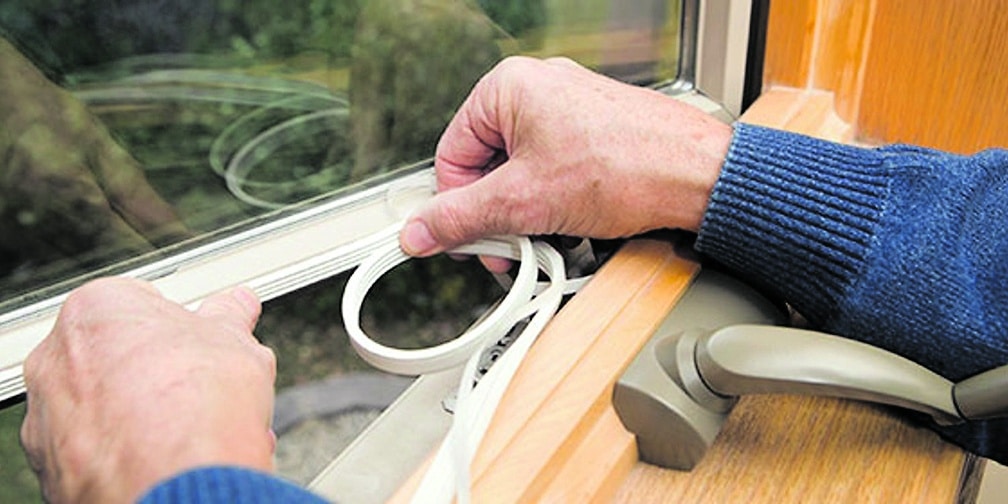
Drat proofing windows.
As the new year dawns, many of us are setting ambitious personal and professional goals for 2026. I know personally that if I achieve even half of mine, I’ll be doing well! Having said that, it’s also a great time to extend that ambition to our homes. This year, resolve to make your living space more comfortable, energy-efficient, and environmentally friendly. Retrofitting isn’t just about massive, whole-house overhauls; it’s about making smart improvements that deliver lasting benefits.
Snug Seals – The First Step to a Warmer Home: One of the easiest and most impactful ways to begin your journey is by tackling draughts. Unwanted heat loss via air leakage occurs all over the house. I see lots of these unnoticed gaps around windows, doors, and pipework on my visits around West Cork. The secret culprits force your heating system to work harder and your energy bills to rise.
Resolving to seal these gaps can make an immediate difference, creating a noticeably warmer home from day one. It’s a simple resolution that pays dividends. You can do a lot of this yourself with a can of expanding foam and a roll of draught excluder. Open chimneys are also a huge source of heat loss. If you aren’t ready to fit a stove or block the chimney up completely, consider a chimney balloon or even an old pillow as a temporary, removable seal.
Bright Savings – Illuminate Your Way to Efficiency: Another ‘quick win’ is upgrading your lighting. Swapping old bulbs for energy-efficient LEDs is a no-brainer. LEDs use significantly less electricity and last much longer. They now come in a wide range of colour temperatures to suit any room, allowing you to reduce your carbon footprint without sacrificing a cozy atmosphere.
Beyond the Basics – Planning for a Greener Future: Once you’ve tackled the quick fixes, consider your larger ‘Green Goals’. Perhaps this is the year for better insulation, ensuring your walls and attic act as cozy layers against the elements. Or maybe you’ll explore the benefits of a heat pump or solar panels.
Even if you don’t start the physical work this year, you can take the most important first step: Planning. A Home Energy Assessment (HEA) is essentially a roadmap for your upgrade. It includes an existing BER (Building Energy Rating) to show where your home currently stands, along with a detailed report outlining your options.
The HEA provides estimated savings in carbon and fuel bills, an outline specification and details on available grants. Crucially, this plan ensures that any work you do now won’t jeopardise future upgrades or cause unintended consequences, such as poor ventilation.
A HEA must be completed by an SEAI-registered technical assessor and costs in the region of €550-plus VAT. (Note: a grant is often available toward this cost if you work directly with a registered One Stop Shop).
Making your home more energy-efficient is a powerful resolution that benefits your wallet, your comfort, and the planet. By taking small, manageable steps – or a few larger ones –you can significantly reduce your footprint and enjoy a more sustainable year ahead.