


In this second instalment of her series on the nine principles of interior design, Mairead Collier explores two critical principles that govern how we perceive and move through a room: Focal Points and Rhythm.
When you understand the fundamental principles of interior design, you unlock the ability to transform any space from ordinary to extraordinary. Paired with practice, a bit of trial, and creative experimentation, this knowledge empowers you to curate a home that feels uniquely yours.
Every room needs a focal point.
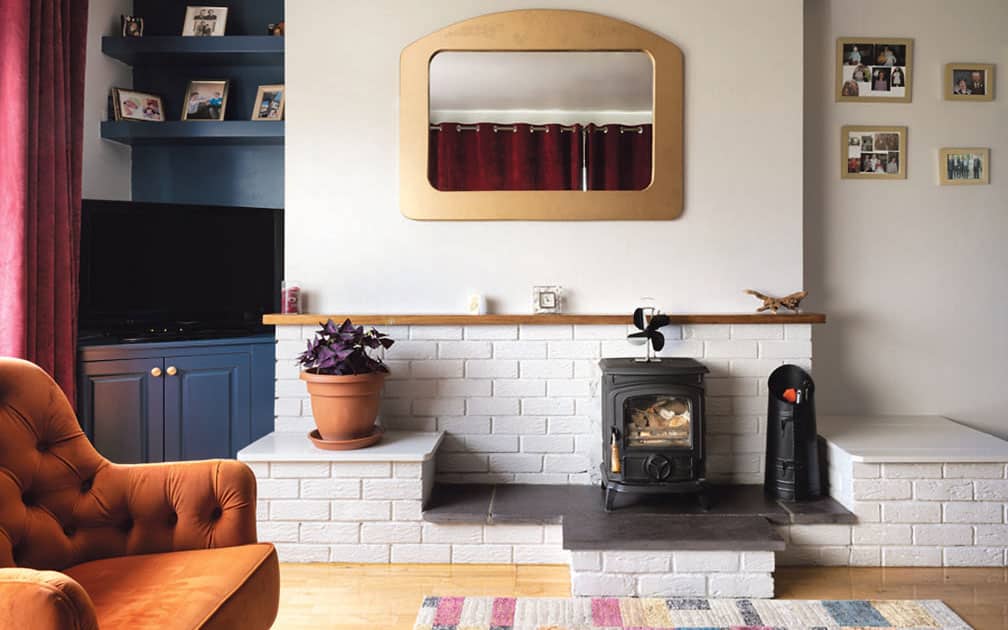
A focal point is the star of the room, the striking feature or element that instantly grabs your attention and draws your eye inward upon entering. It can be a natural architectural feature like a breathtaking view through a floor-to-ceiling window or a classic stone fireplace. Alternatively, it can be a deliberate design choice, such as a large-scale piece of artwork, a bold upholstered headboard, or a dramatic accent wall.
The most common mistake in home interiors is a room with no clear anchor. Without one, furniture and decor end up competing with one another, every piece screaming for attention at once. The alternative is equally uninspired: a room where nothing stands out, leaving the space feeling flat, bland, and tedious.
Depending on its scale, a well-designed room can support more than one focal point. However, unless you are highly confident in your design abilities, it is best to start with a single, clear anchor to avoid visual overload.
A successful focal point must capture immediate interest while remaining an integral part of the overall design scheme. It should invite you to look further without feeling disconnected from the rest of the room. If your room lacks a natural architectural feature, build one! Highlight a key piece of furniture, like a rich velvet sofa, or style an eye-catching media console or gallery wall.
If you struggle to identify what is working in your room, step back and take a few photos on your phone. Looking at a space through a lens strips away daily familiarity and reveals exactly where the eye lands first.Once your focal point is chosen, arrange your furniture to orient toward it. Frame it with clever lighting, such as picture lights, directional spotlights, or flanking sconces, to add impact and drama.
Once your focal point establishes where the eye should land; Rhythm dictates how the eye moves through the rest of the space. In interior design, rhythm is the art of creating patterns of repetition, progression, and contrast. It carries the viewer along a continuous, visual path that feels effortless and intuitive.
Without rhythm, a room feels like a collection of disconnected, individual objects. With it, every element feels intentionally linked, creating a subconscious sense of harmony and continuity that defines a professionally designed home.
At the heart of rhythm lies repetition, the deliberate, recurring use of a specific design element across a space. When an element is repeated, the human eye naturally connects the dots, creating a subtle visual track to follow.
You can establish repetition through various design layers:
Repeating an accent hue, such as carrying a deep rust tone from a canvas painting to sofa cushions and a decorative vase across the room.
Echoing soft, organic curves through an arched mirror, a round coffee table, and spherical lighting fixtures.
Reappearing warm timber finishes across table legs, picture frames, and wall cladding, or repeating woven textures like rattan and linen.
While repetition is essential to establish rhythm, the key is balance. Overusing or over-repeating the exact same element is a common trap that leads to visual monotony.
If every single piece of furniture in a living room features the exact same oak finish, or if every cushion, curtain, and rug shares the identical pattern, the space loses its energy. Instead of feeling curated, it becomes flat, boring, and sterile, resembling a rigid, copy-and-paste furniture showroom rather than a lived-in home.
To create a dynamic rhythm that keeps a room engaging, repeat a material or colour, but vary its application, scale, or intensity. For example, pair a chunky bouclé armchair with a subtle woven linen cushion in a similar shade, or mix a dark walnut dining table with lighter oak framing details nearby.
Use contrasting elements to create ‘beats’ along your visual path. A sleek, smooth glass tabletop placed against a coarse, textured rug instantly breaks up monotony and adds an unexpected, modern edge. Lead the eye by altering an element’s scale, such as styling a collection of candlesticks or ceramic vases in graduating heights along a sideboard.By thoughtfully repeating elements while embracing subtle variation and contrast, you create a captivating rhythm that brings your home to life, guiding the eye seamlessly from one beautiful detail to the next.
Coming up in Part 3: We dive into contrast and harmony.
Mairead Collier creates refined, bespoke luxury homes for private clients across Ireland, London, and the USA, fully managed from concept to completion. For more visit maireadscollierinteriors.com