


James Joyce has a universe of admirers, and rightly so, for how he changed the face of literature. It’s perhaps more difficult to like him as a person once you uncover the facts around how his artistic obsession brought many consequences, particularly to the people who supported him when he needed it most. Of course there is always that old chestnut that asks us to separate the artist from their art, the writer from their writings and, of course, there is validity in that argument. History has illustrated that great people can be so driven that they become blind to the suffering of those around them, or sometimes indifferent to it. In the second part of a two-part series on James Joyce, Kieran Doyles writes that Joyce owes his success not only to his genius, but also to a handful of individuals, mainly women.
I need to start first with a key figure, who was not in fact a woman, but who was the chief catalyst behind the initial emergence of Joyce. Ezra Pound was immersed in literature, as an editor, poet, critic and champion of modernism. In Joyce, he saw the modernist hammer that could shatter the conservative wall that he believed was strangling the artistic world. Contemporary writers such as the great English poet T.S. Eliot, (author of ‘The Waste Land’) would later call Joyce’s ‘Ulysses’, “a book to which we are all indebted and from which none of us can escape”. Pound saw the potential in Joyce’s earlier works, but when Joyce sent him the first chapter of ‘Ulysses’, he recognised something different: a writer who had transformed what literature could be. Pound then set about finding a publication willing to publish Joyce’s work. It was not an easy task, given that Joyce’s earlier work had struggled to find a publisher and, at the time, had brought him neither money nor recognition beyond a small literary circle. Given the geographical obscurity of Joyce, in far off Trieste (then part of the Austro-Hungarian Empire), there was no reason that Joyce was simply going to be ‘discovered’. But it was five woman in particular who risked everything to make ‘Ulysses’ happen.
Before ‘Ulysses’ became a success, Joyce had made little to no money in writing. ‘Dubliners’ and ‘A Portrait of the Artist as a Young Man’ had sold poorly, though they were highly regarded by many in the literary world because of Joyce’s gritty realism and pioneering writing style.
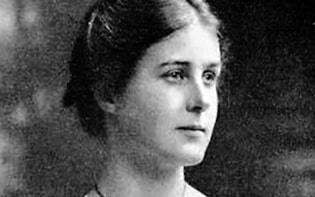
Joyce had been broke ever since he left Dublin for Trieste in 1904 with Nora Barnacle to take a teaching job. He relied heavily on his brother Stanislaus, another unsung hero who kept his brother afloat and got little in return. Joyce felt Dublin was parochial, church-dominated and strangled by British moralism. He was already rebelling before he became a full-time writer, refusing to kneel and pray at his mother’s deathbed, writing stories that unveiled the unspoken ills of societies and telling Nora that he wanted to be her husband but he would never marry (which would have been an untenable position had he stayed in Dublin, for a whole host of reasons). What would allow Joyce to spend seven years writing ‘Ulysses’ and 17 years writing ‘Finnegan’s Wake’, was the patronage of an amazing woman – Harriet Shaw Weaver. Weaver inherited a large fortune when her father passed. A fan of modern and avant-garde literature, she knew the aforementioned Ezra Pound, who by then, was championing Joyce’s work, after W.B. Yeats introduced him to his writings. Weaver ran a literary magazine called The Egoist and decided to serialise Joyce’s first novel ‘Portrait of the Artist.’ Understanding the artistic value of that novel, she tried to get it published as a novel in the UK, but similar to the situation in America, printers and publishers were too fearful of imprisonment and fines to support the project. The only thing to do was publish it herself (ironically she got it published in serial form first in the US). She succeeded in 1917, but similar to Sylvia Beach, would face a greater uphill battle to publish ‘Ulysses’ in the UK.
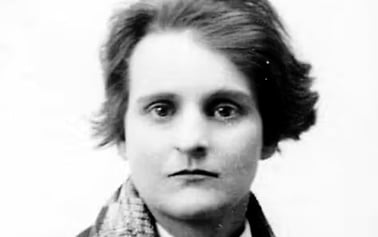
Weaver never relented but it was her financial muscle that truly released Joyce from trying to make a living from writing. To allow him to concentrate fully on writing, she supported Joyce with vast sums of money so he could be pulled out of poverty and continue to concentrate on writing for the rest of his life, which she did until Joyce died in 1941. She also paid for his medical expenses; he had many operations for an eye condition that plagued him all his life, rendering him almost blind. Despite her fortune, Harriet Shaw Waever lived modestly. Joyce did not. He spent Weaver’s money on fine dining and expensive hotels, treating her like a bank. Yet without her, Joyce could never have committed himself to full time writing.
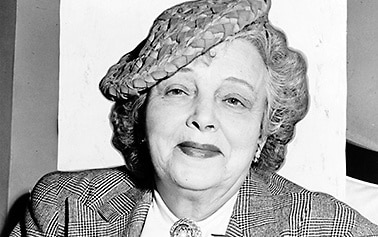
Margaret Anderson and Jane Heap were feminists and self-made women, champions of individualism, and editors of a literary magazine called ‘The Little Review’. Anderson gave voice to a new wave of individualism – ‘Why couldn’t women do anything they want to do? We are all in bondage to social conventions and only by rebellion we make break those bonds’. It was a line Anderson was to live by. Ezra Pound, understanding their refreshing and bold approach to writers, asked them to publish a serialised version of Ulysses. Once they read it, they were utterly committed to its publication, in spite of the censorship laws and potential fines and imprisonment for doing so. In fact ‘Ulysses’ appealed to many women (Ironically, it was often cited that one of the reasons the book should be banned was that it would corrupt women). Joyce’s book broke the mould on so many levels. Its liberation of sexual feelings and desires, as much for women, as for men, evoked a sense of emancipation that tapped into individualism and freedom that many women like Anderson and Heap sought. They were prosecuted and convicted in February 1921 for releasing Joyce’s writing, chapter by chapter in their magazine. They were ably defended by John Quinn, a New York lawyer, an advocate of modern art. He too played his part in this pantomime, helping to redefine the censorship laws, which would be used in Joyce’s censorship case, after his untimely and premature death.
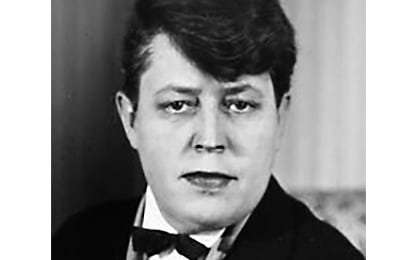
France was one of the few countries that never banned Ulysses. Paris had become a haven for writers, artist, poets, painters and dreamers in the 1920s and this influenced the French government’s approach to modernism. An American woman called Sylvia Beach would become another essential chain in the link – perhaps the most vital. Beach had worked in the Red Cross during the Great War and wished to stay in France, to escape ‘The conservative, puritanical constraints of American society’. Like Anderson, she could see something in Ulysses that was attempting to break the chains of the old world through art. Sylvia Beach would eventually publish Ulysses in France, to the detriment of her own finances. More importantly, she was the head of a group of people (including Ernest Hemingway) who would attempt to smuggle copies of the book into the US for those who were looking to purchase the illusive and even then, mythical book. Faced with so many barriers and constraints, one could be forgiven for giving in, but it did not deter this most determined of women, nor did the real fear of imprisonment and financial ruin, restrain her. In that era, printers could equally face peril and imprisonment. Beach was involved in both processes and very exposed. She lived modestly, supposedly sleeping in her bookstore, and took very little in way of money from Joyce, ensuring he received his share of any profits. The reward for the woman who had supported Joyce financially, emotionally, and published him when no one else would, was to be cast aside. When dangled with the lure of being published by an established book company, Joyce transferred the relevant publishing rights to Random House in 1932.
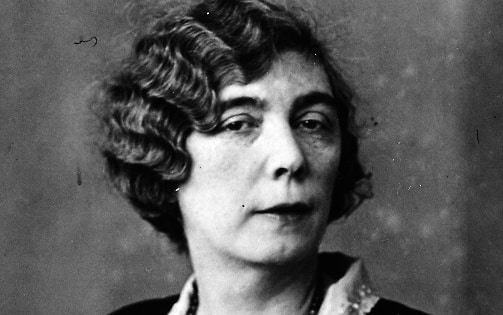
One of the most important and influential figures from Joyce’s life was his wife Nora Barnacle. On the surface they were from different worlds, she a modestly-educated Galway woman and Joyce a university graduate (rare for those days) and city man. What bound them was a sense of breaking free from society’s controlling system. For Nora it was to get away from small town life, the narrow expectations for women of that time, and the restrictions of her uncle who was involved in raising her. Joyce too felt strangled, but on another level; by the conservative nature of parochial Dublin. But it was their passion and desires too that bound them together. His Molly Bloom character in his last chapter was strongly influenced by his wife Nora. One of the accusations against Joyce was his obscene, sexual language. By today’s standards we wouldn’t see it as outrageous (though it is unabashed). But in the shadow of Edwardian moralism, which still threw a shadow over literature and art, it was perceived as lewd or filth. Nora and Joyce did exchange very sexually charged letters, (Joyce’s were published after his death) which reveal their passionate and often graphic desires, something which Joyce replicates in the Molly Bloom final episode of ‘Ulysses’. More than being his muse, she was a pillar of strength. The Joyce family moved dozens of times, often enduring penury and hardship. Joyce was a notorious drunk and Nora had to raise their two children under these conditions. Many Joyce fans will know that Joyce suffered from chronic eye condition, recurrent iritis, which became progressively worse and he was almost blind by the time of his death. He had to endure numerous operations and months of acute pain and fainting bouts, only to be nursed back to health by Nora. It’s a wonder how Joyce wrote at all given his poor eyesight and the dim lamps used in that period. By the time he was near finishing ‘Finnegans Wake’, he had to dictate his thoughts to trusted scribes, such as future Nobel Prize winner and friend, Samuel Beckett.
When we pay homage to ‘Ulysses’, we must pay homage in particular to publisher Sylvia Beach, patron and publisher Harriet Shaw Weaver, editors Margaret Anderson and Jane Heap, and partner, carer and creative influence Nora Barnacle. Did he appreciate what they did for him? Absolutely. Did he use them or take them for granted too? Certainly. Without these women, and the support of many others like Pound, Quinn and Stanislaus, the story of James Joyce and ‘Ulysses’ would surely have been very different.