

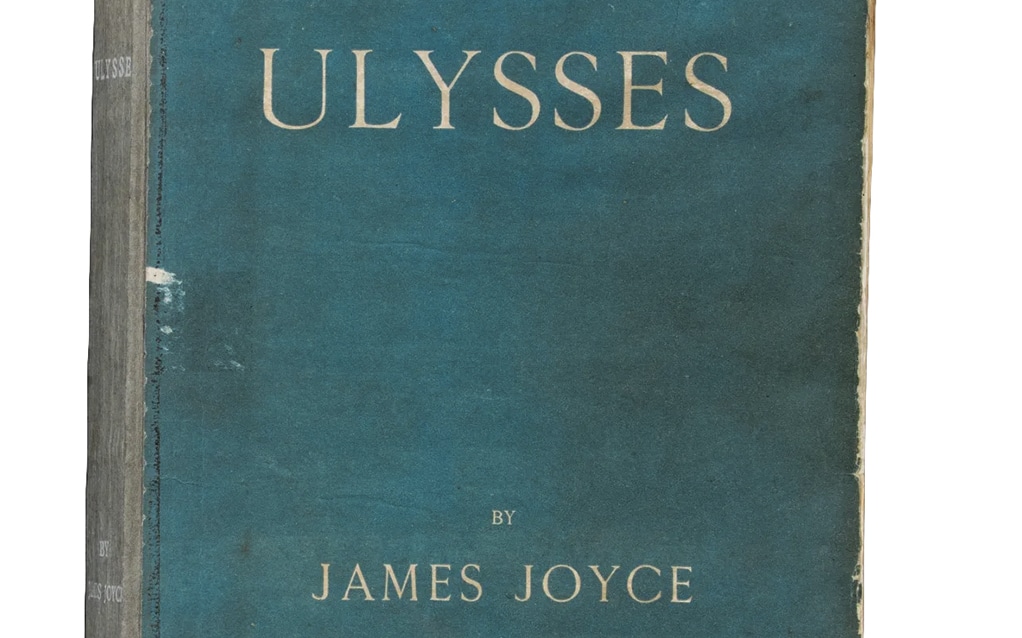
The picture houses of the world are currently alive with Christopher Nolan’s cinematic offering of ‘The Odyssey’ – an ancient Greek story, written by Homer in the eighth century BC. Nolan has, on a number of occasions, demonstrated how to capture the epics majestically and effectively – ‘Dunkirk’ and ‘Oppenheimer’ – on the big screen. ‘The Odyssey’ is a story that continues to captivate and challenge artists to retell it for modern audiences. Pat Barker’s wonderful trilogy of novels retells the Trojan war from the unique perspective of female captives carried off as bounty of war. Nolan’s serving is just the latest trope to emerge. ‘The Odyssey’ was also the inspiration behind James Joyce’s ‘Ulysses’. Joyce however – who was educated in Latin in Belvedere College, Dublin – chose to call his book, ‘Ulysses’, the Roman name of the Greek hero Odysseus. The Romans themselves retold this epic tale and Joyce preferred their more flawed version of the central protagonist, rather than the noble, king-like figure depicted by Homer.
A few years ago (see WCP March 2022), I wrote an article examining the artistic merits of Ulysses from a literary point of view, so I won’t delve into that again. But what of Joyce himself and indeed how was ‘Ulysses’ perceived when it first began to be serialised in an American Avant-garde magazine, ‘The Little Review’? Though today the book is universally accepted as a modernist classic, at the time it was one of the most controversial books ever to be written and was censored across the world, (France didn’t and this is key to the story). Joyce’s tale takes place in Dublin and centres around Leopold Bloom, but over just a single day. Homer’s Odysseus wanders for ten years in the Greek legend. Both central characters encounter a range of obstacles and challenges on his return journey to his wife. Odysseus makes his way home to Penelope, Leopold Bloom to Molly. Homer’s ‘Odyssey’ has distinct episodes and the 18 sections of Joyce’s ‘Ulysses’ (the titles were added in later publications), align themselves to the Homeric episodes from a metaphorical and symbolic way, to fit ordinary day life in Dublin. Modern education no longer anchors itself in subjects like Latin or Greek nor does it pay the same attention to the writings of Greek and Roman scholars such as Homer, Virgil, or Aristotle, so today we may be forgiven in asking – what’s all the fuss? Context is everything!
Let’s take a step back to when Joyce conceived of and wrote ‘Ulysses’. It was the turn of the 20th century. When he finished writing the novel in 1921, it was banned in the USA, UK and much of the globe, for obscenity (and it also faced accusations of blasphemy). To unpack and unravel what makes ‘Ulysses’ such an important piece of literature, one must understand the forces that opposed it and the world that both inspired it and reacted against it. World War One was of course, the greatest epochal change on society and it radicalised how people began to think of themselves as individuals and not just pawns for big governments and empires. In this period, when Joyce put pen to paper, it was a world run by men and restricted by the laws of puritanical religion. It was structured to benefit the wealthy few over the masses and controlled by laws to keep it that way. One of the most important ways to stifle free thought and change, was censorship. Government censorship and the punitive laws used to enforce it, were employed to deal with the new voices that emerged during and after the war that challenged the status quo or wanted to reshape society to reflect a fairer and equitable world. What emerged were mass movements of working men who wanted a vote and the Suffragettes, who wanted more than just a vote – they were fighting for full access to society and independence within it. Unions, anarchists, communists, socialists, all fought to throw off the yoke of upper-class and church domination, whose rules favoured the few and kept them in power. But the battleground wasn’t just in politics – it was in art too. Art also was packaged to reflect this Victorian and Edwardian world of order. In this era, the art and literature that was championed and published had a structure. There were rules and, if you followed them, you could find your work in a bookstore, art gallery, and so on. Yet it was a narrow world. It reflected a place that many people like Joyce, Picasso, or the Suffragettes could not see themselves in. So when Joyce had the audacity to write Homer’s epic story from the point of view of an ordinary working man, – one who was blasphemous, visited the red light district, had a wife who was having an affair – pioneering a stream of conscious technique that reflected their every thought, from the most rudimentary bodily functions to sexual desires, it blew the lid off a global society. It pitted those who were ensconced in a morally rigid society against the burgeoning frustrations of others, who wanted to redefine the world as a less restrictive form of life and art.
The Comstock Act, introduced as far back as 1873 in the US, was a federal anti-obscenity law that banned the circulation of obscene and lewd material in the postal system. It was used to great effect to prevent the circulation of literary magazines that were pushing artistic boundaries. What made this particularly potent was that it was the postal system that stopped packages merely on the suspicion or accusation of the many self-named ‘vice societies’ that acted like big brother, deciding who or what should be banned in accordance to their own view of morality. It was a suffocating world for anyone who wanted change. It wasn’t just literature. An article in The Washington Times in 1921 (a year before Ulysses was completed) referred to Picasso’s Cubism as being ‘the product of diseased minds’. Kenyon Cox, a contemporary painter and critic, went as far to say Cubism was an ‘abolition of the law’. But who’s law? For all the political revolutions that would ensue in the early 20th century, we can often forget that art was even a greater one, and that an Irishman was at the forefront of this charge.
‘Ulysses’, in many ways, benefitted greatly from its notoriety and ban, because it turned the world’s eyes on the book, making it a must read for the curious and those who were looking for new forms of literature, if they could find one. Women, in particular, seemed drawn by the realism and the liberation of Molly Bloom, depicted as a woman whose thoughts burst through the restrictive strangulation around how the ‘place’ of female characters should be in a novel, or indeed in society. John Quinn, an Irish American lawyer and collector of modern art, had broken ground defending ‘The Little Review’ magazine after Margret Anderson serialised Ulysses chapter by chapter, but after his death, Morris Ernst stepped up to defend Joyce. When the case came to trial in 1933, Ernst deliberately postponed the trial as long as he could until a more liberal judge could be found. This man was Judge John Woolsey. Ernst knew that he was up against the Comstock Act that criminalised the sending of ‘obscene, lewd, indecent, filthy or vile material’ through the post and was the justification for seizure of the book by another law, the Tariff Act, which in itself banned the importation of obscene material. He needed to prove that while it had graphic, real, and even ‘disgusting’ descriptions, none of it was filth nor did it arouse sexual desire, which were morally corrupting. Woolsey ultimately agreed with the case put forward by Joyce’s legal team. It was high art. He ended his summation by declaring ‘I am quite clear that it does not tend to excite sexual impulses or lustful thoughts and that it is not obscene….it is a sincere attempt to devise a new literary method for describing mankind’. As a result of this landmark case, within three years it was no longer censored in the UK. However it would take until 1948 for the book to be circulated in Canada and 1953 in Australia. While never actually banned in Ireland, it wasn’t until the 1960s that ‘Ulysses’ began circulating in the country. Up until then booksellers had held off importing it because of opposition from the Catholic Church.
For all the genius behind Joyce’s work, it would never have seen the light of day without the help of people control to this story, who risked all, from imprisonment to financial ruin and ostracism. Ezra Pound, a young American poet and critic and, most importantly, the four staunch and utterly committed women, Harriet Weaver, Sylvia Beach, Margaret Anderson and Jane Heap, that made it happen. Next month I will look at their vital contributions, as well the part played by his wife, Nora Barnacle. Without them, ‘Ulysses’ might never have reached its readers.
Side Note: For lovers of history and literature: Stephen McWilliams has written an intriguing historical fiction titled ‘Defying Donn’, published by Tribes Press, that creates a world in which Michael Collins survives Béal na Bláth, thus providing a fictitious tale of what could have been! A must-read for all fans of Michael Collins. Closer to home, Con Hurley and Gerald O’Brien have written a book, along with Fr Kevin O’Regan, as supervising editor, entitled ‘St. Patrick’s Cathedral, Skibbereen: 1826–2026 A History’, which will be on sale in all local bookstores from August. All proceeds of the book will go towards the restoration fund for the Cathedral.