


“Sorry I am late,” said the taxi driver. “There were elephants in our compound, eating the mango trees.” That is not the sort of excuse one often hears from a taxi driver in Ireland, but in southern Africa, elephants and humans are not getting along too well.
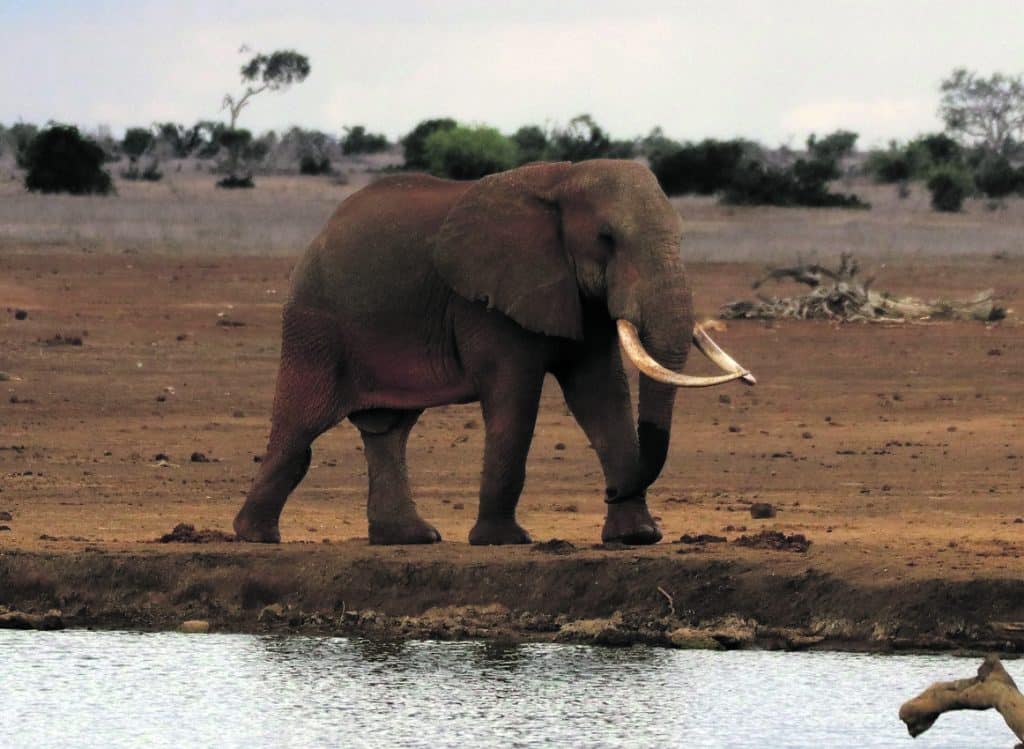
That was a few weeks ago, in Livingstone, southern Zambia. I had been in Lusaka, Zambia’s capital, for my adopted son’s graduation, and was then on my way, by ghastly bus, to Zimbabwe to visit some old friends. Stopping for the night in the town named after the famous explorer, I stayed at a beautiful place not far from Victoria Falls. While I enjoyed my sundowners in the riverside bar, the only sounds were the scary barking of baboons and the chirping of grass frogs, tinkling of reed frogs and the woody creaking of guttural toads. Early next morning, before the bulbuls and robin chats had started off the dawn chorus, the first thing I saw, chomping away at the grass a few yards from my chalet, was a hippopotamus.
I was last there ten years ago. Nothing much had changed, except the front gates of the lodge had once been surrounded by woodland; now there were just broken tree stumps. And as we drove into town, the culprits, the largest of all land animals, were plodding along one of the main streets.
Southern Africa was experiencing a severe drought (probably exacerbated by climate change); Victoria Falls was almost completely dry – a great disappointment for any tourists expecting to see one of the world’s most spectacular natural wonders. For wildlife, it was much more serious. Elephants had moved out of nature reserves in Zambia and neighbouring Zimbabwe in search of food and water. This caused confrontations with humans – my taxi driver said that some farmers had recently been killed trying to defend their crops, and an elephant was shot just the day before I arrived. In 2024, 31 people were killed by elephants in Zimbabwe.
According to the ‘Save the Elephants’ charity, there are about half a million elephants in all of Africa. There were 10 million at the beginning of the 20th century. Until recently, hunting for ivory was the main cause of their decline. A decade ago, ivory was worth up to $2,000 a kilogram in China, and on average, 100 were killed by poachers every day. But ivory sales were banned in China in 2018, and poaching has decreased. The biggest problem for elephants now is lack of space, as the human population increases madly and the continent ‘develops’.
While elephants are classified as endangered by the International Union for the Conservation of Nature, in Zimbabwe and Botswana, which together have over a quarter of all African elephants, their numbers are considered to be out of control. They can be legally hunted in Zimbabwe – there is a quota of 500 a year. In 2019, thirty young elephants from Hwange National Park were sold to Chinese zoos, which is a terrible fate for any animal. And last year, the Zimbabwean government proposed slaughtering elephants to feed drought-stricken communities. Conservationists in the UK were horrified, prompting Botswana’s wildlife minister to suggest sending 10,000 elephants to Hyde Park in London, so Britons could learn what it was like to live alongside them.
Attempts have been made to reduce conflicts with humans. In Hwange, sixteen elephants have been fitted with radio collars so they can be tracked. When they are heading towards villages, rangers on bicycles are sent off to warn locals (not that the locals can do much, except shout, wave sticks and bang cooking pots). ‘Save the Elephants’ has taught farmers in Kenya to grow crops that elephants don’t like, such as chillis and sunflowers, and to keep bees – elephants are scared of bees – which also provide the farmers with an extra income.
In lawless states like the Democratic Republic of Congo and South Sudan, elephants are probably doomed, hunted as they are for meat, as well as ivory. The forest elephant, found only in the Congo Basin and parts of west Africa (and considered a separate species since 2000), is critically endangered. In Kenya, which tries to look after its wildlife, there are about 36,000 elephants left, most, but not all, in nature reserves; 12,000 live in Tsavo National Park.
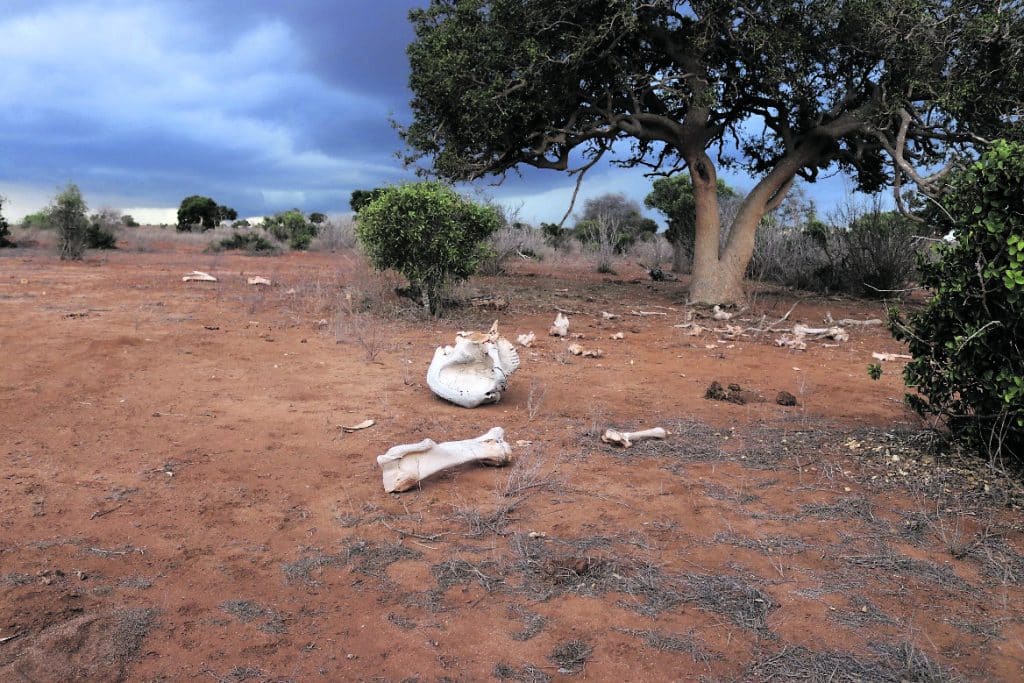
Tsavo is Kenya’s oldest and largest reserve. There are actually two separate parks, East and West; the railway line from Nairobi to Mombasa runs roughly through the middle. The total area of Tsavo is 22,000 square kilometres, nearly three times the size of County Cork. It was in Tsavo in 1898 that two mane-less male lions terrorised workers constructing the railway. Irish-born Lieutenant Colonel John Henry Patterson, the chief engineer of the project, eventually shot the lions, but by then they had devoured 28 Indian workers and unrecorded scores of Africans.
After leaving Zimbabwe, I flew up to Kenya to visit another old friend who lives in a small seaside village north of Mombasa. Tsavo is three hours away by car, so with my friend’s cook driving and her night watchman for security, I went there for a two-day safari. We saw giraffes, hippos, several species of antelope, a pride of sleepy lions, a cheetah and her cub and a large number of wonderful birds. There were no rhinoceroses (the few surviving rhinos mostly live in guarded reserves within reserves), but dozens of elephants, coloured red from the lateritic soil they roll in and the giant termite mounds they rub against. Many of the elephants in Tsavo were once orphans, their parents killed by poachers. They were cared for by the late, heroic Daphne Sheldrick in her orphanage outside Nairobi until they were big enough to be released back into the wild.
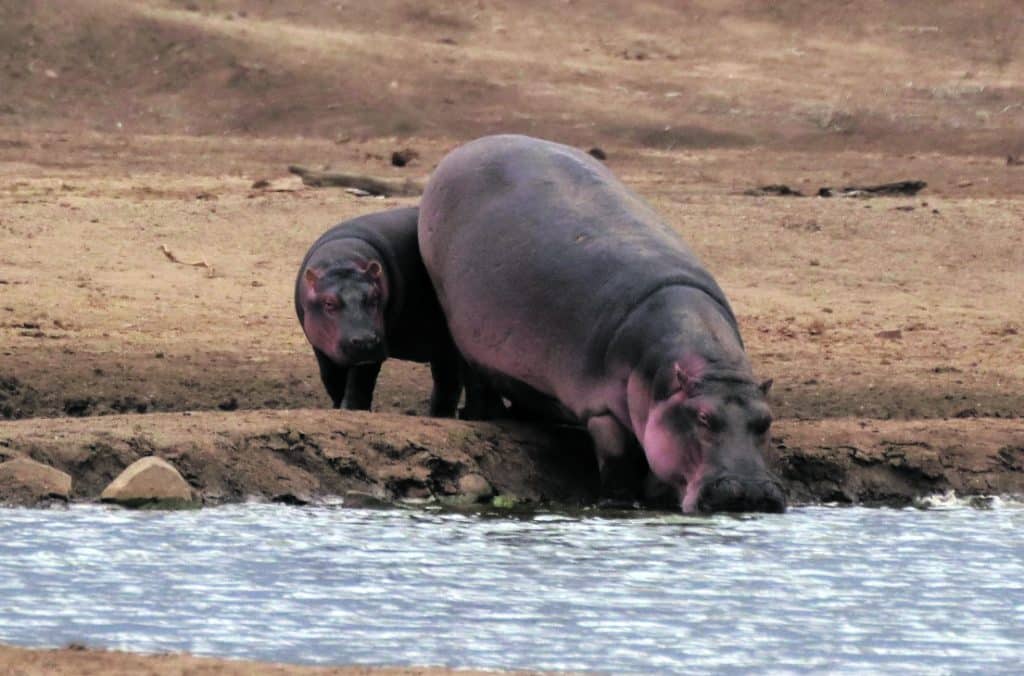
At the camp where we stayed, meals were shared, unexpectedly, with splendid starlings and a very persistent red-billed hornbill. Early one morning there was a fearful commotion: screeching baboons sent a herd of impalas stampeding around the tents. The cause of the disturbance was a cheetah who came in to the camp for a drink. Later, having failed to zip up my tent sufficiently, I returned from breakfast to find a box of biscuits torn to shreds and the contents gone – stolen by vervet monkeys.
Africa is a paradise for animal lovers, and there are still such vast areas of wilderness; it is difficult to imagine it will ever change. But every time I return to Africa, the cities are larger, there are new airports where there was once forest, and roads and railways, built by the Chinese, cutting through national parks. Lusaka, never an attractive city, is now an unplanned monstrosity of horrendous traffic jams, expensive shopping malls, ugly buildings, slums and unbelievable litter. All African cities I’ve been to are much the same. Main roads linking cities are choked up with lines of lorries, and so new roads have to be built. Then there are all the mines and the dams. No thought is given to wildlife, whose territories are increasingly fragmented or destroyed.
As in most parts of the world, there are animals in Africa that have adapted to life alongside humans. Marabou storks stroll along the streets in Kampala, picking up the rubbish. At the airport bar in Mombasa, vervet monkeys help themselves to packets of crisps when the barmaid isn’t looking. Baboons steal from lorries queuing up at border crossings. The friends with whom I stayed had gardens filled with impressive birds, including wood hoopoes and crested barbets, hadada ibis and huge trumpeter hornbills; in Kenya I was awakened most nights by bushbabies. Even in my Zambian family’s awful neighbourhood, there were bulbuls, robin chats, barn owls and fruit bats.
Most wild animals, however, prefer to be far away from humans, but as African nations strive, regrettably, to be just like countries in the west, that is becoming increasingly difficult, especially for elephants. One has to sympathise with farmers whose crops are devastated by rampaging pachyderms, but it is not the animals’ fault. There are 550,000 elephants in Africa, living as they have done for millions of years. The population of African humans is 1,500,000,000 and rising. Which one is out of control?
P.S. I made an inexplicable error in last month’s article. My sister’s donkey, Bess, not only finished third in the 1976 Courtmacsherry Regatta Donkey Derby, she won the race in 1977, and was third again in 1978, two months after falling down the well. My apologies.